Panagia Olympiotissa Monastery, Byzantine monastery in Elassona, Greece
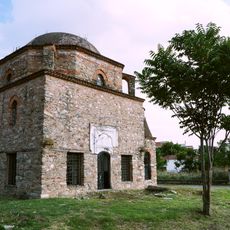
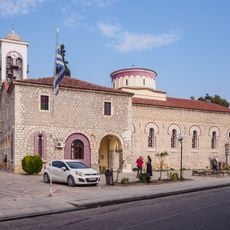
Panagia Olympiotissa Monastery is a Byzantine religious site in Elassona built between 1295 and 1304 on a hilltop. The complex contains a church, guest accommodations, a library, and a natural history museum.
The monastery was founded between 1295 and 1304, probably by the sebastokratores Constantine and Theodore, co-rulers of Thessaly, on the medieval citadel of Elassona. A 1342 sigillion of Patriarch John XIV Kalekas confirmed its stauropegic status, and a forged chrysobull attributed to Andronikos III Palaiologos listed estates reaching as far as Larissa. It was the region's main spiritual centre in the 16th and 18th centuries.
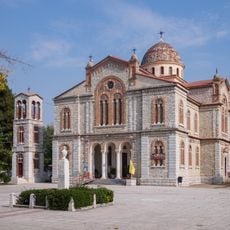
The monastery's name comes from a venerated icon of the Panagia believed to have been brought from a now-vanished monastery at Karya, at the foot of Mount Olympus. Each year on 5 October the icon is carried in a litany from the monastery to the Church of Saint Demetrios in Elassona. The community, originally male, is now a female convent celebrating on 6 and 15 August.
The monastery stands on the medieval citadel above Elassona, so the approach is uphill. The katholikon, the 1819 chapel of Saint Nektarios, the library and the natural history museum are the parts a visitor can see. The icon is carried to the Church of Saint Demetrios in a litany every 5 October.
The monastery's name comes from a venerated icon of the Panagia believed to have been brought from a now-vanished monastery at Karya, at the foot of Mount Olympus. Each year on 5 October the icon is carried in a litany from the monastery to the Church of Saint Demetrios in Elassona.
The community of curious travelers
AroundUs brings together thousands of curated places, local tips, and hidden gems, enriched daily by 93,291 contributors worldwide.