Lake Agra, reservoir in Greece
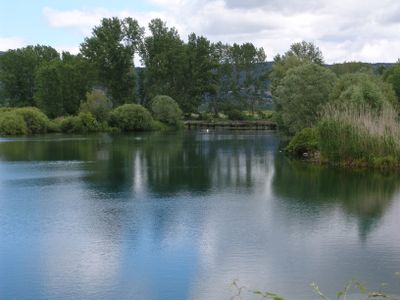
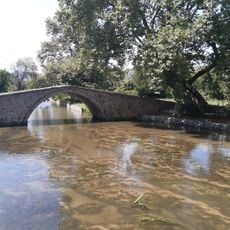
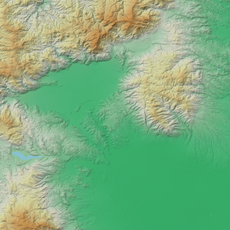
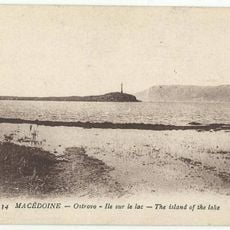
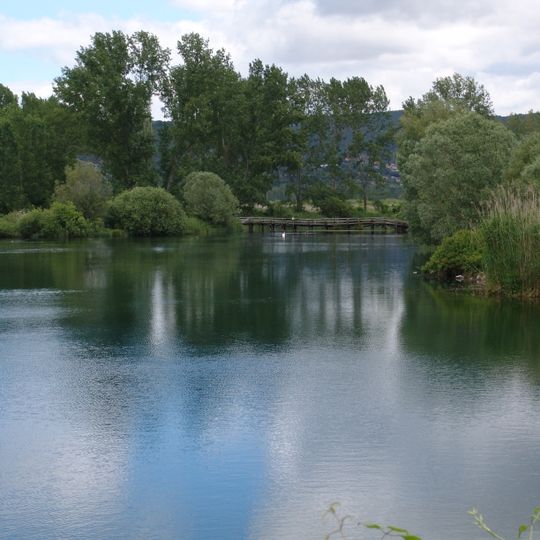
Lake Agra is a large reservoir in Macedonia's plain, created in 1953 through a hydroelectric project that diverts water from the Voda River. It sits at roughly 1,540 feet (470 meters) above sea level with a winding shoreline extending about 11 miles (18 kilometers), framed by Mount Kaimaktsalan to the north and Mount Vermio to the south.
The lake formed in 1953 when Greece's electricity company built a hydroelectric station and redirected the Voda River, transforming wetlands and peat bogs into a water reservoir. This engineering change altered the landscape from natural marshes into the artificial lake that defines the area today.
The lake's modern name, Agra-Vryton-Nisi, honours the three villages on its shores whose residents campaigned to save the wetland. Near the road toward Karydia stands a monument to Macedonian fighters Tellos Agras and Antonis Migas, hanged by Bulgarian komitadjis in 1907 during the Macedonian Struggle.
The lake lies 6 km west of Edessa, with the villages of Agras, Vryta and Nisi on its shores; local roads from these villages reach the banks. The wetland is a Natura 2000 site (GR1240006) and a wildlife refuge, so stay on paths at the reed beds. Feeding or disturbing the birds is not appropriate.
The lake is often called "Swan Lake" because mute swans live there, and the Greek Ornithological Society has recorded at least 68 bird species using it for nesting, wintering and breeding. These include 20–30 pairs of little bittern and up to 5 pairs of purple heron. A monument near the road to Karydia honours Tellos Agras and Antonis Migas, Macedonian fighters hanged by Bulgarian komitadjis in 1907.
The community of curious travelers
AroundUs brings together thousands of curated places, local tips, and hidden gems, enriched daily by 94,022 contributors worldwide.