Rue Victor-Hugo, Pedestrian shopping street in Lyon, France
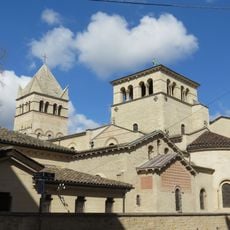
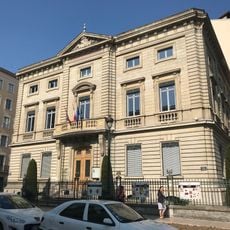
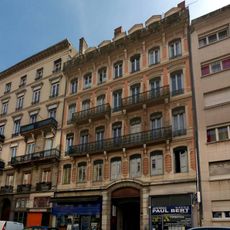
Rue Victor-Hugo is a pedestrian street in the 2nd arrondissement of Lyon measuring about 800 meters (2,600 feet) long. It connects two major squares and runs past buildings from the 19th century with four to six stories, displaying varying architectural styles and periods.
Planned in 1775 by Antoine Michel Perrache and laid out under the First Empire, the street was opened in five stages between 1817 and 1841 and completed in 1842. It was named Rue de Bourbon in 1816, became Rue de la République from 1848 to 1852, and took its current name on 26 May 1885, four days after Victor Hugo's death. It was pedestrianised on 8 December 1976.
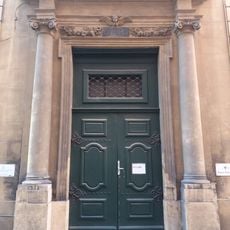
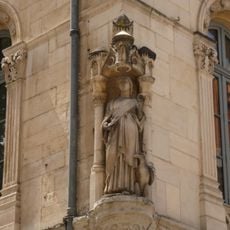
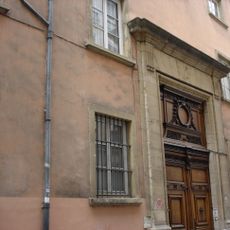
The street is named after Victor Hugo; the municipal council chose the name on 26 May 1885, four days after his death. At No. 25 and 27 stood the Œuvre des Charlottes, founded by Chalotte Dupin, later the Sœurs de Saint-Joseph. Look for carved lion heads and snakes on many doorways.
The street is directly accessible from Ampère-Victor Hugo metro station, which also connects to other lines in the city. The flat, paved surface makes it easy to walk and explore, particularly during quieter times like early morning or late afternoon.
The street was planned in 1775 by Antoine Michel Perrache so that Napoleon, from a palace planned at the Confluence, could see the equestrian statue of Louis XIV on Place Bellecour. The digging was completed in 1842. The street was opened in five stages between 1817 and 1841.
The community of curious travelers
AroundUs brings together thousands of curated places, local tips, and hidden gems, enriched daily by 94,472 contributors worldwide.