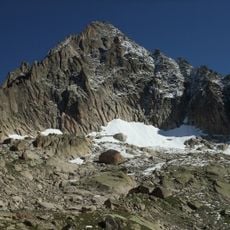
Aiguille Verte, Pyramidal peak in Chamonix-Mont-Blanc, France
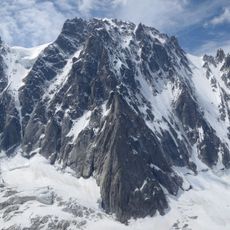
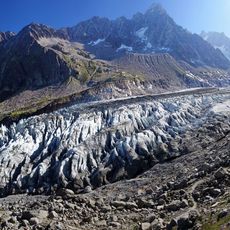
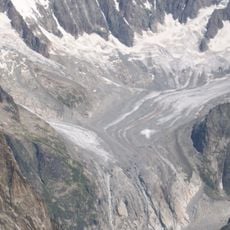
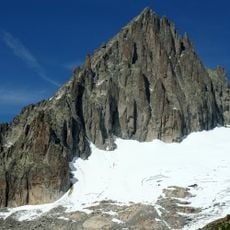
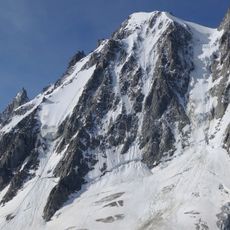
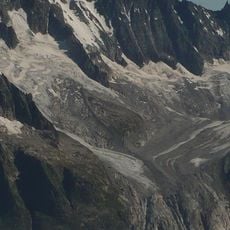
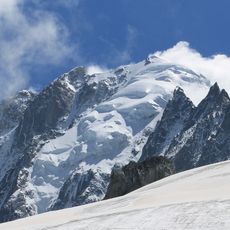
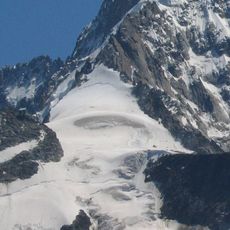
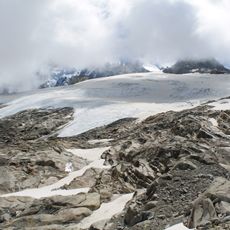
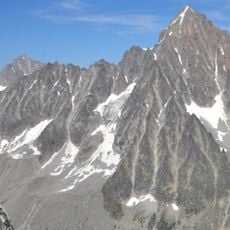
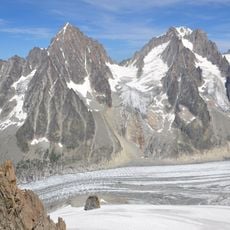
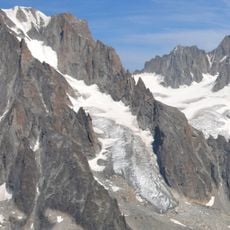
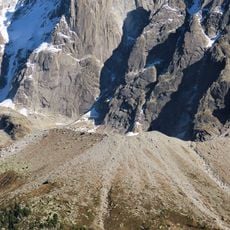
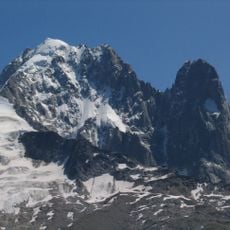
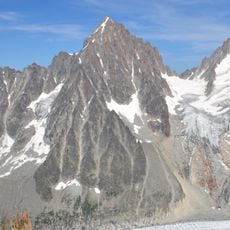
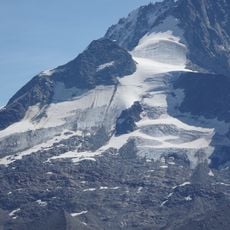
Aiguille Verte is a pyramidal peak in the Mont Blanc massif rising to 4,122 metres, with four main ridges: the Moine, Sans Nom, Jardin and Grands Montets. Its faces are cut by steep granite walls and couloirs, including the Whymper and Couturier, and its summit is flanked by two satellites, the Grande Rocheuse and the aiguille du Jardin.
Edward Whymper, Christian Almer and Franz Biner made the first ascent on 29 June 1865 via the Whymper Couloir, two weeks before Whymper's Matterhorn ascent. Whymper had hired Almer because his usual guide Michel Croz was waiting for a client in Chamonix. Six days later Charles Hudson, T. S. Kennedy and Michel Croz climbed the Moine ridge; Lucy Walker was the first woman on the summit in 1870.
The name Aiguille Verte means "Green Needle", often linked to the green-blue tint the ice takes when the sun strikes it from the side. Some scholars instead trace "verte" to the pre-Celtic root ver or var, meaning a height. In Chamonix people simply call it "La Verte".
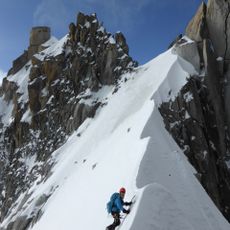
No cable car or shuttle reaches the summit; climbers start from the Couvercle (2,867 m), Argentière (2,771 m) or Charpoua (2,841 m) refuges. The Whymper couloir, the normal route and descent, turns to ice late in the season. Parties on the Moine ridge must descend before the couloir becomes too sun-exposed.
Each of its four faces presents different geological formations and climbing challenges that can take several days to complete. Mountaineers often find that approaching from different sides offers entirely different technical experiences.
The community of curious travelers
AroundUs brings together thousands of curated places, local tips, and hidden gems, enriched daily by 94,658 contributors worldwide.