Place de la Concorde, Public square in 8th arrondissement, Paris, France
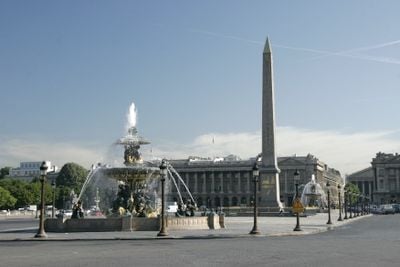
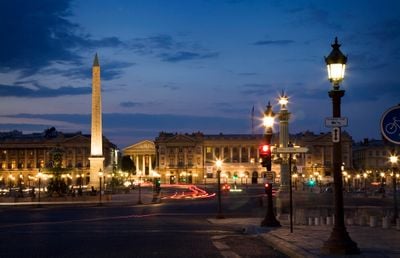
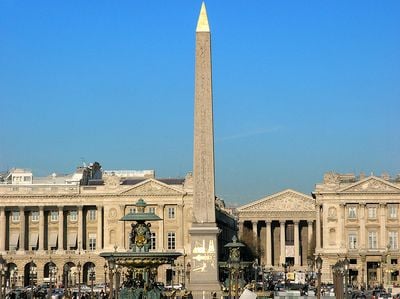
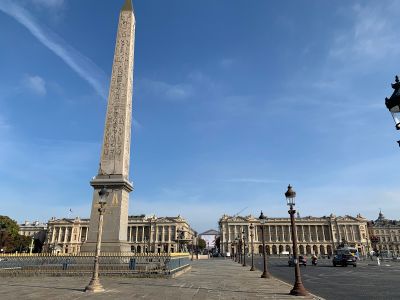
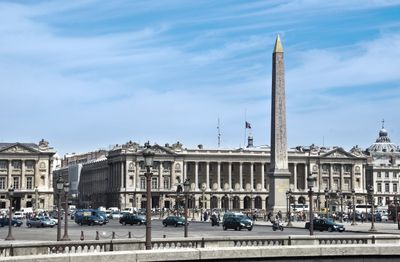
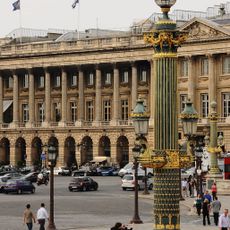
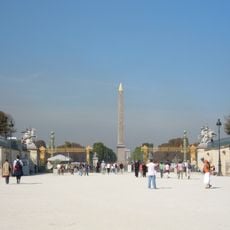
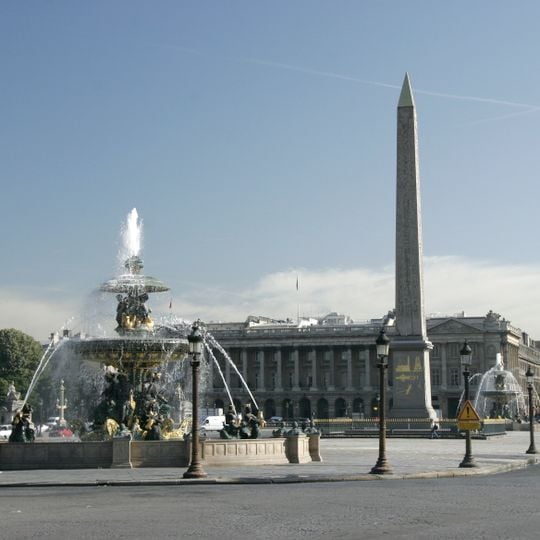
The Place de la Concorde is an octagonal square of 7.6 hectares laid out by Ange-Jacques Gabriel and finished in 1772, at the eastern end of the Champs-Élysées. In its centre stands the Luxor Obelisk, a tapering shaft of warm-toned stone covered on all four faces with carved hieroglyphs and figures, ending in a gilded pyramidion and set on a dark, sloped pedestal. A curved, gold-tipped fence with decorative patterns runs around the base, and two large fountains by Jacques Ignace Hittorff flank the monument.
The square was created in the mid-eighteenth century as a royal site and later became the stage for executions during the Revolutionary years. After the Terror ended, it received its current name and urban planning transformed it into an open junction between the new Parisian axes.
The name Concorde means harmony and was chosen after the Revolution to mark a fresh start following years of bloodshed. The eight stone statues stand along the perimeter in careful symmetry, showing the territorial divisions of France during the nineteenth century.
The location sits near several metro lines and allows quick crossing on foot, though visitors should watch for heavy car traffic. Early morning or late evening hours offer more calm for a longer walk around the fountains and the obelisk.
The tip of the obelisk carries a gilded pyramid that was only added in 1998 to replace the missing original. Close inspection reveals inscriptions in hieroglyphs glorifying Pharaoh Ramses II that have remained unchanged for over three thousand years.
The community of curious travelers
AroundUs brings together thousands of curated places, local tips, and hidden gems, enriched daily by 92,055 contributors worldwide.