Fame Riding Pegasus, Stone sculpture in Tuileries Garden, France
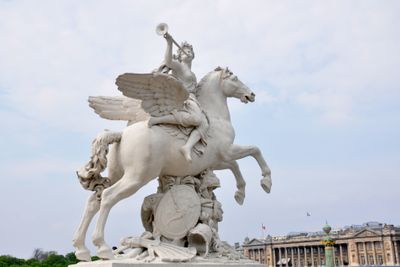
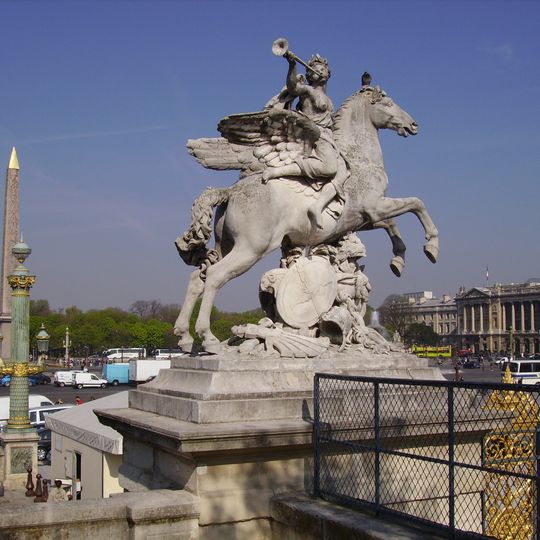
Fame Riding Pegasus is a stone sculpture in Tuileries Garden that depicts the goddess of fame mounted on the winged mythical horse, captured in forward motion. The current version is a replacement of the original marble sculpture, which now resides in the Louvre.
Created by Antoine Coysevox between 1698 and 1702, the sculpture first stood at the entrance of Marly estate. It was moved to Tuileries Garden in 1719, where it became part of the garden's permanent arrangement.
The figure is Fame, not a generic goddess: she blows a long trumpet, and the shield and armour below the horse's hooves refer to war trophies. Coysevox carved the group for the Château de Marly, a retreat of Louis XIV, where such allegories served the king's image. The marble original is now in the Louvre; the Tuileries version is a copy.
The sculpture sits in the western section of Tuileries Garden, easily accessible from main pathways. Keep in mind this is a copy of the original, which is on view at the Louvre, so visitors can see both versions.
The marble original was moved to the Louvre partly to protect it from weathering, and Coysevox's signature is not the only mark to look for: the rocky base under the hooves carries a round shield, a helmet and a bundle of sticks, trophies that tie the group to war rather than to fame alone.
The community of curious travelers
AroundUs brings together thousands of curated places, local tips, and hidden gems, enriched daily by 93,128 contributors worldwide.