Musée de l'Orangerie, National art museum in Tuileries Garden, Paris, France.
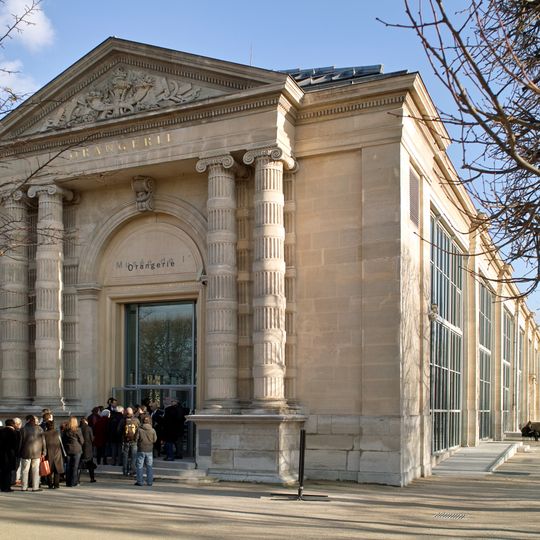
The Musée de l'Orangerie occupies the former orangery of the Tuileries Palace, a light-beige stone building whose east and west entrances have four fluted Ionic columns and a triangular pediment carved with cornucopias, plants and ears of corn. The south facade facing the Seine is glazed, while the north side is almost windowless. Inside, eight Water Lilies panels line two oval rooms lit by skylights.
The building was constructed in 1852 as a greenhouse for orange trees from the Tuileries and later served as storage space and an exhibition hall. Monet convinced the French government to display his large water lily paintings there permanently, leading to the opening of the museum in 1927.
The name comes from the building's original role sheltering the Tuileries citrus trees in winter. Since 1927 the two oval rooms have held Monet's Nymphéas, arranged as an infinity symbol along the east-west axis from the Arc de Triomphe to the Louvre. Monet wanted skylights so daylight would fall on the canvases.
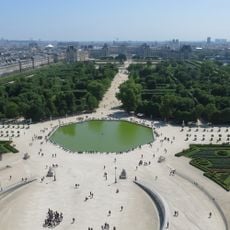
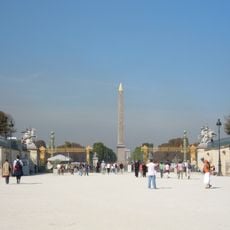
The museum occupies the old orangery on the Terrasse du Bord de l'Eau, in the southwest corner of the Tuileries Garden, between the Place de la Concorde and the Seine. The Concorde metro station is the nearest stop. The Water Lilies rooms lie on the ground level, while the Jean Walter and Paul Guillaume collection is reached by the staircase added in the 1960s.
The eight water lily panels form a continuous horizon with no beginning or end and surround the viewer completely. Monet worked on this series for almost three decades and donated it to the French state on the day after the armistice of the First World War.
The community of curious travelers
AroundUs brings together thousands of curated places, local tips, and hidden gems, enriched daily by 94,036 contributors worldwide.