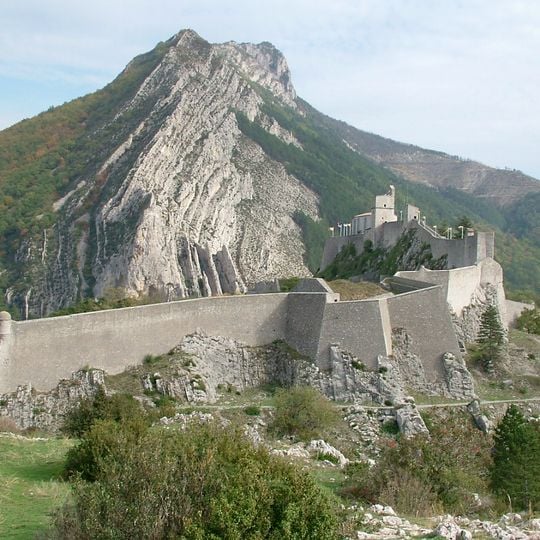
Citadelle de Sisteron, Citadel in Sisteron, France
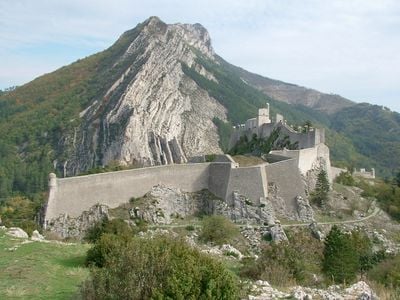
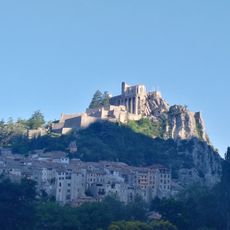
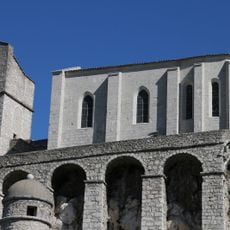
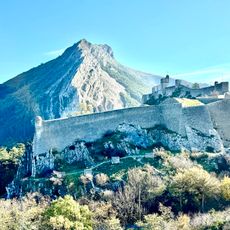
The Citadelle de Sisteron stands at 500 m altitude on a rocky spur above the Durance, its long pale stone wall with a stepped top and a rectangular tower rising from grey rock. The fortress combines a 12th-century upper rampart and keep with bastioned tiers added by Jean Errard from 1590 to 1597, plus a 14th-century chapel on arcades.
The upper rampart and keep date from the 12th century. After the Wars of Religion, Jean Errard adapted the enceintes from 1590 to 1597, introducing saw-tooth fortifications later refined by Vauban. Vauban planned major works in 1692, but only the powder magazine and well were built. Final adaptations took place from 1842 to 1860, including an underground stair to the north gate.
The citadel's chapel, Notre-Dame du Château, was built in the 14th century on a terrace held up by arcades, using golden Bevons sandstone and grey Chambrancon limestone. Three-quarters destroyed in 1944, it was rebuilt between 1970 and 1980 with stained glass by Claude Courageux and now hosts exhibitions. Since the 1930s an open-air stage on the north slope has hosted the annual Nuits de la Citadelle festival.
Access involves stairs and pathways kept in steady condition, allowing visitors to explore different levels throughout the grounds. Sturdy footwear is wise, especially in wet or windy conditions, as the upper areas are exposed to the elements.
The underground staircase linking the citadel to the town's north gate was dug between 1842 and 1860, when engineers followed Vauban's two-century-old recommendations. The same campaign raised the curtain walls and cut two carriage gates into the south face. The north gate itself was rebuilt at the same time.
The community of curious travelers
AroundUs brings together thousands of curated places, local tips, and hidden gems, enriched daily by 92,892 contributors worldwide.