Château de Luc, Medieval castle in Luc, France.
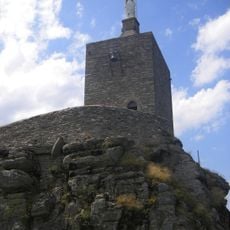
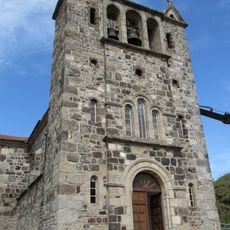
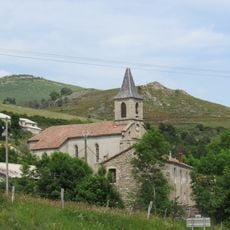
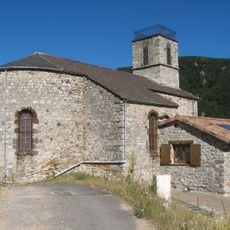
Château de Luc is a castle ruin perched on a strategic hilltop between the Gévaudan and Vivarais regions in the area of Luc, France. The site features a square keep and the remnants of fortified walls that reveal how this position was used to control movement across the landscape.
The castle was built in the 12th century and served as a toll collection point along the Regordane Way, a major pilgrimage route leading toward Saint Gilles. This role on an important trade and pilgrimage path explains why it was built in such a strategic location.
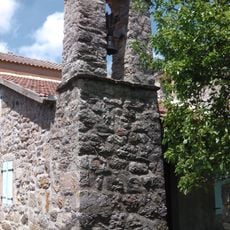
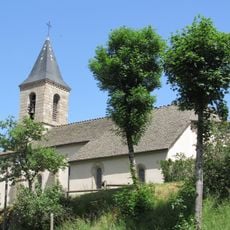
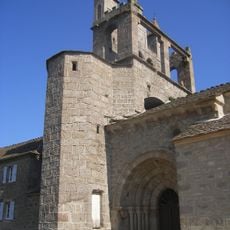
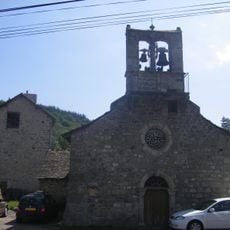
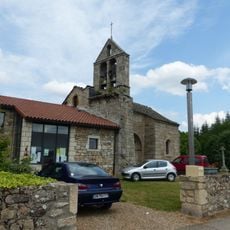
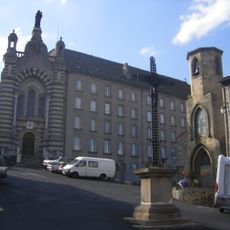
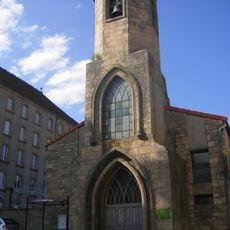
The keep was converted into a chapel in 1878 by local parishioners, who placed a shrine to the Virgin Mary on its summit. Stevenson, passing that same year, noted the white statue weighed fifty quintals and was to be dedicated on 6 October. The bell now hangs on the tower's face above an arched opening.
Access to the ruins is possible via a gently sloping path that leads to the entrance without needing climbing equipment. Visitors should wear sturdy shoes since the ground is uneven and footing can be uncertain in places.
In 1878 Robert Louis Stevenson passed through Luc while travelling with his donkey Modestine, and in 'Travels with a Donkey in the Cévennes' he noted the new white statue of Our Lady on the keep, which he heard weighed fifty quintals and was to be dedicated on 6 October. He described Luc as a straggling double file of houses wedged between hill and river.
The community of curious travelers
AroundUs brings together thousands of curated places, local tips, and hidden gems, enriched daily by 94,225 contributors worldwide.