Abbey of St. Medard, Medieval monastery in Soissons, France.
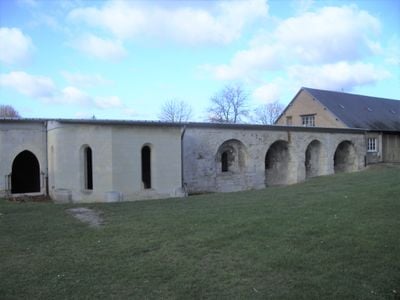
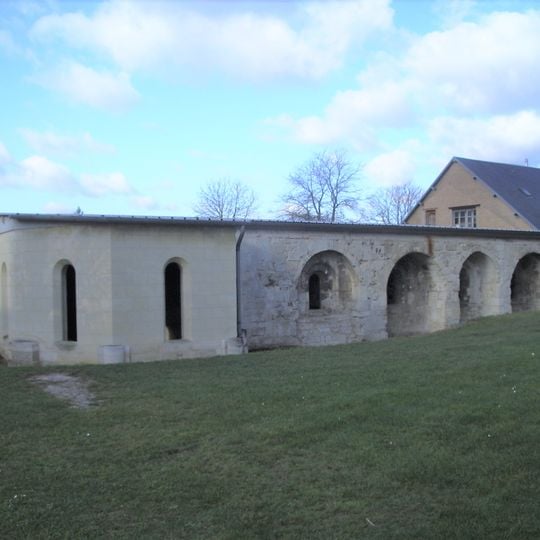
The Abbey of Saint Medard is a former Benedictine monastery in Soissons whose remains consist of underground crypts and stone foundations that extend across multiple buried levels. The archaeological site sits near the city center and preserves traces from different periods of its long occupation.
King Clotaire I founded the monastery in 557 to preserve the remains of Saint Medard, establishing it as a major religious foundation of the early medieval period. The community grew substantially over succeeding centuries and shaped the religious landscape of northern France.
The abbey held the relics of Saint Medard, bishop of Noyon and Tournai, and of Saint Sebastian, translated here in 826 by Abbot Hilduin, which drew pilgrims from across Europe. The funeral legend says Clotaire I carried Medard's body himself and gave the Crouy domain for the foundation. The tower of the surrounding wall is said to have held Abelard, imprisoned for his writings.
The abbey survives only as ruins: the crypt, the main gateway and one tower of the surrounding wall. According to legend, the tower held Abelard, imprisoned for his writings. The site lies just outside the old limits of Soissons, on the Crouy estate where Clotaire I founded the monastery.
The abbey's scriptorium produced the "Gospel Book of Saint Medard", a Carolingian illuminated manuscript made in the final years of Charlemagne's reign at the palace school of Aachen. Its oversized evangelist portraits and rich colours make it one of the most representative examples of early 9th-century illumination. The tower where the walled precinct survives is said, by legend, to have held Abelard, imprisoned for his writings.
The community of curious travelers
AroundUs brings together thousands of curated places, local tips, and hidden gems, enriched daily by 93,895 contributors worldwide.