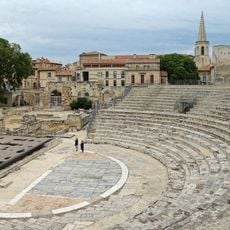
Arelate, Roman city, predecessor of Arles
Arelate was an important Roman city on the Rhone River and shaped southern Gaul for centuries. The archaeological remains are scattered across present-day Arles and include a theater, amphitheater, and other structures from antiquity.
Arles became a Roman colony in 46 BC, when Caesar settled veterans of the 6th Legion near the old Greek town; Tiberius Claudius Nero carried out the foundation. Augustus expanded it with a forum and theater, and the amphitheater followed in Flavian times. In 407 the seat of the Gallic praetorian prefect moved here from Trier, and the Visigoth king Euric took the city in 476.
The name Arelate comes from Latin and refers to the marshlands that once surrounded the ancient city. Today, visitors can discover remains of this Roman past scattered throughout the town, shaping how locals and travelers understand the place.
The remains are located at several spots within modern Arles and some are easy to reach on foot. Plan a few hours to explore and read the information boards to understand the ancient structures better.
The name Arelate means "the town in the marshes", referring to the wetland setting of the Greek settlement destroyed by the Ligurians in 535 BC and rebuilt in the 4th century BC. Excavations in the Jardin d'Hiver between 1976 and 1989 uncovered five occupation phases of that Greek town, whose streets followed a grid plan.
The community of curious travelers
AroundUs brings together thousands of curated places, local tips, and hidden gems, enriched daily by 94,387 contributors worldwide.