Rue Sainte-Catherine, Pedestrian shopping street in central Bordeaux, France
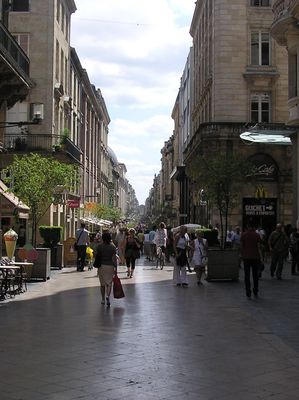
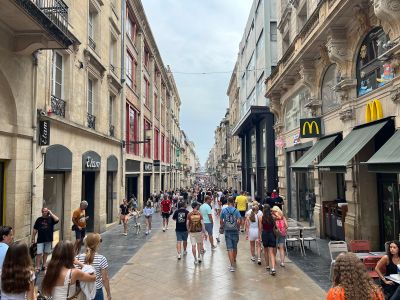
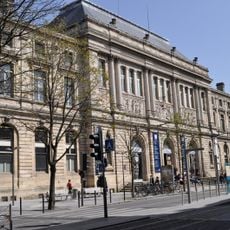
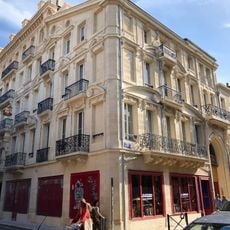
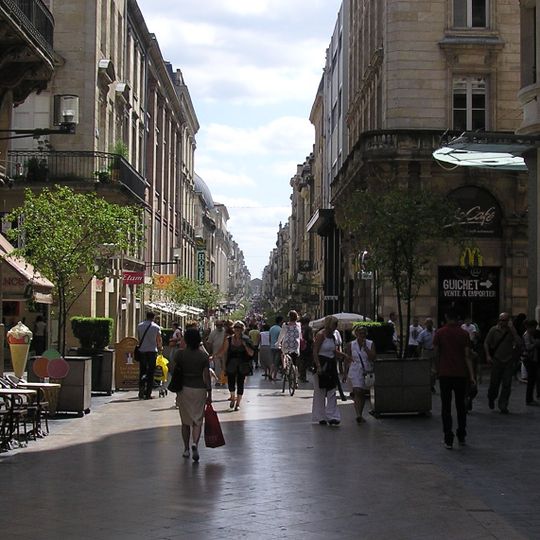
Rue Sainte-Catherine runs straight for 1,250 metres from Place de la Comédie, where the Grand Théâtre stands, to Place de la Victoire, on the former Roman cardo of Burdigala. It is paved with light grey stone blocks, level and without kerbs, flanked by tall pale-stone buildings with rows of windows and wrought-iron balconies. Near street level a dark sign reads "GUICHET" and "VENTE A EMPORTER" beneath a round café sign.
The layout follows a Roman road pattern from ancient times that formed the north-south axis of the settlement. Between 1976 and 1984, the entire route was closed to motor traffic and converted into a pedestrian zone.
The name comes from the Chapelle Sainte-Catherine, one of Bordeaux's oldest chapels, inaugurated in 1048 by the Knights of the Order of Malta at what is now 60-62 rue Sainte-Catherine. Its last remains vanished in 1835 when the Bazar bordelais was built. Two annual street fairs, the winter braderie in February and the summer braderie in July, fill the street with itinerant traders' stalls.
The pedestrian zone is usually busy during the day, especially on Saturdays and during holiday periods. Those who prefer a quieter walk should visit on weekday mornings or explore the side streets.
At the intersection with Cours Alsace-Lorraine, a relief marks the spot where two underground rivers, the Peugue and the Devèze, flow beneath the pavement. Both were covered in the 19th century and disappeared from the cityscape, but they still influence the moisture levels of the surrounding ground.
The community of curious travelers
AroundUs brings together thousands of curated places, local tips, and hidden gems, enriched daily by 93,402 contributors worldwide.