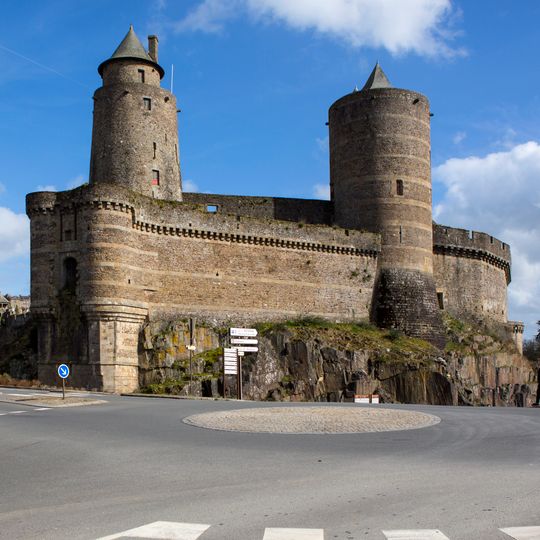
Castle of Fougères, Medieval fortress in Fougères, France
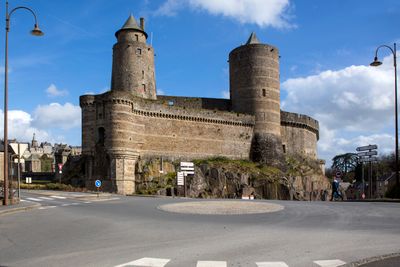
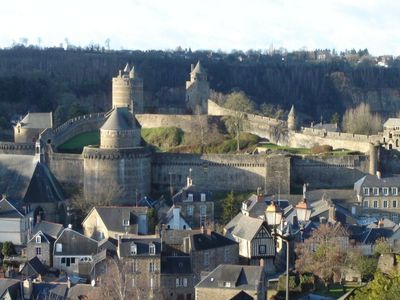
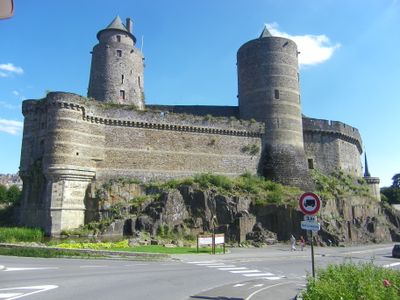
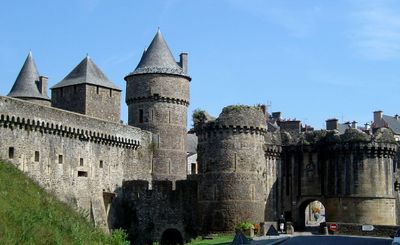
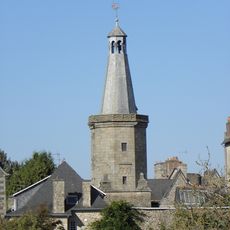
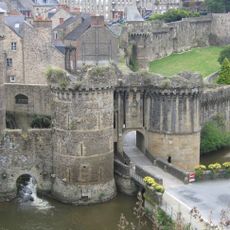
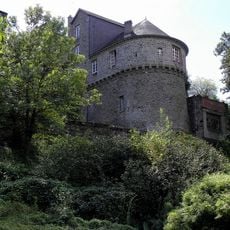
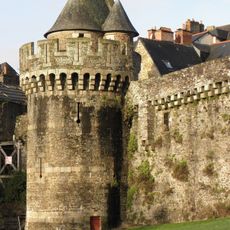
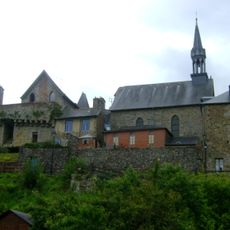
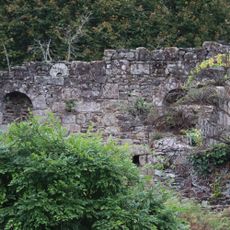
The Castle of Fougères occupies two hectares on the Couarde rock, a schist outcrop rising from a marsh encircled by a loop of the Nançon. Its granite and schist walls form three enclosures: the Avancée by the town, the crescent-shaped lower court, and the high court or Réduit with its keep. The 13 towers include the 12th-century square Tour de la Haye-Saint-Hilaire, the 14th-century Tour Mélusine, and the 15th-century Tour Raoul.
The castle was originally built in wood during the 11th century but was destroyed by Henry II of England in 1166, leading to its reconstruction in stone. This transformation into a stone fortress significantly strengthened its defensive capabilities and made it one of the region's most formidable military structures.
The castle's name comes from the Fougères family, who held it from the 11th century. In 1449, the mercenary François de Surienne seized it by night with 600 men, and the town was pillaged. The towers carry names such as Mélusine, Raoul and Hallay, and Victor Hugo used the Mélusine tower as the model for the "Tourgue" in his novel Quatrevingt-treize.
The site is straightforward to navigate, with clearly marked pathways that allow visitors to explore the fortification from different angles and levels. Comfortable footwear is recommended because the granite hill has steep sections and paths can become uneven in places.
Raoul II rebuilt the castle after 1166 and kept his donkeys there; their successors can often be seen grazing in the castle courtyard today. The fortress has thirteen towers in all, and the 14th-century Tour Mélusine, with its oubliette visible through a floor grille, inspired the "Tourgue" in Victor Hugo's Quatrevingt-treize (1879).
The community of curious travelers
AroundUs brings together thousands of curated places, local tips, and hidden gems, enriched daily by 93,767 contributors worldwide.