Dreux Royal Chapel, Neogothic chapel in Dreux, France.
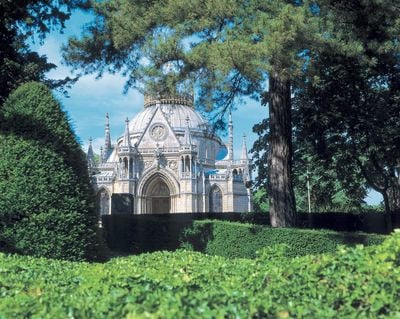
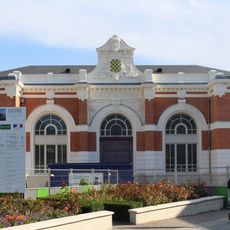
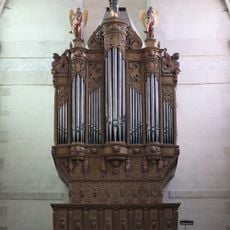
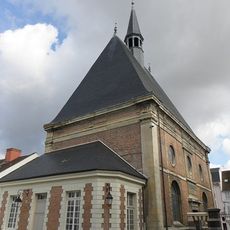
The Royal Chapel of Dreux is a Gothic Revival chapel with a light beige stone facade, a ribbed dome crowned by a slender spire and cross, and a pointed-arch portal with a rose window above. Inside, a high vaulted ceiling shelters an 1845 Cavaillé-Coll organ set in a 1614 case, and a pale stone effigy lies on a dark wooden table before rows of red-cushioned chairs.
In 1793 revolutionaries desecrated the crypt of the Collégiale Saint-Étienne and threw ten bodies into a mass grave in the Chanoines cemetery. The Duchess of Orléans bought back the land on 14 February 1816 and had Claude-Philippe Cramail build a chapel on that grave, its first stone laid on 19 September 1816. From 1839 her son Louis-Philippe I enlarged it in Gothic Revival style with architect Pierre-Bernard Lefranc, making it the Orléans dynasty's necropolis, nicknamed the "Saint-Denis des Orléans".
The chapel is the necropolis of the House of Orléans, nicknamed the "Saint-Denis of the Orléans". Its stained glass, made at Sèvres from 1843 to 1845, shows saints on a "bleu de Sèvres" ground after cartoons by Ingres, who reused four windows from the Neuilly chapel. Funerals of the family still take place here, such as that of Henri d'Orléans, Count of Paris, on 2 February 2019.
The chapel stands inside the grounds of the Château de Dreux, in Eure-et-Loir, and is reached from the town on foot. It belongs to the Saint-Louis Foundation, created in 1974, which keeps it open to visitors; the building has been classified as a monument historique since 12 December 1977. The interior is entered through the dark oak double door beneath the organ tribune, and the grave with the pale stone effigy lies in the centre of the nave, with rows of red-cushioned chairs facing it.
From 1828 Alexandre Brogniart, director of the Sèvres porcelain manufactory, produced fired-enamel paintings on large panes of plate glass for Louis-Philippe I, an early French commission in Gothic Revival taste. The chapel's stained glass was made at Sèvres between 1843 and 1845 using glass tinted in the mass, with cartoons by Ingres for the twelve transept windows.
The community of curious travelers
AroundUs brings together thousands of curated places, local tips, and hidden gems, enriched daily by 94,225 contributors worldwide.