Musée archéologique de Strasbourg, Archaeological museum in Palais Rohan, Strasbourg, France.
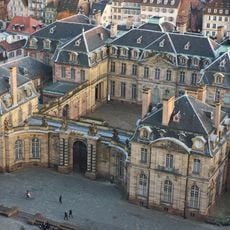
The Archaeological Museum of Strasbourg is housed in the Palais Rohan and displays finds ranging from prehistoric times to the Middle Ages. The collections include stone tools, pottery, coins, and other regional objects from different periods.
The museum traces its origin to the bequest of the historian Johann Daniel Schöpflin, who left his antiquities to the city of Strasbourg. From 1855 the Society for the Conservation of Historical Monuments of Alsace expanded and displayed the collections, most of which were destroyed in the bombardment of August 1870. The museum has occupied the vaulted basement of the Palais Rohan since 1896, and was fully renovated between 1988 and 1992.
The museum displays objects that document daily life for people across the Alsace region over thousands of years. Visitors see tools, jewelry, and pottery that reveal how communities in the area developed and changed.
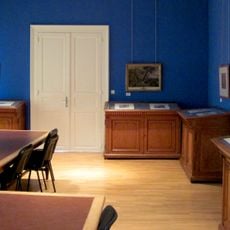
The museum occupies the vaulted basement rooms of the Palais Rohan, reached from the palace courtyard; the galleries open onto both the courtyard and a terrace over the Ill. The 1,200 m² chronological route runs through four sections, from Prehistory to the Merovingian period, with trilingual information panels along the way.
The museum's best-known piece is the funerary stele of Caius Largennius, a legionary of the 22nd Legion whose portrait and inscription were found in Strasbourg. Finds from the Gallo-Roman sanctuaries of Mont Donon and Mackwiller and Merovingian objects from around Erstein are also on show. Excavations for the new tramway continue to enlarge the collection.
The community of curious travelers
AroundUs brings together thousands of curated places, local tips, and hidden gems, enriched daily by 93,470 contributors worldwide.