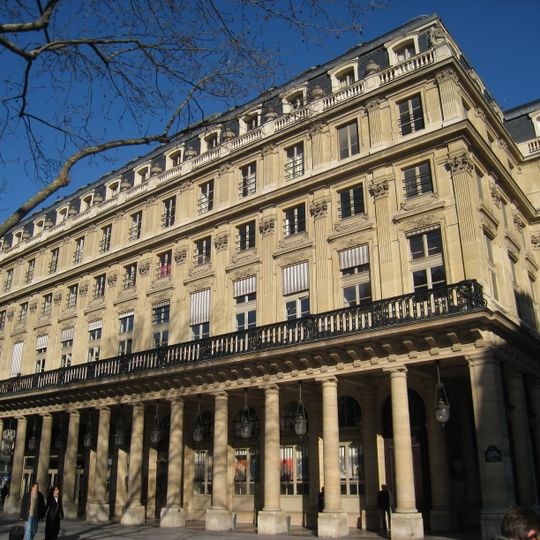
Salle Richelieu, Theatre venue at Palais-Royal, Paris, France
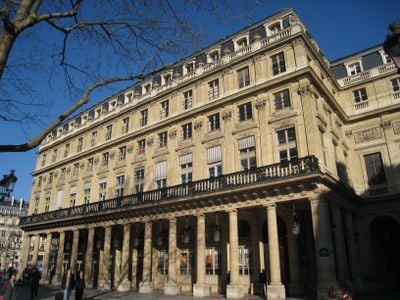
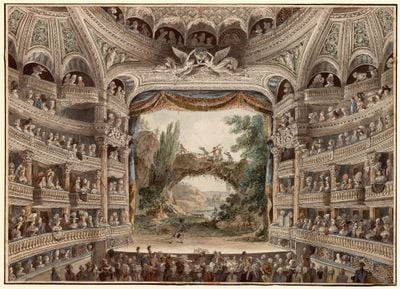
The Salle Richelieu is a theatre hall within the Palais-Royal and serves as the principal stage of the Comédie-Française with a horseshoe-shaped seating arrangement. It holds about 862 seats and is supported by an iron framework that carries the vaulted auditorium.
Architect Victor Louis designed the hall between 1786 and 1790 as part of the Palais-Royal complex. A devastating fire in 1900 destroyed the building, after which architect Julien Guadet oversaw its reconstruction with considerable effort.
The theatre has been the Comédie-Française's home since an 1799 act merged the Variétés-Amusantes with players from the Théâtre de la Nation; the company performed there from 30 May 1799 as the Théâtre-Français de la République. The troupe is also called the Maison de Molière, and his armchair is kept in the foyer.
The theatre is entered from the Palais-Royal side, where the narrow site forced Victor Louis to place the entrance foyer beneath the auditorium itself. Two covered passages run along the building: the galerie du Théâtre-Français and the galerie de Chartres. The auditorium seats 862 spectators, so seats are limited for each performance.
The Fauteuil de Molière, displayed in the public foyer, is the armchair in which Molière collapsed while playing Argan in Le Malade imaginaire. The painter Pierre Roussel also left numerous portraits of actors in the corridors and boxes.
The community of curious travelers
AroundUs brings together thousands of curated places, local tips, and hidden gems, enriched daily by 94,149 contributors worldwide.