Lion of Belfort, Monumental sculpture at Citadel, Belfort, France
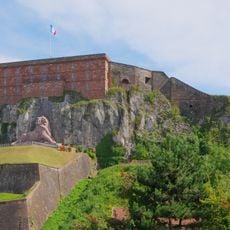
The Lion of Belfort is a colossal high-relief carved from individually sculpted blocks of pink Vosges sandstone, assembled against the grey limestone cliff below the citadel. It measures 19.06 m long and 10.56 m high, making it the largest stone statue in France. The reclining lion faces west, its head turned from Prussia, one forepaw resting on an arrow pointing back toward the German border.
Sculptor Frédéric Auguste Bartholdi completed this work in 1880 as a memorial to Belfort's defense during the Franco-Prussian War of 1870-1871. The city had resisted a long siege, becoming a symbol of French resistance during that conflict.
Belfort took the lion as its emblem, earning the nickname "Cité du Lion"; reproductions spread on postcards, plates and watches, and Bartholdi won lawsuits against unchecked copying from 1898. The inscription "Aux défenseurs de Belfort 1870-1871" was engraved by the Belfort section of the Club Alpin Français with funds raised through a paid access right set up in 1890. A legend claims Bartholdi killed himself over a missing tongue, but the lion has one, confirmed during the 2019 cleaning, and the sculptor died of tuberculosis.
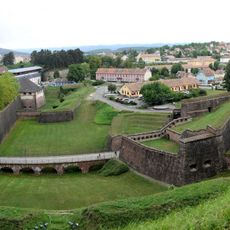
The Lion lies on a terrace below the Belfort citadel, reached on foot from the town; the climb is steep and the ground uneven. The sculpture faces west, its rear to the east, so afternoon light falls on the mane and the inscribed band along the base. The terrace is open at all hours.
The dedication inscription at the base was added in 1890 after funds collected from visitor donations were used to commission the engraving. This shows how the community valued the monument enough to contribute collectively to completing it.
The community of curious travelers
AroundUs brings together thousands of curated places, local tips, and hidden gems, enriched daily by 93,359 contributors worldwide.