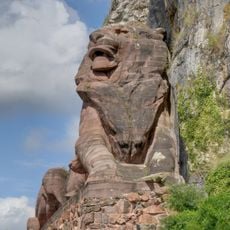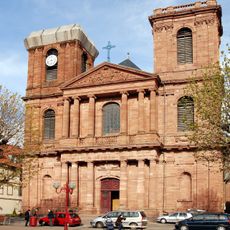
Belfort citadel, Military citadel in Belfort, France
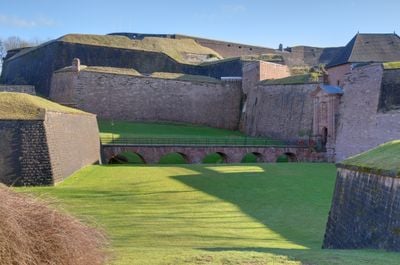
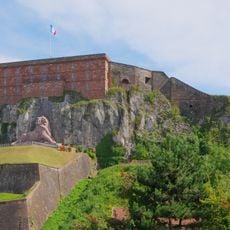
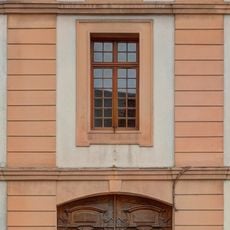
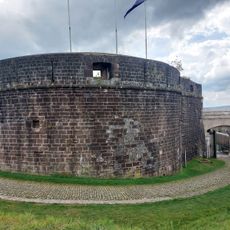
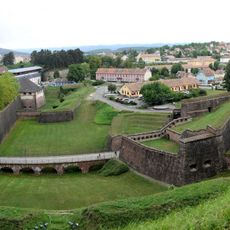
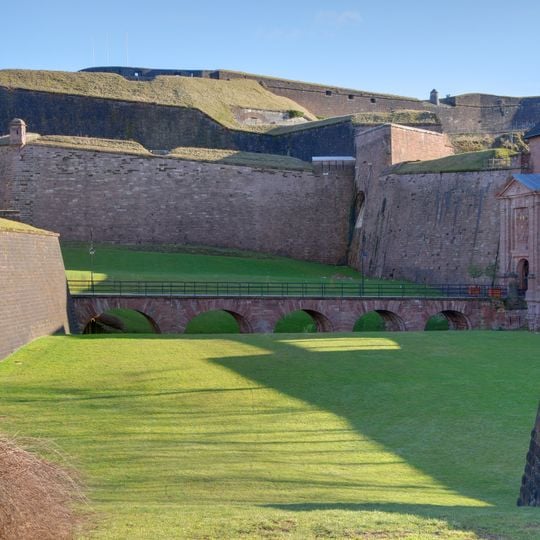
Belfort citadel is a fortress on a limestone promontory above the town, with a lower wall pierced by seven rounded arches and grassy ramparts stepping up to the highest stone line. On the right, an angled wall meets a building with a triangular pediment and a tall arched doorway. The medieval Tour des Bourgeois and a large underground passage remain from the castle.
A castle of the County of Belfort is first attested in 1226, and its site held the medieval Château de Belfort-sur-la-Roche. From 1636 Gaspard de Champagne, Count of La Suze, began converting it into a citadel; Vauban and Jacques Tarade carried out the main works between 1687 and 1703. General Haxo replaced Vauban's barracks in the 1820s, and Séré de Rivières made further changes after the 1871 Treaty of Frankfurt.
The citadel was voted France's favourite monument on 18 September 2020 in the France 3 programme Le Monument préféré des Français, during the European Heritage Days. Its fourth ditch was the setting for the photograph known as Le Fusillé souriant, showing resistance fighter Georges C. F. Blind (1904–1944) facing a Wehrmacht firing squad; later research showed it was a mock execution meant to make him talk.
Visitors can walk through the fortification and explore the defense systems and military structures throughout the complex. Comfortable footwear is recommended, as there are several levels and stairs to navigate within the site.
The fourth moat served as the backdrop for a famous photograph known as Le Fusillé souriant ("the smiling executed man"). It shows resistance fighter Georges C. F. Blind (1904–1944) smiling at a Wehrmacht firing squad in October 1944. Later research showed it was a mock execution staged to make him talk; Blind died two months later in the Blechhammer labour camp.
The community of curious travelers
AroundUs brings together thousands of curated places, local tips, and hidden gems, enriched daily by 93,766 contributors worldwide.