Église Notre-Dame-de-la-Salette de Paris, Modern Catholic church in 15th arrondissement, Paris, France
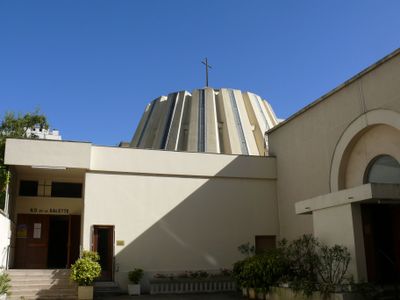
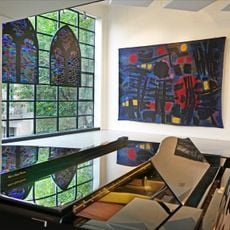
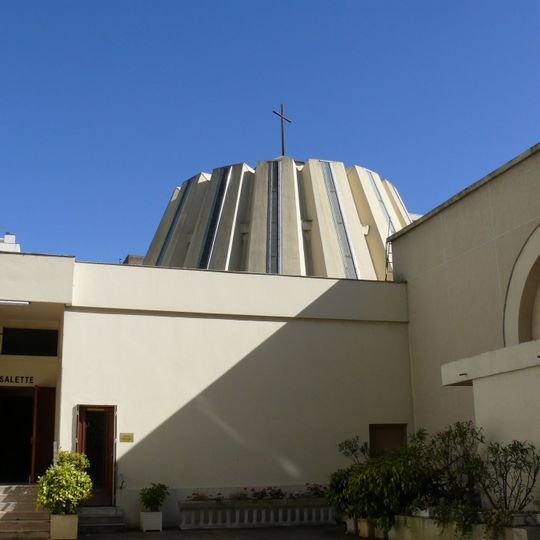
The Église Notre-Dame-de-la-Salette is a round, rough-concrete church whose exterior rises as an openwork cone shaped like a Gugelhupf, with a slender metal cross at its top. Inside, sixteen pillars carry the vaults of a circular plan, and sixteen obliquely set stained-glass windows with geometric patterns by Paul Martineau and Joseph Archepel filter the light. The walls carry no ornament.
The Brethren of Saint Vincent de Paul, founded in 1845 by Jean-Léon Le Prévost, Clément Myionnet and Maurice Maignen, ran an orphanage here from 1853. After three orphans were healed, they built a chapel in 1858 dedicated to the Sacred Hearts of Jesus and Mary; it was enlarged in 1886 and demolished in 1969. The present church, designed by Henri Colboc and Jean Dionis du Séjour, was built from 1963 to 1965 and consecrated by Bishop Pierre Brot on 19 September 1965.
The walnut door at the entrance, carved by Jean-Marie Baumel, depicts Christ and the Virgin of La Salette with two child witnesses. This artwork shapes the entrance experience and tells a story of a Marian apparition through its figures.
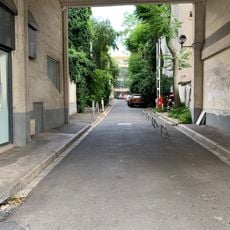
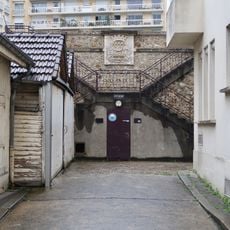
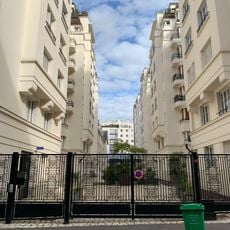
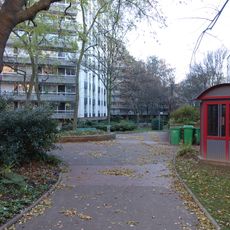
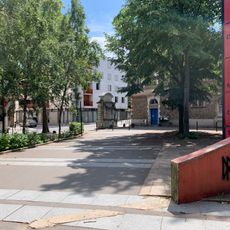
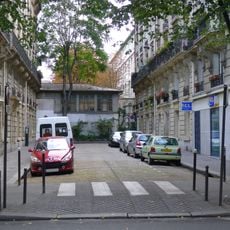
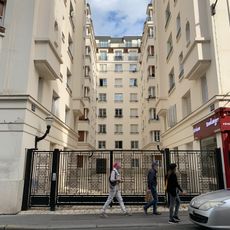
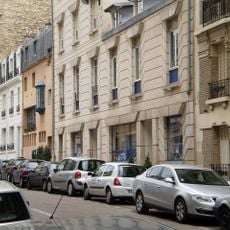
The church is set back from both streets and is not visible from either rue de Cronstadt or rue de Dantzig. The main entrance is at 38 rue de Cronstadt; a second entrance is at 27 rue de Dantzig. To reach the building from the Foyer Le Prévost side you pass beneath the ten-storey building's vault.
The church rests on twenty-six masonry wells sunk through old quarries; twelve reach 18 to 20 metres down to solid rock. The bells are hidden in the crowning of the concrete cone, so no bell tower is visible from the two streets flanking the building.
The community of curious travelers
AroundUs brings together thousands of curated places, local tips, and hidden gems, enriched daily by 95,340 contributors worldwide.