La Ruche, Art Nouveau artists' residence in 15th arrondissement, France
La Ruche is an artists' workshop and residence complex built as a beehive, consisting of an octagonal central building with sixty studios spread across three floors arranged around a garden. The structure uses original materials and preserves the initial design spread across several thousand square meters.
Alfred Boucher founded the complex in 1902 using leftover materials from the 1900 World's Fair to create affordable workspace for emerging artists. This initiative shaped Paris's artistic development in the 20th century and helped numerous artists launch their careers.
Alfred Boucher named the complex after bees, comparing the artists to a hive's workers. In 1905 it held 90 artists and 110 studios, and a 300-seat theatre in the garden saw Louis Jouvet's debut. Today about sixty studios remain, but the interior is closed to the public; only the ground-floor exhibition hall in Passage Dantzig, opened in 2017, is accessible.
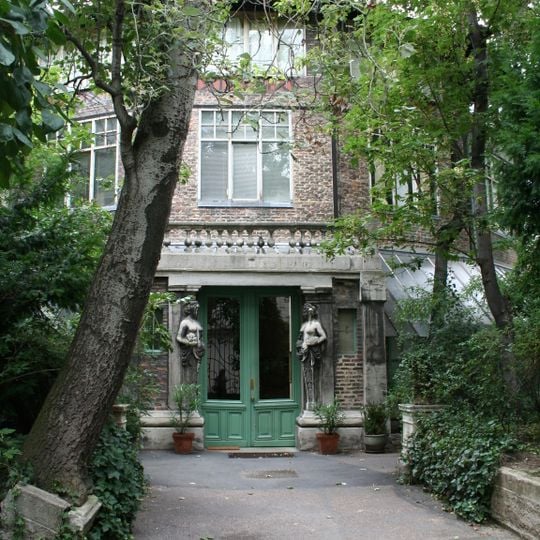
The interior is closed to the general public: only residents and invited guests enter, though guided tours are possible with a licensed guide and during the Journées du patrimoine. Since 2017 a ground-floor exhibition hall on the Passage Dantzig opens all year and holds two openings a month; access to it does not extend to the rest of the site. The brick exterior, with its green doors and stone figures, can be seen from the passage.
The structure was built from leftover building materials from the 1900 Paris World's Fair and retained this recycled character, making it an early example of sustainable architecture. This practical reuse of resources gave the project its innovative character and helped keep it economically accessible.
The community of curious travelers
AroundUs brings together thousands of curated places, local tips, and hidden gems, enriched daily by 93,428 contributors worldwide.