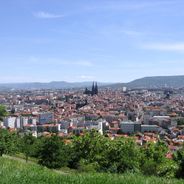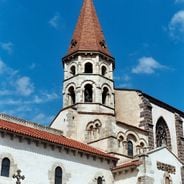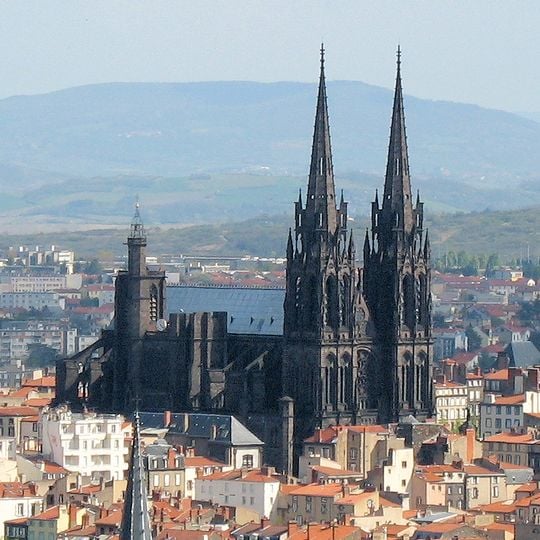
Clermont-Ferrand Cathedral, Gothic cathedral in Clermont-Ferrand, France
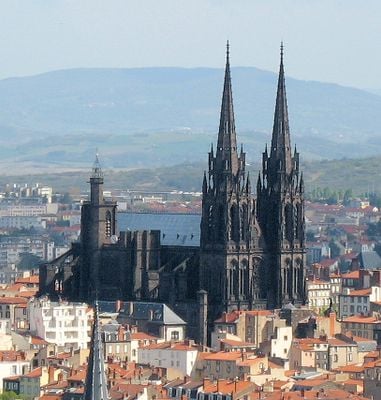
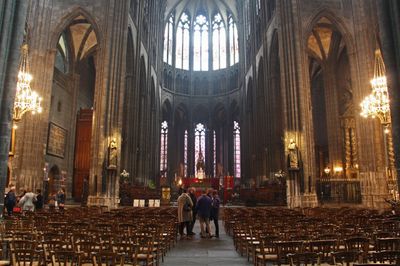
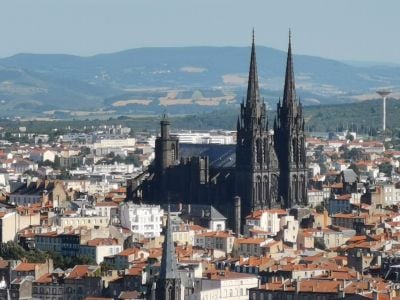
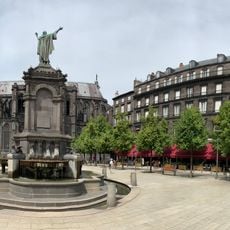
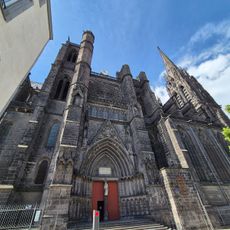
Clermont-Ferrand Cathedral is a Gothic structure that rises on a hill in the old city center, built entirely from dark volcanic stone quarried locally. The building displays characteristic pointed arches and ribbed vaults that shape the interior spaces and give the structure its distinctive form.
Construction of the present cathedral began in 1248 under Bishop Hugues de la Tour, replacing three earlier religious structures that dated back to the 5th century. The extended building phases and subsequent restorations have shaped the monument over nearly 800 years.
The cathedral is dedicated to Our Lady of the Assumption; its original patron saints were Vitalis and Agricola, whose relics Namatius brought from Bologna. The Goncourt brothers nicknamed it the "Cathedral of the Charcoal Burners" because of its black Volvic stone. In the choir, Louis IX married his son Philip to Isabella of Aragon, and the king may have paid for stained glass from the same workshop as Sainte-Chapelle's.
Visitors should wear respectful clothing when entering, as it is an active place of worship, and comfortable shoes are recommended due to uneven stone floors. Plan time to explore both levels, especially if you want to see the crypt and upper galleries.
Architect Jean Deschamps used volcanic rock from Volvic to create exceptionally thin pillars that allow natural light to flood the interior. This clever structural solution was groundbreaking for its era and stands apart from the heavier Gothic designs found in other regions.
The community of curious travelers
AroundUs brings together thousands of curated places, local tips, and hidden gems, enriched daily by 93,481 contributors worldwide.