See the monuments around you in AROpen chests in the app
Around Us is built for your phone — point your camera at the streets and discover the monuments and places around you in augmented reality.Around Us is built for your phone — chests unlock when you walk, explore and capture nearby places.
Clermont-Ferrand sits at the edge of a volcanic landscape in the Massif Central, offering a mix of geological formations, medieval architecture and urban spaces for photographers. The Cathedral of Notre-Dame-de-l'Assomption, built from black volcanic stone, rises above the historic center, while Puy de Dôme, a 4,800-foot (1,465-meter) dormant volcano, shapes the surrounding terrain. The city combines industrial history with architectural heritage, from the Romanesque design of the Basilica of Notre-Dame-du-Port to modern facilities like the Michelin Museum.
The city center preserves its medieval street pattern in neighborhoods like Rue des Gras and Rue du Port, where dark stone buildings line narrow lanes. Place de Jaude forms the main square, featuring the equestrian statue of Vercingetorix and the Renaissance-era Fountain of Amboise. Parks such as Jardin Lecoq and Parc Montjuzet provide green spaces within the city, while cultural institutions like the Musée d'art Roger-Quilliot and Centre de Photographie Fontfreyde display contemporary and historical collections. The surrounding area includes several volcanic cones, among them Puy de la Vache, as well as the Chemin du Volcan hiking trail and the remains of the Gallo-Roman Temple of Mercury atop Puy de Dôme.
Clermont-Ferrand sits at the edge of a volcanic landscape in the Massif Central, offering a mix of geological formations, medieval architecture and urban spaces for photographers. The Cathedral of Notre-Dame-de-l'Assomption, built from black volcanic stone, rises above the historic center, while Puy de Dôme, a 4,800-foot (1,465-meter) dormant volcano, shapes the surrounding terrain. The city combines industrial history with architectural heritage, from the Romanesque design of the Basilica of Notre-Dame-du-Port to modern facilities like the Michelin Museum.
The city center preserves its medieval street pattern in neighborhoods like Rue des Gras and Rue du Port, where dark stone buildings line narrow lanes. Place de Jaude forms the main square, featuring the equestrian statue of Vercingetorix and the Renaissance-era Fountain of Amboise. Parks such as Jardin Lecoq and Parc Montjuzet provide green spaces within the city, while cultural institutions like the Musée d'art Roger-Quilliot and Centre de Photographie Fontfreyde display contemporary and historical collections. The surrounding area includes several volcanic cones, among them Puy de la Vache, as well as the Chemin du Volcan hiking trail and the remains of the Gallo-Roman Temple of Mercury atop Puy de Dôme.
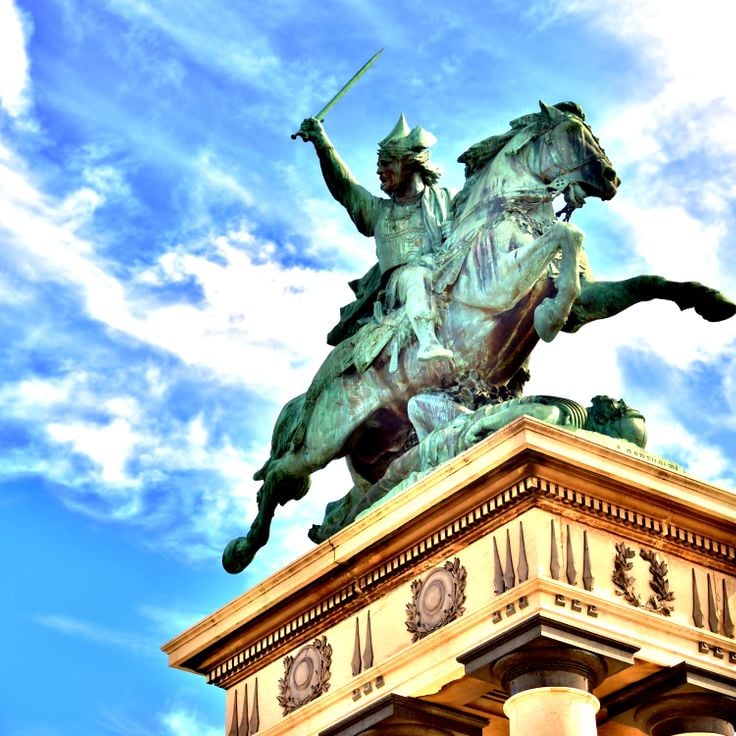
The bronze statue of Vercingetorix was created in 1903 by Frédéric Auguste Bartholdi, the sculptor who designed the Statue of Liberty in New York. The monument depicts the Gallic leader on horseback with his sword raised and stands in Place de Jaude at the center of Clermont-Ferrand. The statue measures 13 feet (4 meters) in height and rests on a granite pedestal rising 26 feet (8 meters). Bartholdi chose this heroic pose to symbolize the Arverni chief's resistance against Julius Caesar. The green patina of the metal contrasts with the black volcanic stone facades of surrounding buildings, making the monument a focal point for urban photography.
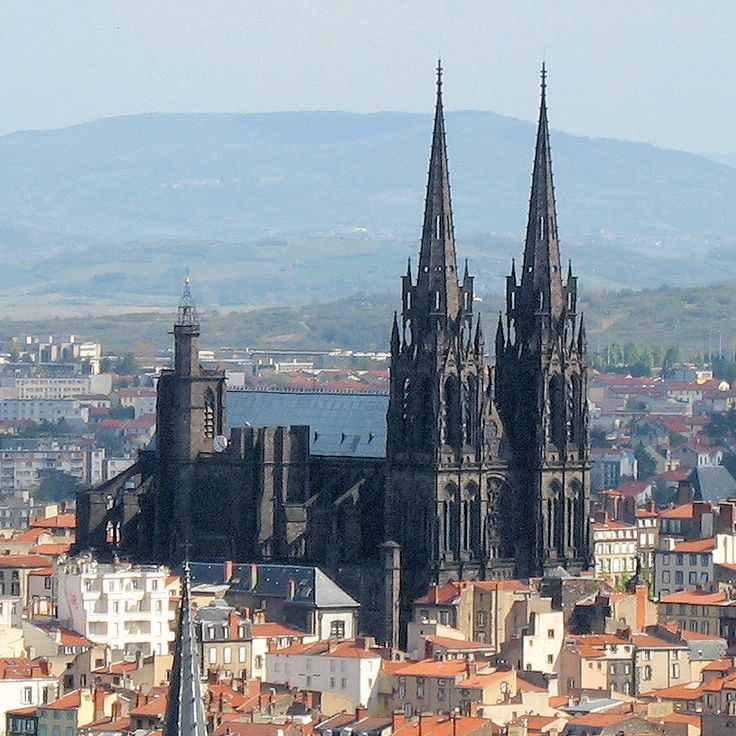
The Cathédrale Notre-Dame-de-l'Assomption was built in the 13th century from black volcanic stone quarried locally and stands as one of the most distinctive Gothic structures in France. Its twin spires rise 108 meters (354 feet) above Clermont-Ferrand and define the city skyline. The dark stone creates a strong visual contrast with the surrounding pale volcanic landscape of the Auvergne region. Inside, stained glass windows from various periods document centuries of craftsmanship and artistic evolution. The western facade, with its detailed portal and flying buttresses, provides varied opportunities for architectural photography in changing light conditions throughout the day.
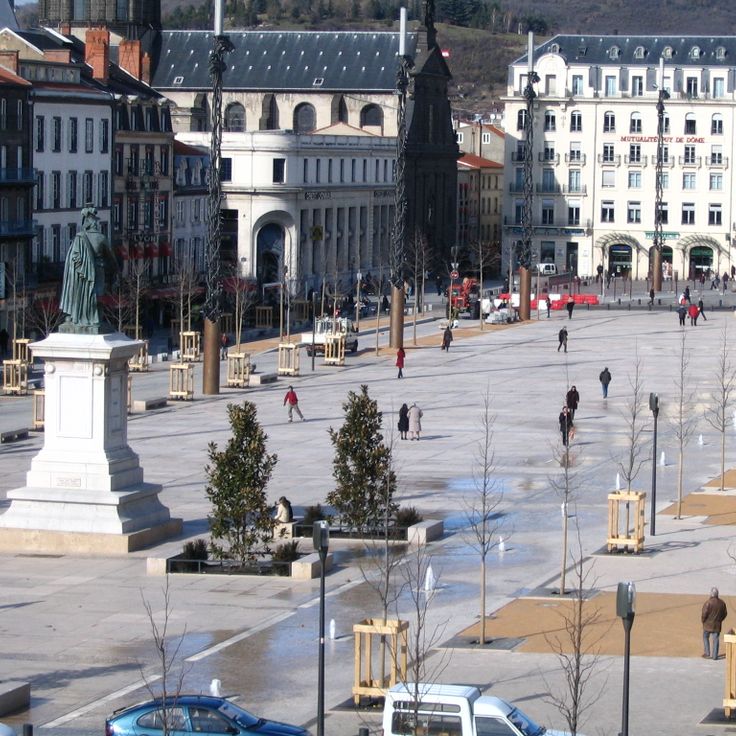
Place de Jaude serves as the commercial and social center of Clermont-Ferrand. The expansive square combines modern architecture with historical elements and is lined with shops, restaurants and cafés. A bronze statue of General Desaix from the French Revolutionary period stands at the center of the square, commemorating the military leader born in Clermont-Ferrand. Trams cross the plaza, connecting it to other parts of the city. The pedestrian area extends from the square in several directions, leading to shopping streets and historic districts. Photographers find subjects ranging from urban architecture to daily life, with views extending toward the volcanic mountains of Auvergne in the distance.
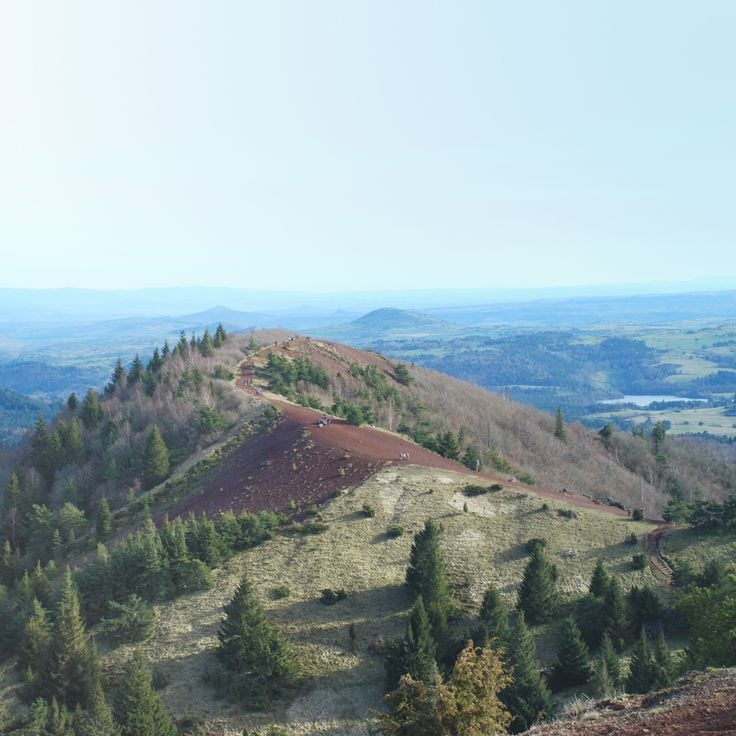
Puy de la Vache rises to 3830 feet (1167 meters) and displays the volcanic history of Auvergne through its slopes of red and black scoria. This cone belongs to a chain of extinct volcanoes within the regional natural park and provides trails to the summit crater. From the top, the volcanic landscape extends with neighboring Puy de Lassolas and the Chaîne des Puys. The ascent takes about 30 minutes and passes through vegetation growing on volcanic soil. The geological formation dates back approximately 8000 years.
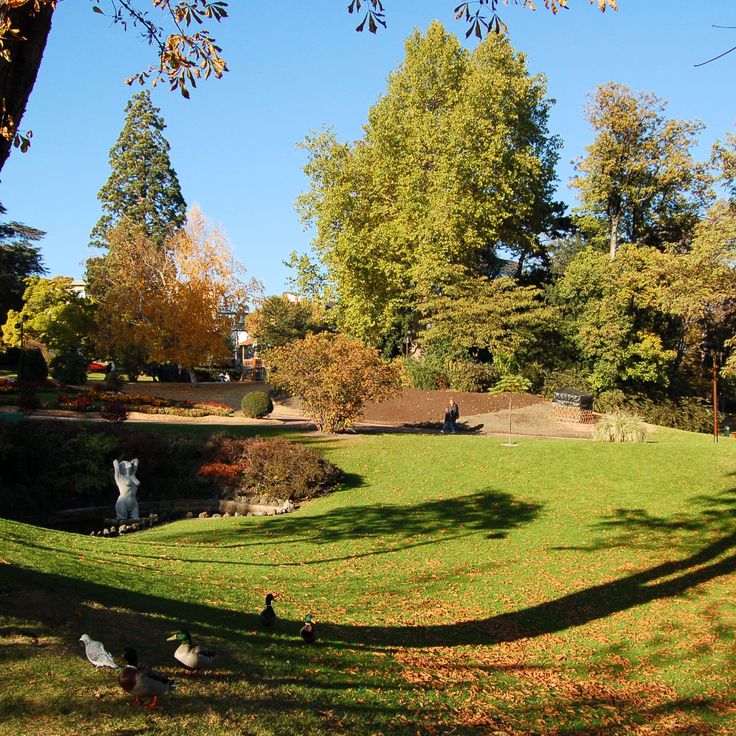
This central park spans 10 acres (4 hectares) near the city center and features a pond, greenhouses, rare trees and maintained flower beds. The Jardin Lecoq was established in the 19th century and combines landscape gardens with botanical collections. Pathways lead along the water to different themed areas, while the historic greenhouses shelter exotic plants. The park serves as a recreational space for residents and offers photographers changing seasonal subjects from flower beds to autumn foliage beneath mature tree canopies.
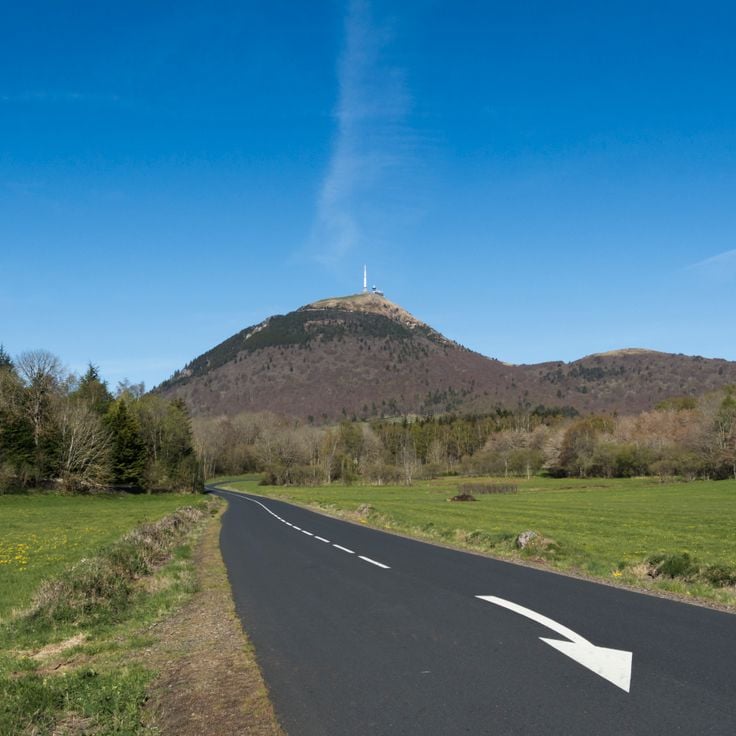
The Puy de Dôme rises to 4,800 feet (1,465 meters) and forms the highest peak of the Chaîne des Puys. A rack railway runs from the base to the summit, where the remains of a Gallo-Roman temple dedicated to Mercury dating from the second century stand. From the top, views extend over some sixty extinct volcanoes in the chain, as well as the city of Clermont-Ferrand and the surrounding Auvergne region. The volcanic dome formed about eleven thousand years ago through explosive eruptions. Hiking trails also lead to the summit for those who prefer to ascend on foot.
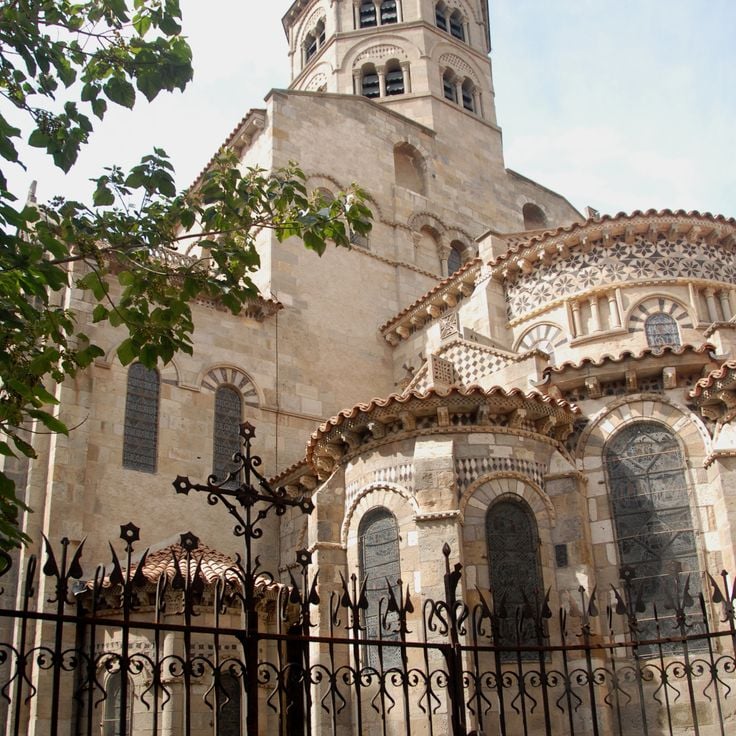
This 12th-century Romanesque basilica displays carved capitals, a crypt and walls built from black volcanic stone quarried locally. The church stands in the historic quarter of Clermont-Ferrand and has been part of the UNESCO World Heritage listing since 1998 as a stop on the pilgrimage routes to Santiago de Compostela. The interior preserves a three-nave layout with vaulted ceilings and a raised choir. The nave extends roughly 75 feet (23 meters) in length, and the central crossing tower rises to 167 feet (51 meters). The apse features a 19th-century mosaic depicting the Virgin Mary.
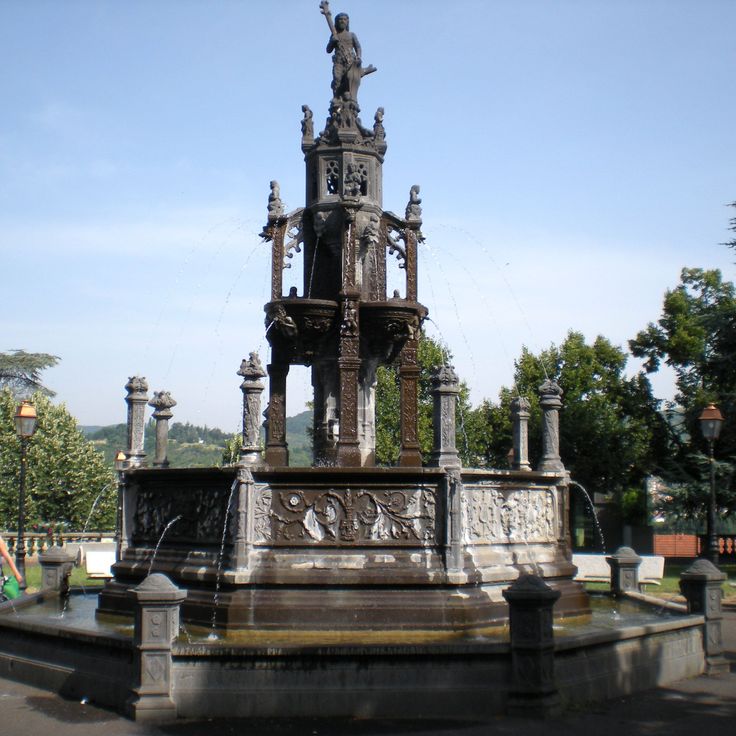
This stone fountain stands on Place de la Poterne and was built in 1515. The Fontaine d'Amboise features carved figures and water jets in the Renaissance style, representing one of the notable urban monuments from the early 16th century in Clermont-Ferrand. The structure documents the urban development of the period.
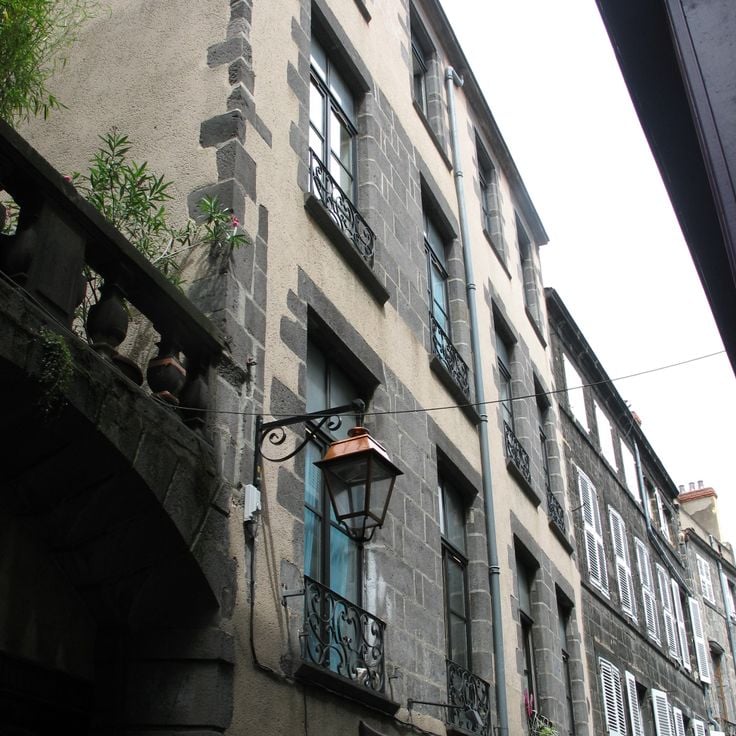
Rue du Port displays half-timbered houses from the 15th century with exposed wooden beams and stone foundations typical of medieval construction. This narrow street in Clermont-Ferrand's historic center documents the preservation of original residential architecture and offers subjects for urban photography through its restored facades and tight passages between buildings. The combination of dark timber and volcanic stone creates a contrast frequently found in Auvergne architecture.
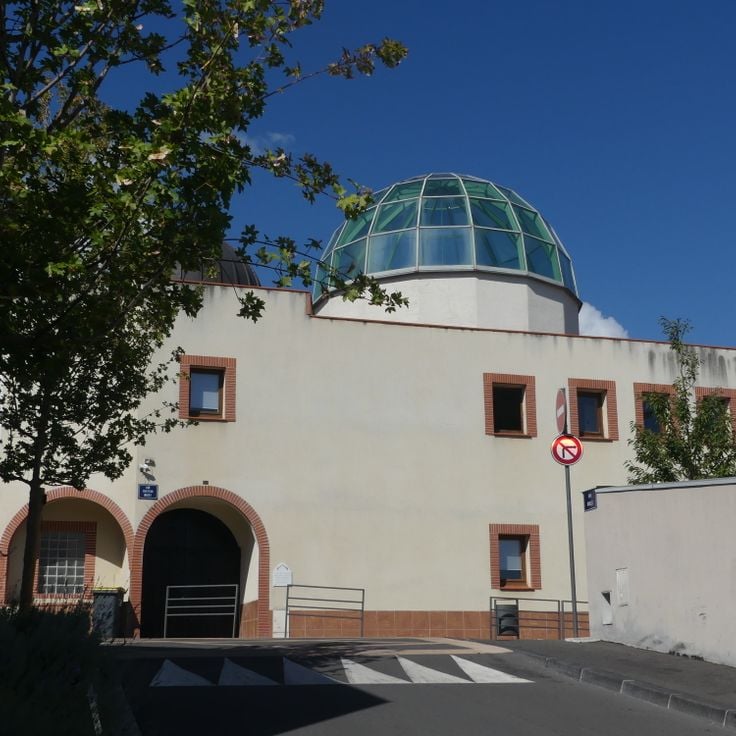
The Grande Mosquée de Clermont-Ferrand was completed in 2009 and combines contemporary design with traditional Islamic architectural elements. The prayer hall features geometric patterns on facades and interior walls, while a 82-foot (25-meter) minaret defines its silhouette. The mosque serves as both a place of worship and a community center for the city's Muslim population. Photographers document the blend of modern construction materials with classical Islamic design principles. The exterior spaces with their arcades and courtyards add to the urban landscape.
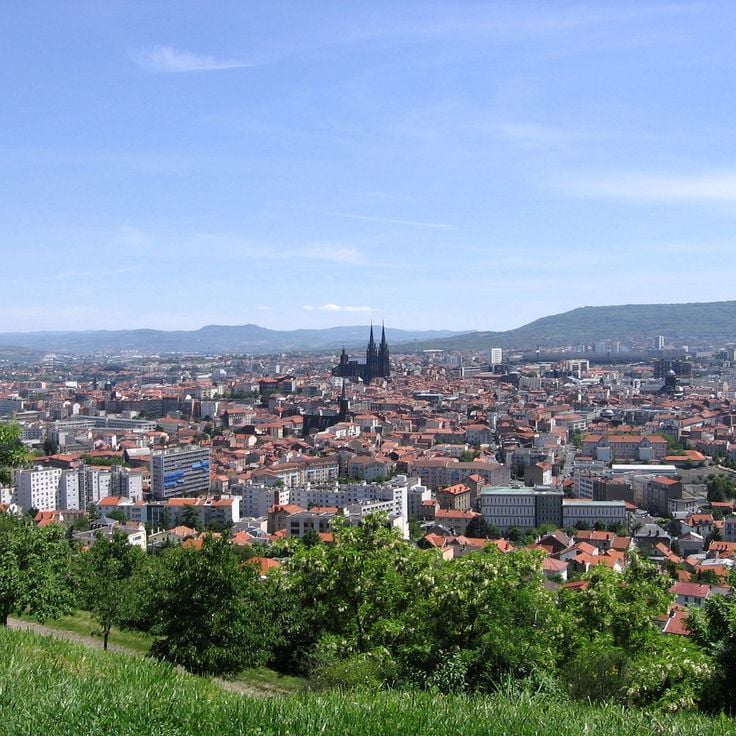
Parc Montjuzet covers 26 hectares at an elevation of 1,510 feet (460 meters) and features walking paths, sports facilities and garden areas overlooking Clermont-Ferrand and the surrounding mountains. The park was established in the early 20th century and combines maintained lawns with wooded sections. From its elevated points, visitors survey the city center with its black cathedral and the Chaîne des Puys to the west. Multiple pathways lead through different levels of the park, while playgrounds and sports areas serve families and active visitors. The vegetation includes native and exotic tree species that provide varied photographic subjects across seasons.
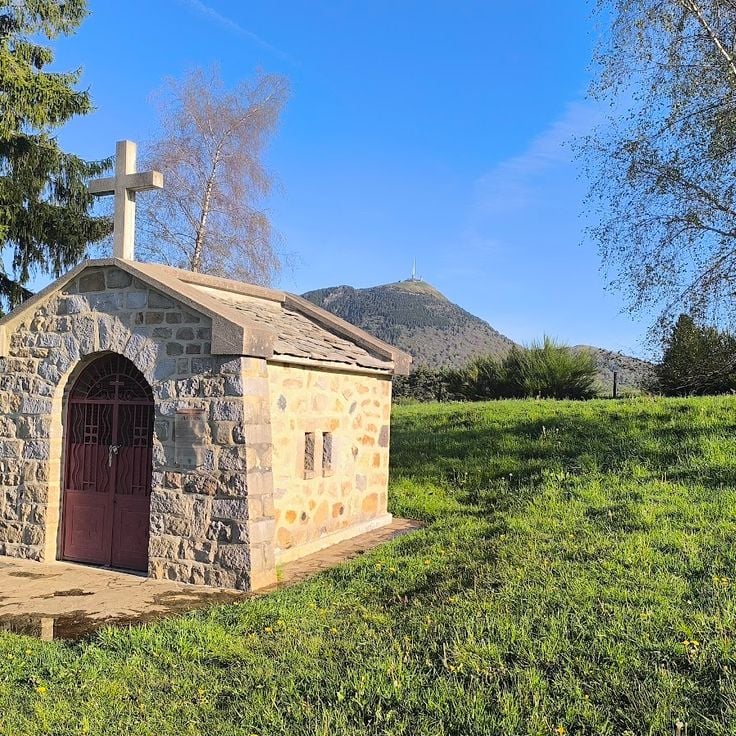
The Saint-Aubin Chapel dates from the 12th century and stands in a grassy landscape near Saint-Genès-Champanelle. This Romanesque chapel preserves original stonework and architectural elements from its construction period. The single-nave structure with its rectangular plan and simple bell gable sits among fields and clusters of trees. The chapel serves as evidence of medieval religious architecture in the rural surroundings of Clermont-Ferrand, offering subjects for architectural and landscape photography in a natural setting.
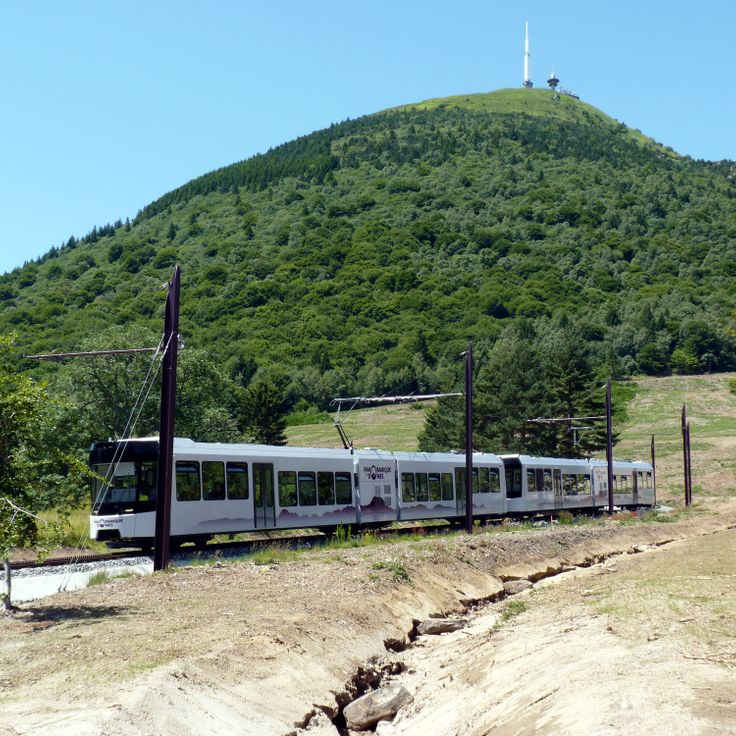
This electric train runs along a 3.5-mile (5.6-kilometer) track to the 4,806-foot (1,465-meter) summit of Puy de Dôme, offering views across the volcanoes of Auvergne. The journey provides access to the highest point of the Chaîne des Puys, where a Roman temple to Mercury once stood. The panoramic train replaced the former toll road in 2012 and transports visitors to the top in about 15 minutes. The cars feature large windows for photographers seeking to capture the dormant volcanic cones and surrounding landscapes. Upon arrival at the summit, visitors can explore the volcanic terrain and archaeological remains.
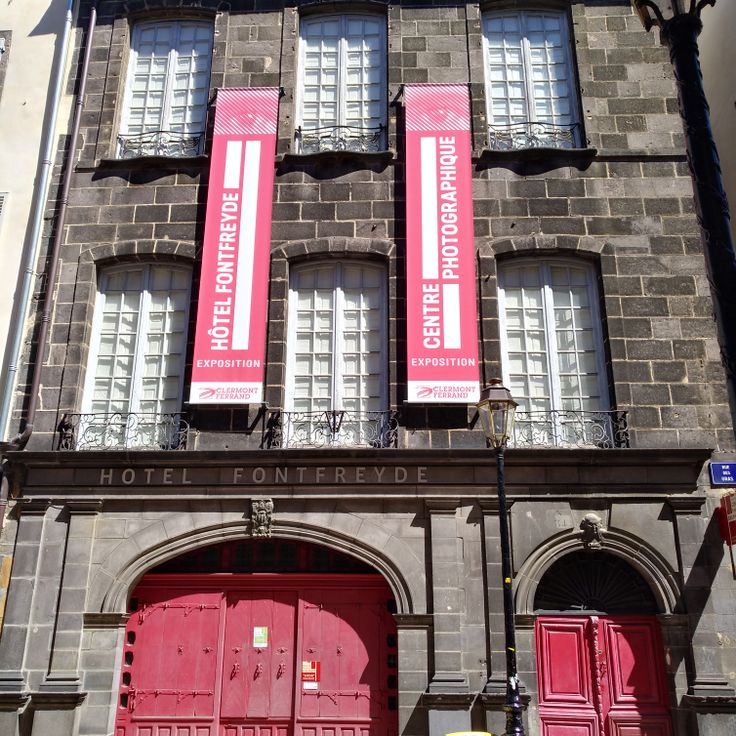
The Centre de Photographie Fontfreyde occupies a manor house dating from 1513 and focuses on contemporary and historical photography. The facility spans three floors and presents rotating exhibitions alongside a permanent collection documenting various photographic practices and movements. The building itself represents the Renaissance architecture of Clermont-Ferrand, with stone walls and vaulted spaces that provide an appropriate setting for the works on display. The center regularly organizes exhibitions by regional and international photographers, contributing to the city's photographic scene.
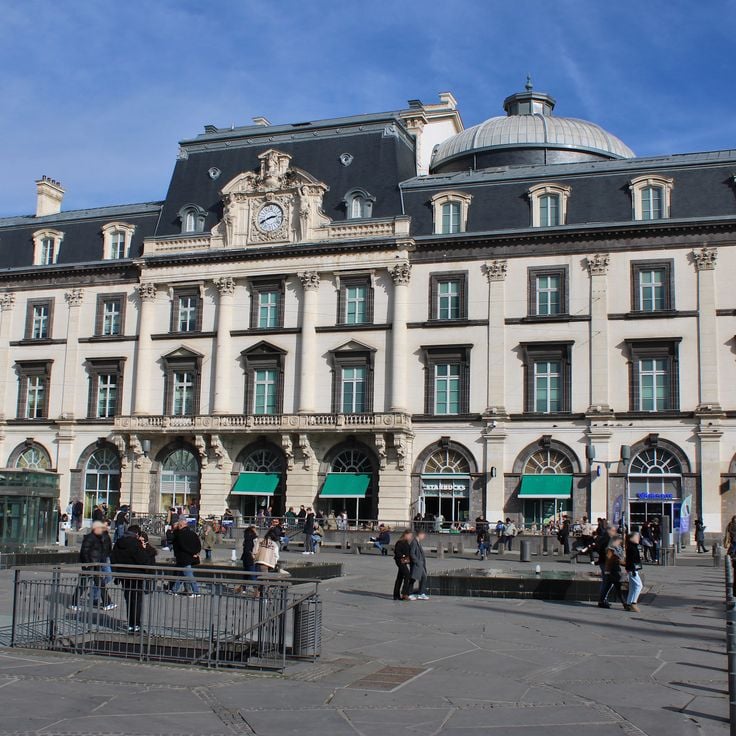
This theater building completed in 1894 was designed by architect Jean Teillard in Belle Époque style and offers 1,500 seats. The facade displays classical elements with columns and sculptures, while the interior features gilded balconies, red velvet seating and painted ceilings. The opera house hosts opera performances, classical concerts and theatrical productions throughout the year. Its central location at Place de Jaude makes it a key cultural landmark in the city. Photographers find subjects in the historic architecture, interior spaces during public tours and the evening illumination of the facade.
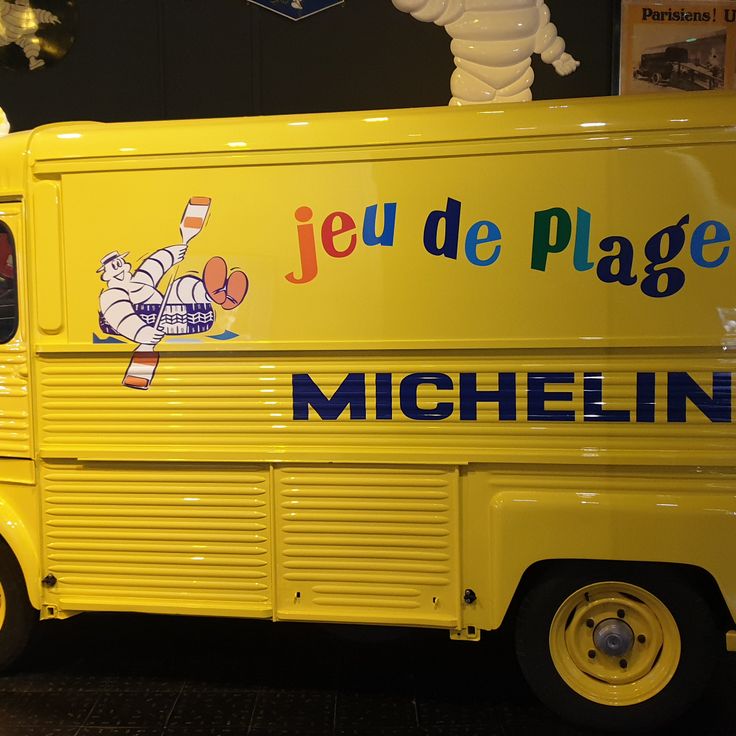
The Musée Michelin occupies 2,000 square meters (21,500 square feet) and presents the history of the tire manufacturer founded in 1889 through collections of vehicles, advertising materials and industrial equipment. The exhibition documents technical developments in tire production and the company's role in automotive history. Visitors encounter original racing cars, vintage posters featuring the Michelin Man and manufacturing machinery from different periods. Located in the Cataroux industrial district, the museum provides insights into the economic importance of Clermont-Ferrand as a center of French tire manufacturing.
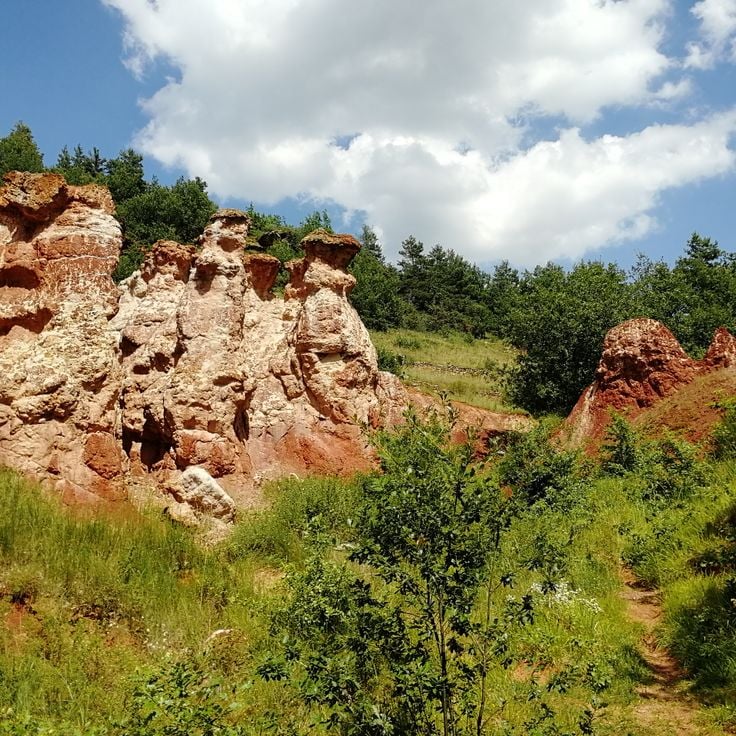
The Vallée des Saints displays red and orange rock formations shaped by thousands of years of erosion. These stone pillars rise among vineyards in a geologically significant landscape that forms part of the Auvergne Volcanoes Regional Nature Park. Several marked trails lead between the mineral structures, offering different perspectives on the rock needles. The loop trail covers roughly 1.2 miles (2 kilometers) and combines geological observation with views of the surrounding agricultural landscape. The rock towers reach heights of up to 50 feet (15 meters) and document both volcanic and sedimentary processes of the region.
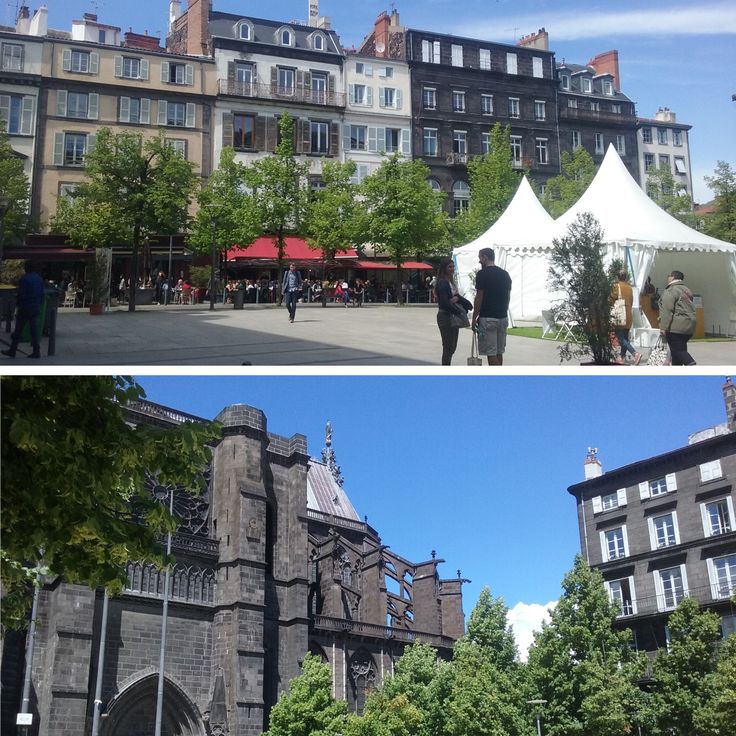
Place de la Victoire forms a central square in the historic core of Clermont-Ferrand, featuring stone benches and fountains. The surrounding medieval buildings house restaurant terraces and shops at street level. This square serves as a gathering point for locals and visitors, offering various perspectives on traditional Auvergne architecture. The stone structures and urban activity create diverse photographic subjects throughout the day.
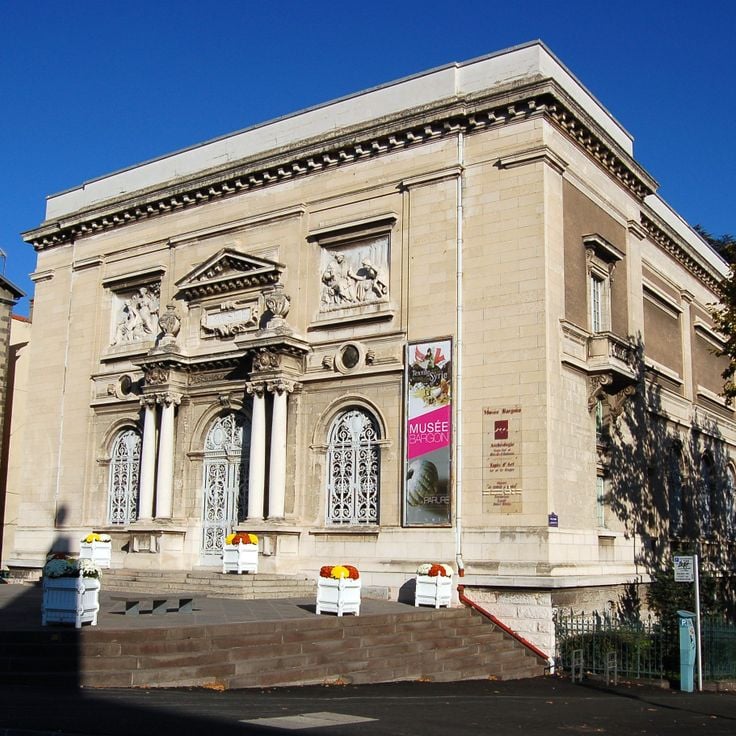
Musée Bargoin houses archaeological collections from the Auvergne region spanning prehistory through the Middle Ages. Two floors present finds from the Gallo-Roman period, including ceramics, coins and everyday objects recovered from local excavation sites. The upper level focuses on contemporary textile art and historical fabrics, with rotating exhibitions on weaving traditions and textile crafts. The collection connects the archaeological history of the volcanic landscape around Clermont-Ferrand with the region's textile industry heritage.
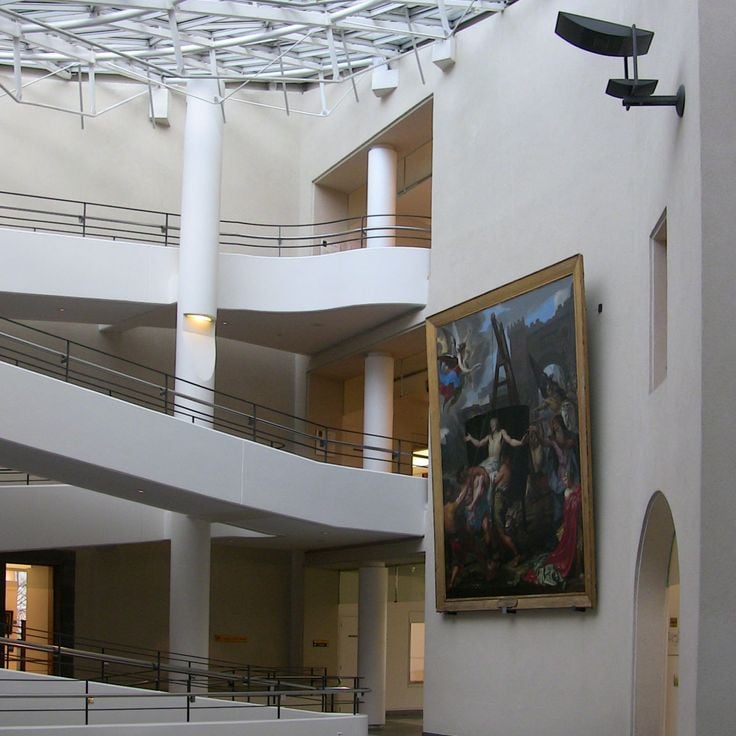
The Musée d'art Roger-Quilliot occupies a converted 17th-century convent complex and presents European art from the Middle Ages through the 20th century. The collection includes paintings, sculptures and liturgical objects from the Auvergne region, along with works by French and Italian masters. The historic rooms, with their vaulted ceilings and cloisters, provide a fitting setting for the displayed pieces. The museum sits at the edge of Clermont-Ferrand's old town and combines religious heritage with civic art history.
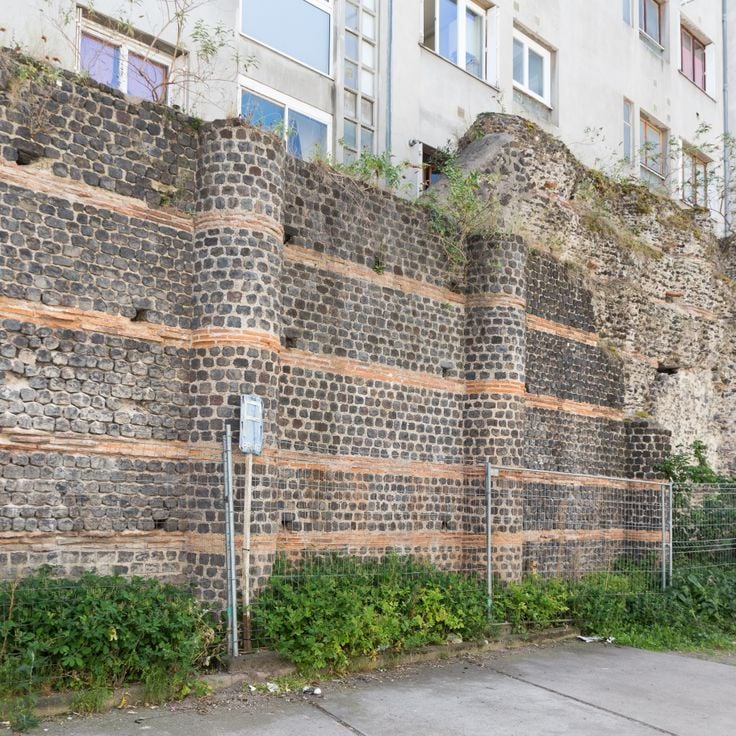
This 13th-century defensive wall stretches along its original foundation and represents one of the few remaining sections of Clermont-Ferrand's medieval fortifications. The structure rises approximately 20 feet (6 meters) and extends roughly 100 feet (30 meters) in length. The rampart displays characteristic features of military architecture from this period and provides insight into the city's historical defense systems. For photographers, this medieval wall offers compelling angles with its stone construction and the contrast between ancient fortification and surrounding urban landscape. The site documents Clermont-Ferrand's development as a fortified city during the Middle Ages.
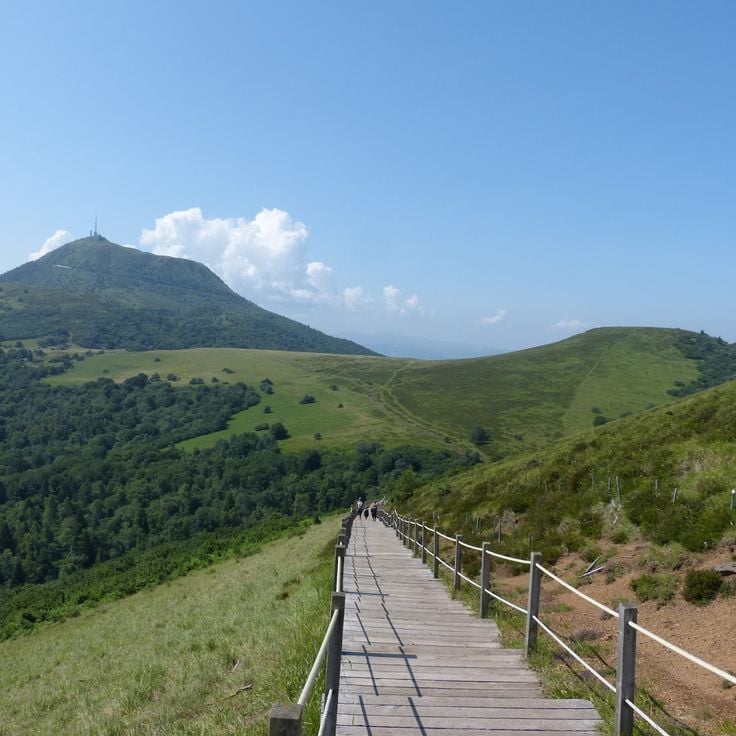
The Chemin du Volcan ascends the Puy de Dôme via stone steps to its summit at 3967 feet (1209 meters). This trail provides views of the volcanic chain across the Auvergne region and neighboring peaks. The stairway offers direct access to the highest point, where a panorama unfolds over the surrounding landscape. Photographers find compositions contrasting the stone steps with vegetation and distant volcanic cones. The path connects the base to the summit plateau, which preserves archaeological remains of a Gallo-Roman temple.
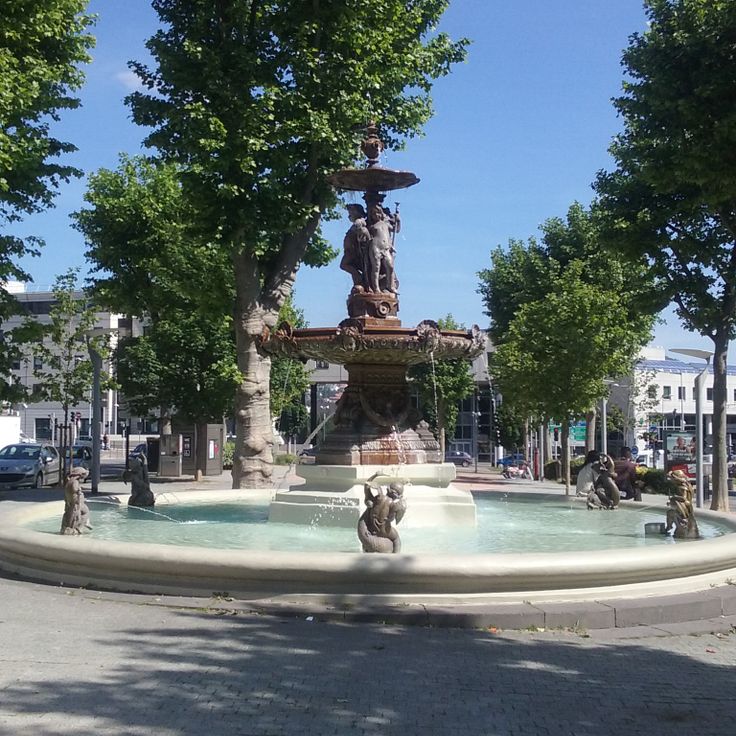
This stone fountain from 1875 stands on Place Delille and features water jets and bronze decorations in a circular basin. The installation was built in the late 19th century and belongs to the historic fountains in the city center. The bronze elements complement the stone architecture of the basin. The fountain sits in a green space near the city center and serves as a public gathering point. Place Delille connects several streets of the historic quarter and the Fontaine forms the central point of the square.
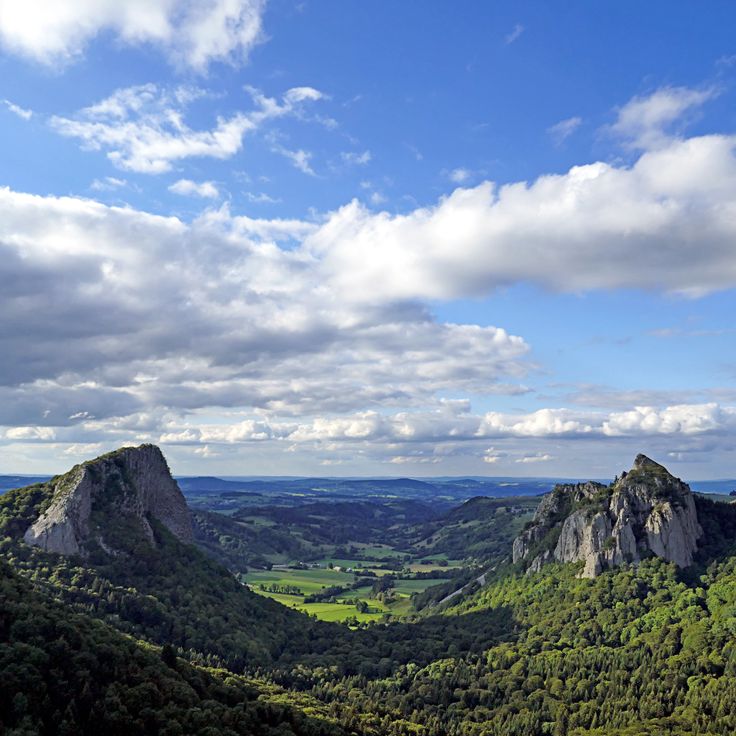
This observation platform at 4,225 feet (1,288 meters) elevation provides direct views of two volcanic rock formations and the valley between them. The site sits within the Auvergne Volcanoes Regional Natural Park and allows visitors to study the geological structure of the extinct volcanoes. The two formations display different erosion patterns shaped by millennia of volcanic activity and weathering. The location works well for landscape photography and documentary shots of the volcanic topography. From here, you can observe the defining features of the Auvergne volcanic chain, including steep slopes and rugged summits. The valley between the two formations shows the characteristic V-shape of glacial erosion. The viewpoint is accessible via marked hiking trails and offers clear sight lines across the surrounding volcanic landscape.
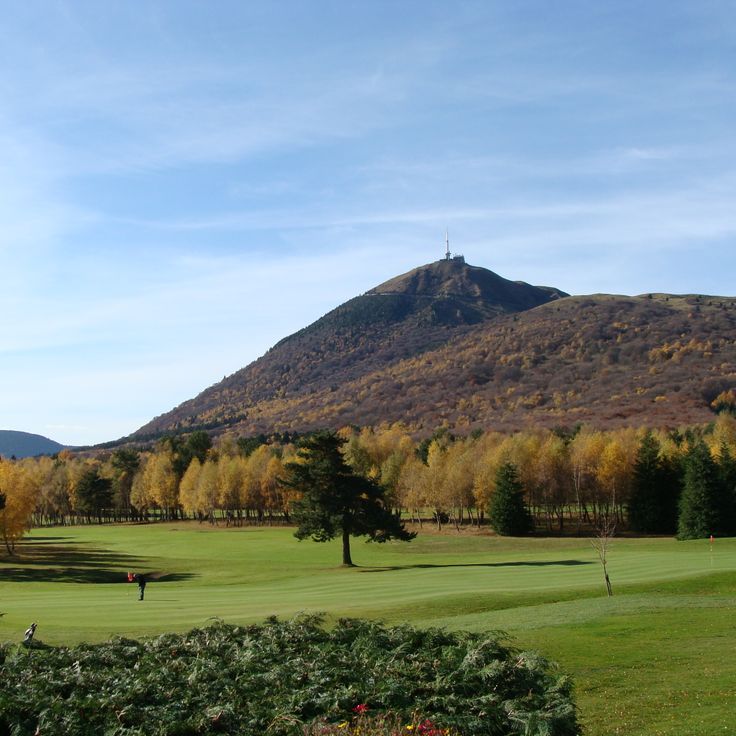
The Golf des Volcans sits at 3,000 feet (900 meters) elevation on volcanic terrain in the Auvergne, featuring an 18-hole course with views toward Puy de Dôme. The layout follows the natural contours of the landscape, incorporating rises and depressions into the design that challenge players with varied holes. The setting combines athletic pursuit with the geological history of the region, as fairways wind between lava formations and vegetation. Photographers find subjects in the contrast between manicured greens and the characteristic volcanic cones that form the backdrop.
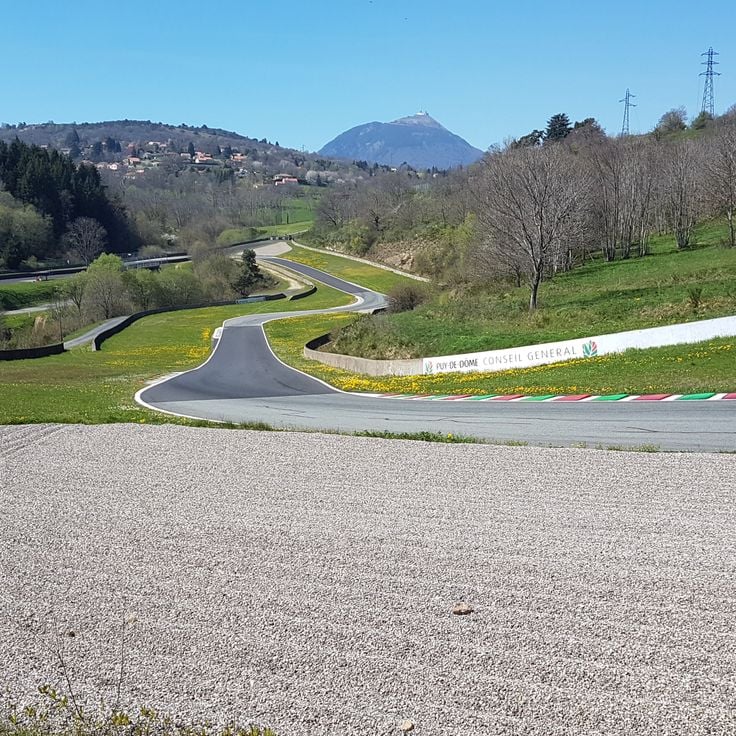
The Circuit de Charade has followed the natural contours of an extinct volcano since its opening in 1958, running 8 kilometers (5 miles) through 51 turns. This racing circuit uses the volcanic topography around Clermont-Ferrand and offers photographers changing perspectives between asphalt sections and landscape elements. The elevation changes and the tight layout through the volcanic terrain create a technically demanding course that makes the geological features of the Auvergne visible.
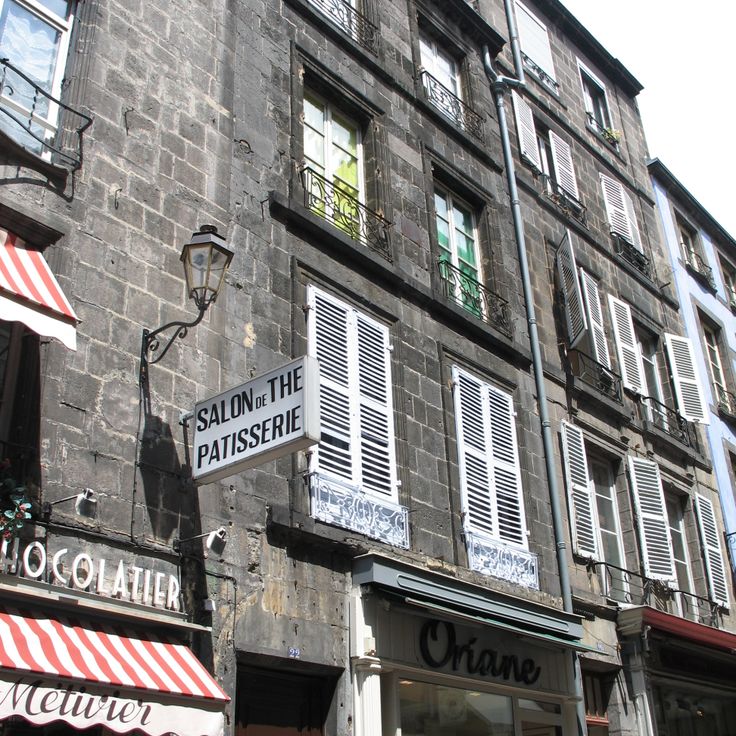
This commercial street in the historic center connects Place de la Victoire to Place de Jaude, running through the medieval quarter of the city. The Rue des Gras follows the western side of the cathedral and displays a succession of buildings from different centuries, including several structures made of dark volcanic stone. Shops occupy the ground floors of seventeenth and eighteenth century houses, while the street itself forms one of the principal north-south axes of the center, guiding pedestrians between the two main squares of the city.
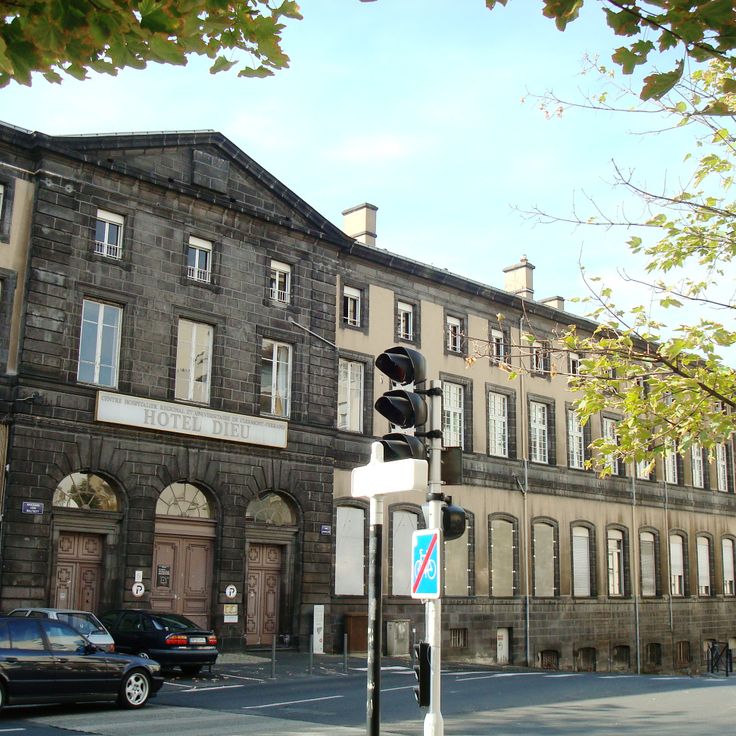
This former hospital dating from 1773 has been converted into a university and cultural center. The classical building now houses university administrative offices, rotating exhibition spaces and conference rooms. The light stone facade creates a contrast with the black volcanic stone architecture that characterizes Clermont-Ferrand. The interior courtyard and historic rooms offer various perspectives for capturing 18th-century architecture. The central location allows combination with other historic buildings in the surrounding area.
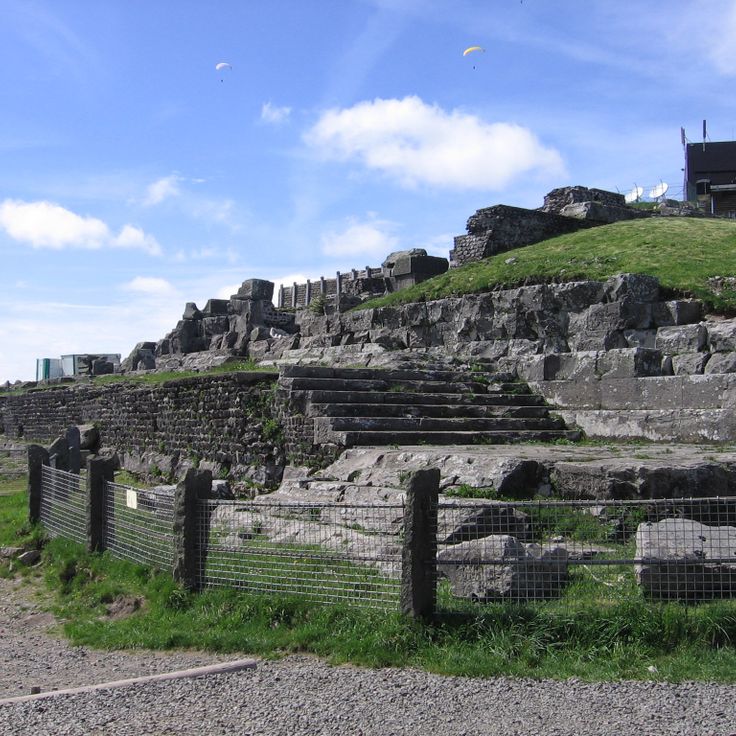
This Roman temple from the 2nd century stands at 4,810 feet (1,465 m) on Puy de Dôme and documents religious practices during the Gallo-Roman period. The preserved foundations show a rectangular structure measuring roughly 49 by 36 feet (15 by 11 m), dedicated to the god Mercury. Archaeological findings confirm the importance of this cult site, which attracted pilgrims during Roman rule over the Auvergne region. The stone walls and architectural fragments lie partially exposed, revealing construction techniques from the era. The summit location combined religious function with strategic position. Hikers reach the ruins via marked trails or by taking the rack railway, which has served the summit since 2012.
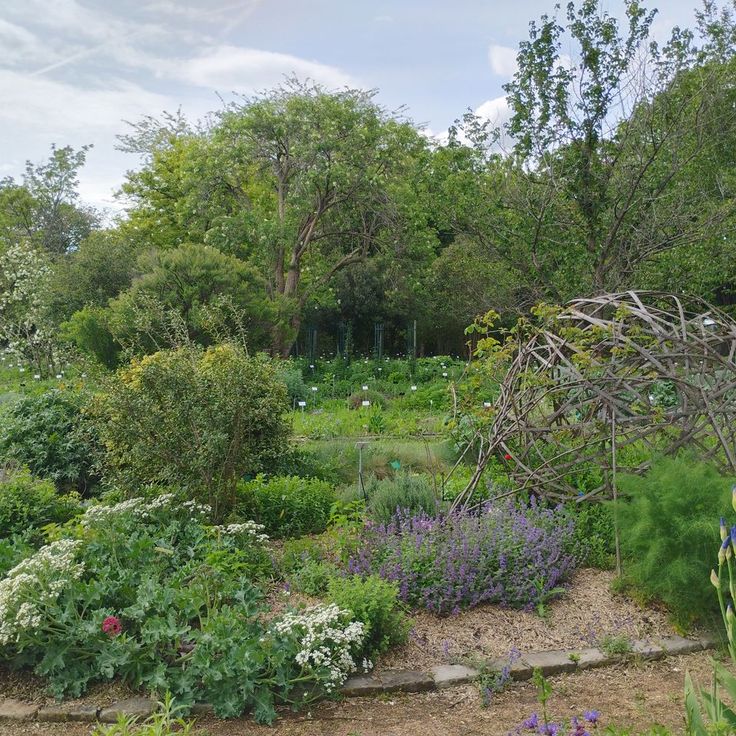
The Jardin Botanique de la Charme covers 2,150 square feet (2,000 square meters) and displays approximately 500 plant species from various botanical categories. This municipal garden presents medicinal herbs, alpine specimens and regional species. The site serves as a documentation center for local flora and offers visitors thematically organized plantings. Educational pathways explain the different collections. The compact size allows for a complete circuit in under an hour.
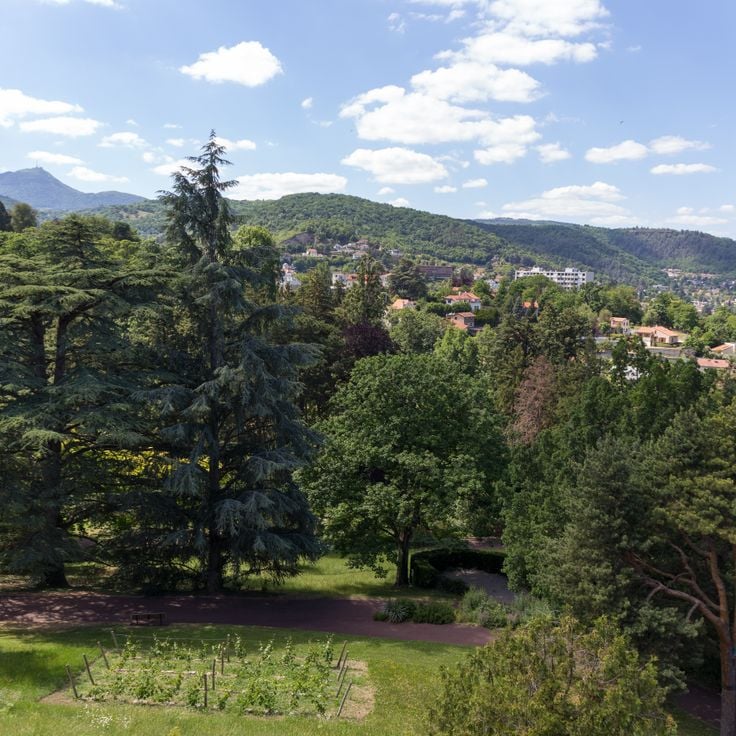
Parc Bargoin extends across 20 acres (8 hectares), combining historic architecture with botanical diversity. The 19th-century manor stands among maintained gardens and pathways that wind through different planting zones. The park's cedar collection includes several mature specimens, their broad canopies contrasting with native deciduous trees. The grounds offer various angles for architectural and nature photography, from shaded paths beneath old trees to open lawns with views of the building. The mix of formal garden sections and more natural areas creates changing light conditions throughout the day.
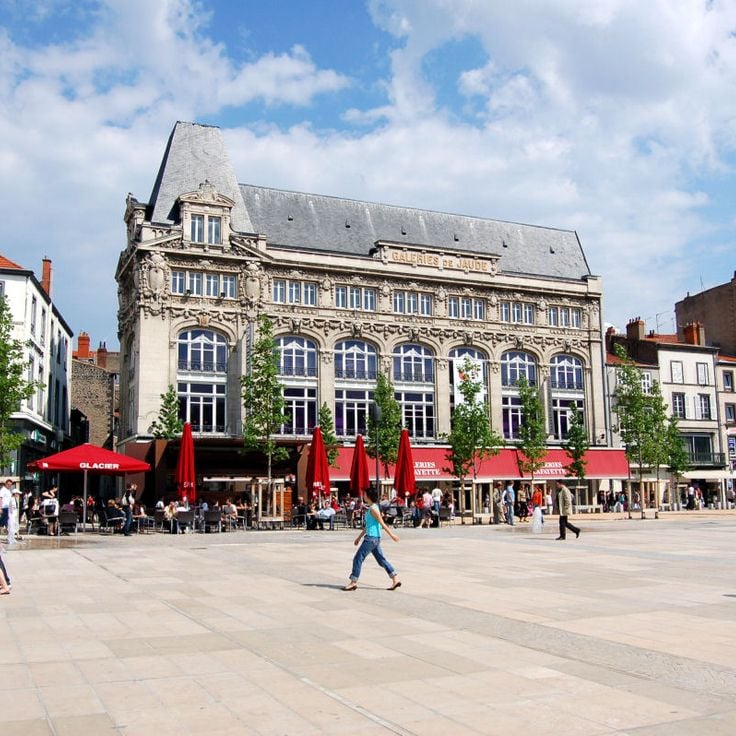
The Galeries de Jaude shopping center occupies 160,000 square feet (15,000 square meters) in the heart of Clermont-Ferrand. This complex houses 85 retail stores along with restaurants and a multiplex cinema. The building integrates modern commercial architecture within the historic city center, providing a view of contemporary urban life in the Auvergne capital.
The bronze statue of Vercingetorix was created in 1903 by Frédéric Auguste Bartholdi, the sculptor who designed the Statue of Liberty in New York. The monument depicts the Gallic leader on horseback with his sword raised and stands in Place de Jaude at the center of Clermont-Ferrand. The statue measures 13 feet (4 meters) in height and rests on a granite pedestal rising 26 feet (8 meters). Bartholdi chose this heroic pose to symbolize the Arverni chief's resistance against Julius Caesar. The green patina of the metal contrasts with the black volcanic stone facades of surrounding buildings, making the monument a focal point for urban photography.
The Cathédrale Notre-Dame-de-l'Assomption was built in the 13th century from black volcanic stone quarried locally and stands as one of the most distinctive Gothic structures in France. Its twin spires rise 108 meters (354 feet) above Clermont-Ferrand and define the city skyline. The dark stone creates a strong visual contrast with the surrounding pale volcanic landscape of the Auvergne region. Inside, stained glass windows from various periods document centuries of craftsmanship and artistic evolution. The western facade, with its detailed portal and flying buttresses, provides varied opportunities for architectural photography in changing light conditions throughout the day.
Place de Jaude serves as the commercial and social center of Clermont-Ferrand. The expansive square combines modern architecture with historical elements and is lined with shops, restaurants and cafés. A bronze statue of General Desaix from the French Revolutionary period stands at the center of the square, commemorating the military leader born in Clermont-Ferrand. Trams cross the plaza, connecting it to other parts of the city. The pedestrian area extends from the square in several directions, leading to shopping streets and historic districts. Photographers find subjects ranging from urban architecture to daily life, with views extending toward the volcanic mountains of Auvergne in the distance.
Puy de la Vache rises to 3830 feet (1167 meters) and displays the volcanic history of Auvergne through its slopes of red and black scoria. This cone belongs to a chain of extinct volcanoes within the regional natural park and provides trails to the summit crater. From the top, the volcanic landscape extends with neighboring Puy de Lassolas and the Chaîne des Puys. The ascent takes about 30 minutes and passes through vegetation growing on volcanic soil. The geological formation dates back approximately 8000 years.
This central park spans 10 acres (4 hectares) near the city center and features a pond, greenhouses, rare trees and maintained flower beds. The Jardin Lecoq was established in the 19th century and combines landscape gardens with botanical collections. Pathways lead along the water to different themed areas, while the historic greenhouses shelter exotic plants. The park serves as a recreational space for residents and offers photographers changing seasonal subjects from flower beds to autumn foliage beneath mature tree canopies.
The Puy de Dôme rises to 4,800 feet (1,465 meters) and forms the highest peak of the Chaîne des Puys. A rack railway runs from the base to the summit, where the remains of a Gallo-Roman temple dedicated to Mercury dating from the second century stand. From the top, views extend over some sixty extinct volcanoes in the chain, as well as the city of Clermont-Ferrand and the surrounding Auvergne region. The volcanic dome formed about eleven thousand years ago through explosive eruptions. Hiking trails also lead to the summit for those who prefer to ascend on foot.
This 12th-century Romanesque basilica displays carved capitals, a crypt and walls built from black volcanic stone quarried locally. The church stands in the historic quarter of Clermont-Ferrand and has been part of the UNESCO World Heritage listing since 1998 as a stop on the pilgrimage routes to Santiago de Compostela. The interior preserves a three-nave layout with vaulted ceilings and a raised choir. The nave extends roughly 75 feet (23 meters) in length, and the central crossing tower rises to 167 feet (51 meters). The apse features a 19th-century mosaic depicting the Virgin Mary.
This stone fountain stands on Place de la Poterne and was built in 1515. The Fontaine d'Amboise features carved figures and water jets in the Renaissance style, representing one of the notable urban monuments from the early 16th century in Clermont-Ferrand. The structure documents the urban development of the period.
Rue du Port displays half-timbered houses from the 15th century with exposed wooden beams and stone foundations typical of medieval construction. This narrow street in Clermont-Ferrand's historic center documents the preservation of original residential architecture and offers subjects for urban photography through its restored facades and tight passages between buildings. The combination of dark timber and volcanic stone creates a contrast frequently found in Auvergne architecture.
The Grande Mosquée de Clermont-Ferrand was completed in 2009 and combines contemporary design with traditional Islamic architectural elements. The prayer hall features geometric patterns on facades and interior walls, while a 82-foot (25-meter) minaret defines its silhouette. The mosque serves as both a place of worship and a community center for the city's Muslim population. Photographers document the blend of modern construction materials with classical Islamic design principles. The exterior spaces with their arcades and courtyards add to the urban landscape.
Parc Montjuzet covers 26 hectares at an elevation of 1,510 feet (460 meters) and features walking paths, sports facilities and garden areas overlooking Clermont-Ferrand and the surrounding mountains. The park was established in the early 20th century and combines maintained lawns with wooded sections. From its elevated points, visitors survey the city center with its black cathedral and the Chaîne des Puys to the west. Multiple pathways lead through different levels of the park, while playgrounds and sports areas serve families and active visitors. The vegetation includes native and exotic tree species that provide varied photographic subjects across seasons.
The Saint-Aubin Chapel dates from the 12th century and stands in a grassy landscape near Saint-Genès-Champanelle. This Romanesque chapel preserves original stonework and architectural elements from its construction period. The single-nave structure with its rectangular plan and simple bell gable sits among fields and clusters of trees. The chapel serves as evidence of medieval religious architecture in the rural surroundings of Clermont-Ferrand, offering subjects for architectural and landscape photography in a natural setting.
This electric train runs along a 3.5-mile (5.6-kilometer) track to the 4,806-foot (1,465-meter) summit of Puy de Dôme, offering views across the volcanoes of Auvergne. The journey provides access to the highest point of the Chaîne des Puys, where a Roman temple to Mercury once stood. The panoramic train replaced the former toll road in 2012 and transports visitors to the top in about 15 minutes. The cars feature large windows for photographers seeking to capture the dormant volcanic cones and surrounding landscapes. Upon arrival at the summit, visitors can explore the volcanic terrain and archaeological remains.
The Centre de Photographie Fontfreyde occupies a manor house dating from 1513 and focuses on contemporary and historical photography. The facility spans three floors and presents rotating exhibitions alongside a permanent collection documenting various photographic practices and movements. The building itself represents the Renaissance architecture of Clermont-Ferrand, with stone walls and vaulted spaces that provide an appropriate setting for the works on display. The center regularly organizes exhibitions by regional and international photographers, contributing to the city's photographic scene.
This theater building completed in 1894 was designed by architect Jean Teillard in Belle Époque style and offers 1,500 seats. The facade displays classical elements with columns and sculptures, while the interior features gilded balconies, red velvet seating and painted ceilings. The opera house hosts opera performances, classical concerts and theatrical productions throughout the year. Its central location at Place de Jaude makes it a key cultural landmark in the city. Photographers find subjects in the historic architecture, interior spaces during public tours and the evening illumination of the facade.
The Musée Michelin occupies 2,000 square meters (21,500 square feet) and presents the history of the tire manufacturer founded in 1889 through collections of vehicles, advertising materials and industrial equipment. The exhibition documents technical developments in tire production and the company's role in automotive history. Visitors encounter original racing cars, vintage posters featuring the Michelin Man and manufacturing machinery from different periods. Located in the Cataroux industrial district, the museum provides insights into the economic importance of Clermont-Ferrand as a center of French tire manufacturing.
The Vallée des Saints displays red and orange rock formations shaped by thousands of years of erosion. These stone pillars rise among vineyards in a geologically significant landscape that forms part of the Auvergne Volcanoes Regional Nature Park. Several marked trails lead between the mineral structures, offering different perspectives on the rock needles. The loop trail covers roughly 1.2 miles (2 kilometers) and combines geological observation with views of the surrounding agricultural landscape. The rock towers reach heights of up to 50 feet (15 meters) and document both volcanic and sedimentary processes of the region.
Place de la Victoire forms a central square in the historic core of Clermont-Ferrand, featuring stone benches and fountains. The surrounding medieval buildings house restaurant terraces and shops at street level. This square serves as a gathering point for locals and visitors, offering various perspectives on traditional Auvergne architecture. The stone structures and urban activity create diverse photographic subjects throughout the day.
Musée Bargoin houses archaeological collections from the Auvergne region spanning prehistory through the Middle Ages. Two floors present finds from the Gallo-Roman period, including ceramics, coins and everyday objects recovered from local excavation sites. The upper level focuses on contemporary textile art and historical fabrics, with rotating exhibitions on weaving traditions and textile crafts. The collection connects the archaeological history of the volcanic landscape around Clermont-Ferrand with the region's textile industry heritage.
The Musée d'art Roger-Quilliot occupies a converted 17th-century convent complex and presents European art from the Middle Ages through the 20th century. The collection includes paintings, sculptures and liturgical objects from the Auvergne region, along with works by French and Italian masters. The historic rooms, with their vaulted ceilings and cloisters, provide a fitting setting for the displayed pieces. The museum sits at the edge of Clermont-Ferrand's old town and combines religious heritage with civic art history.
This 13th-century defensive wall stretches along its original foundation and represents one of the few remaining sections of Clermont-Ferrand's medieval fortifications. The structure rises approximately 20 feet (6 meters) and extends roughly 100 feet (30 meters) in length. The rampart displays characteristic features of military architecture from this period and provides insight into the city's historical defense systems. For photographers, this medieval wall offers compelling angles with its stone construction and the contrast between ancient fortification and surrounding urban landscape. The site documents Clermont-Ferrand's development as a fortified city during the Middle Ages.
The Chemin du Volcan ascends the Puy de Dôme via stone steps to its summit at 3967 feet (1209 meters). This trail provides views of the volcanic chain across the Auvergne region and neighboring peaks. The stairway offers direct access to the highest point, where a panorama unfolds over the surrounding landscape. Photographers find compositions contrasting the stone steps with vegetation and distant volcanic cones. The path connects the base to the summit plateau, which preserves archaeological remains of a Gallo-Roman temple.
This stone fountain from 1875 stands on Place Delille and features water jets and bronze decorations in a circular basin. The installation was built in the late 19th century and belongs to the historic fountains in the city center. The bronze elements complement the stone architecture of the basin. The fountain sits in a green space near the city center and serves as a public gathering point. Place Delille connects several streets of the historic quarter and the Fontaine forms the central point of the square.
This observation platform at 4,225 feet (1,288 meters) elevation provides direct views of two volcanic rock formations and the valley between them. The site sits within the Auvergne Volcanoes Regional Natural Park and allows visitors to study the geological structure of the extinct volcanoes. The two formations display different erosion patterns shaped by millennia of volcanic activity and weathering. The location works well for landscape photography and documentary shots of the volcanic topography. From here, you can observe the defining features of the Auvergne volcanic chain, including steep slopes and rugged summits. The valley between the two formations shows the characteristic V-shape of glacial erosion. The viewpoint is accessible via marked hiking trails and offers clear sight lines across the surrounding volcanic landscape.
The Golf des Volcans sits at 3,000 feet (900 meters) elevation on volcanic terrain in the Auvergne, featuring an 18-hole course with views toward Puy de Dôme. The layout follows the natural contours of the landscape, incorporating rises and depressions into the design that challenge players with varied holes. The setting combines athletic pursuit with the geological history of the region, as fairways wind between lava formations and vegetation. Photographers find subjects in the contrast between manicured greens and the characteristic volcanic cones that form the backdrop.
The Circuit de Charade has followed the natural contours of an extinct volcano since its opening in 1958, running 8 kilometers (5 miles) through 51 turns. This racing circuit uses the volcanic topography around Clermont-Ferrand and offers photographers changing perspectives between asphalt sections and landscape elements. The elevation changes and the tight layout through the volcanic terrain create a technically demanding course that makes the geological features of the Auvergne visible.
This commercial street in the historic center connects Place de la Victoire to Place de Jaude, running through the medieval quarter of the city. The Rue des Gras follows the western side of the cathedral and displays a succession of buildings from different centuries, including several structures made of dark volcanic stone. Shops occupy the ground floors of seventeenth and eighteenth century houses, while the street itself forms one of the principal north-south axes of the center, guiding pedestrians between the two main squares of the city.
This former hospital dating from 1773 has been converted into a university and cultural center. The classical building now houses university administrative offices, rotating exhibition spaces and conference rooms. The light stone facade creates a contrast with the black volcanic stone architecture that characterizes Clermont-Ferrand. The interior courtyard and historic rooms offer various perspectives for capturing 18th-century architecture. The central location allows combination with other historic buildings in the surrounding area.
This Roman temple from the 2nd century stands at 4,810 feet (1,465 m) on Puy de Dôme and documents religious practices during the Gallo-Roman period. The preserved foundations show a rectangular structure measuring roughly 49 by 36 feet (15 by 11 m), dedicated to the god Mercury. Archaeological findings confirm the importance of this cult site, which attracted pilgrims during Roman rule over the Auvergne region. The stone walls and architectural fragments lie partially exposed, revealing construction techniques from the era. The summit location combined religious function with strategic position. Hikers reach the ruins via marked trails or by taking the rack railway, which has served the summit since 2012.
The Jardin Botanique de la Charme covers 2,150 square feet (2,000 square meters) and displays approximately 500 plant species from various botanical categories. This municipal garden presents medicinal herbs, alpine specimens and regional species. The site serves as a documentation center for local flora and offers visitors thematically organized plantings. Educational pathways explain the different collections. The compact size allows for a complete circuit in under an hour.
Parc Bargoin extends across 20 acres (8 hectares), combining historic architecture with botanical diversity. The 19th-century manor stands among maintained gardens and pathways that wind through different planting zones. The park's cedar collection includes several mature specimens, their broad canopies contrasting with native deciduous trees. The grounds offer various angles for architectural and nature photography, from shaded paths beneath old trees to open lawns with views of the building. The mix of formal garden sections and more natural areas creates changing light conditions throughout the day.
The Galeries de Jaude shopping center occupies 160,000 square feet (15,000 square meters) in the heart of Clermont-Ferrand. This complex houses 85 retail stores along with restaurants and a multiplex cinema. The building integrates modern commercial architecture within the historic city center, providing a view of contemporary urban life in the Auvergne capital.
The bronze statue of Vercingetorix was created in 1903 by Frédéric Auguste Bartholdi, the sculptor who designed the Statue of Liberty in New York. The monument depicts the Gallic leader on horseback with his sword raised and stands in Place de Jaude at the center of Clermont-Ferrand. The statue measures 13 feet (4 meters) in height and rests on a granite pedestal rising 26 feet (8 meters). Bartholdi chose this heroic pose to symbolize the Arverni chief's resistance against Julius Caesar. The green patina of the metal contrasts with the black volcanic stone facades of surrounding buildings, making the monument a focal point for urban photography.
The Cathédrale Notre-Dame-de-l'Assomption was built in the 13th century from black volcanic stone quarried locally and stands as one of the most distinctive Gothic structures in France. Its twin spires rise 108 meters (354 feet) above Clermont-Ferrand and define the city skyline. The dark stone creates a strong visual contrast with the surrounding pale volcanic landscape of the Auvergne region. Inside, stained glass windows from various periods document centuries of craftsmanship and artistic evolution. The western facade, with its detailed portal and flying buttresses, provides varied opportunities for architectural photography in changing light conditions throughout the day.
Place de Jaude serves as the commercial and social center of Clermont-Ferrand. The expansive square combines modern architecture with historical elements and is lined with shops, restaurants and cafés. A bronze statue of General Desaix from the French Revolutionary period stands at the center of the square, commemorating the military leader born in Clermont-Ferrand. Trams cross the plaza, connecting it to other parts of the city. The pedestrian area extends from the square in several directions, leading to shopping streets and historic districts. Photographers find subjects ranging from urban architecture to daily life, with views extending toward the volcanic mountains of Auvergne in the distance.
Puy de la Vache rises to 3830 feet (1167 meters) and displays the volcanic history of Auvergne through its slopes of red and black scoria. This cone belongs to a chain of extinct volcanoes within the regional natural park and provides trails to the summit crater. From the top, the volcanic landscape extends with neighboring Puy de Lassolas and the Chaîne des Puys. The ascent takes about 30 minutes and passes through vegetation growing on volcanic soil. The geological formation dates back approximately 8000 years.
This central park spans 10 acres (4 hectares) near the city center and features a pond, greenhouses, rare trees and maintained flower beds. The Jardin Lecoq was established in the 19th century and combines landscape gardens with botanical collections. Pathways lead along the water to different themed areas, while the historic greenhouses shelter exotic plants. The park serves as a recreational space for residents and offers photographers changing seasonal subjects from flower beds to autumn foliage beneath mature tree canopies.
The Puy de Dôme rises to 4,800 feet (1,465 meters) and forms the highest peak of the Chaîne des Puys. A rack railway runs from the base to the summit, where the remains of a Gallo-Roman temple dedicated to Mercury dating from the second century stand. From the top, views extend over some sixty extinct volcanoes in the chain, as well as the city of Clermont-Ferrand and the surrounding Auvergne region. The volcanic dome formed about eleven thousand years ago through explosive eruptions. Hiking trails also lead to the summit for those who prefer to ascend on foot.
This 12th-century Romanesque basilica displays carved capitals, a crypt and walls built from black volcanic stone quarried locally. The church stands in the historic quarter of Clermont-Ferrand and has been part of the UNESCO World Heritage listing since 1998 as a stop on the pilgrimage routes to Santiago de Compostela. The interior preserves a three-nave layout with vaulted ceilings and a raised choir. The nave extends roughly 75 feet (23 meters) in length, and the central crossing tower rises to 167 feet (51 meters). The apse features a 19th-century mosaic depicting the Virgin Mary.
This stone fountain stands on Place de la Poterne and was built in 1515. The Fontaine d'Amboise features carved figures and water jets in the Renaissance style, representing one of the notable urban monuments from the early 16th century in Clermont-Ferrand. The structure documents the urban development of the period.
Rue du Port displays half-timbered houses from the 15th century with exposed wooden beams and stone foundations typical of medieval construction. This narrow street in Clermont-Ferrand's historic center documents the preservation of original residential architecture and offers subjects for urban photography through its restored facades and tight passages between buildings. The combination of dark timber and volcanic stone creates a contrast frequently found in Auvergne architecture.
The Grande Mosquée de Clermont-Ferrand was completed in 2009 and combines contemporary design with traditional Islamic architectural elements. The prayer hall features geometric patterns on facades and interior walls, while a 82-foot (25-meter) minaret defines its silhouette. The mosque serves as both a place of worship and a community center for the city's Muslim population. Photographers document the blend of modern construction materials with classical Islamic design principles. The exterior spaces with their arcades and courtyards add to the urban landscape.
Parc Montjuzet covers 26 hectares at an elevation of 1,510 feet (460 meters) and features walking paths, sports facilities and garden areas overlooking Clermont-Ferrand and the surrounding mountains. The park was established in the early 20th century and combines maintained lawns with wooded sections. From its elevated points, visitors survey the city center with its black cathedral and the Chaîne des Puys to the west. Multiple pathways lead through different levels of the park, while playgrounds and sports areas serve families and active visitors. The vegetation includes native and exotic tree species that provide varied photographic subjects across seasons.
The Saint-Aubin Chapel dates from the 12th century and stands in a grassy landscape near Saint-Genès-Champanelle. This Romanesque chapel preserves original stonework and architectural elements from its construction period. The single-nave structure with its rectangular plan and simple bell gable sits among fields and clusters of trees. The chapel serves as evidence of medieval religious architecture in the rural surroundings of Clermont-Ferrand, offering subjects for architectural and landscape photography in a natural setting.
This electric train runs along a 3.5-mile (5.6-kilometer) track to the 4,806-foot (1,465-meter) summit of Puy de Dôme, offering views across the volcanoes of Auvergne. The journey provides access to the highest point of the Chaîne des Puys, where a Roman temple to Mercury once stood. The panoramic train replaced the former toll road in 2012 and transports visitors to the top in about 15 minutes. The cars feature large windows for photographers seeking to capture the dormant volcanic cones and surrounding landscapes. Upon arrival at the summit, visitors can explore the volcanic terrain and archaeological remains.
The Centre de Photographie Fontfreyde occupies a manor house dating from 1513 and focuses on contemporary and historical photography. The facility spans three floors and presents rotating exhibitions alongside a permanent collection documenting various photographic practices and movements. The building itself represents the Renaissance architecture of Clermont-Ferrand, with stone walls and vaulted spaces that provide an appropriate setting for the works on display. The center regularly organizes exhibitions by regional and international photographers, contributing to the city's photographic scene.
This theater building completed in 1894 was designed by architect Jean Teillard in Belle Époque style and offers 1,500 seats. The facade displays classical elements with columns and sculptures, while the interior features gilded balconies, red velvet seating and painted ceilings. The opera house hosts opera performances, classical concerts and theatrical productions throughout the year. Its central location at Place de Jaude makes it a key cultural landmark in the city. Photographers find subjects in the historic architecture, interior spaces during public tours and the evening illumination of the facade.
The Musée Michelin occupies 2,000 square meters (21,500 square feet) and presents the history of the tire manufacturer founded in 1889 through collections of vehicles, advertising materials and industrial equipment. The exhibition documents technical developments in tire production and the company's role in automotive history. Visitors encounter original racing cars, vintage posters featuring the Michelin Man and manufacturing machinery from different periods. Located in the Cataroux industrial district, the museum provides insights into the economic importance of Clermont-Ferrand as a center of French tire manufacturing.
The Vallée des Saints displays red and orange rock formations shaped by thousands of years of erosion. These stone pillars rise among vineyards in a geologically significant landscape that forms part of the Auvergne Volcanoes Regional Nature Park. Several marked trails lead between the mineral structures, offering different perspectives on the rock needles. The loop trail covers roughly 1.2 miles (2 kilometers) and combines geological observation with views of the surrounding agricultural landscape. The rock towers reach heights of up to 50 feet (15 meters) and document both volcanic and sedimentary processes of the region.
Place de la Victoire forms a central square in the historic core of Clermont-Ferrand, featuring stone benches and fountains. The surrounding medieval buildings house restaurant terraces and shops at street level. This square serves as a gathering point for locals and visitors, offering various perspectives on traditional Auvergne architecture. The stone structures and urban activity create diverse photographic subjects throughout the day.
Musée Bargoin houses archaeological collections from the Auvergne region spanning prehistory through the Middle Ages. Two floors present finds from the Gallo-Roman period, including ceramics, coins and everyday objects recovered from local excavation sites. The upper level focuses on contemporary textile art and historical fabrics, with rotating exhibitions on weaving traditions and textile crafts. The collection connects the archaeological history of the volcanic landscape around Clermont-Ferrand with the region's textile industry heritage.
The Musée d'art Roger-Quilliot occupies a converted 17th-century convent complex and presents European art from the Middle Ages through the 20th century. The collection includes paintings, sculptures and liturgical objects from the Auvergne region, along with works by French and Italian masters. The historic rooms, with their vaulted ceilings and cloisters, provide a fitting setting for the displayed pieces. The museum sits at the edge of Clermont-Ferrand's old town and combines religious heritage with civic art history.
This 13th-century defensive wall stretches along its original foundation and represents one of the few remaining sections of Clermont-Ferrand's medieval fortifications. The structure rises approximately 20 feet (6 meters) and extends roughly 100 feet (30 meters) in length. The rampart displays characteristic features of military architecture from this period and provides insight into the city's historical defense systems. For photographers, this medieval wall offers compelling angles with its stone construction and the contrast between ancient fortification and surrounding urban landscape. The site documents Clermont-Ferrand's development as a fortified city during the Middle Ages.
The Chemin du Volcan ascends the Puy de Dôme via stone steps to its summit at 3967 feet (1209 meters). This trail provides views of the volcanic chain across the Auvergne region and neighboring peaks. The stairway offers direct access to the highest point, where a panorama unfolds over the surrounding landscape. Photographers find compositions contrasting the stone steps with vegetation and distant volcanic cones. The path connects the base to the summit plateau, which preserves archaeological remains of a Gallo-Roman temple.
This stone fountain from 1875 stands on Place Delille and features water jets and bronze decorations in a circular basin. The installation was built in the late 19th century and belongs to the historic fountains in the city center. The bronze elements complement the stone architecture of the basin. The fountain sits in a green space near the city center and serves as a public gathering point. Place Delille connects several streets of the historic quarter and the Fontaine forms the central point of the square.
This observation platform at 4,225 feet (1,288 meters) elevation provides direct views of two volcanic rock formations and the valley between them. The site sits within the Auvergne Volcanoes Regional Natural Park and allows visitors to study the geological structure of the extinct volcanoes. The two formations display different erosion patterns shaped by millennia of volcanic activity and weathering. The location works well for landscape photography and documentary shots of the volcanic topography. From here, you can observe the defining features of the Auvergne volcanic chain, including steep slopes and rugged summits. The valley between the two formations shows the characteristic V-shape of glacial erosion. The viewpoint is accessible via marked hiking trails and offers clear sight lines across the surrounding volcanic landscape.
The Golf des Volcans sits at 3,000 feet (900 meters) elevation on volcanic terrain in the Auvergne, featuring an 18-hole course with views toward Puy de Dôme. The layout follows the natural contours of the landscape, incorporating rises and depressions into the design that challenge players with varied holes. The setting combines athletic pursuit with the geological history of the region, as fairways wind between lava formations and vegetation. Photographers find subjects in the contrast between manicured greens and the characteristic volcanic cones that form the backdrop.
The Circuit de Charade has followed the natural contours of an extinct volcano since its opening in 1958, running 8 kilometers (5 miles) through 51 turns. This racing circuit uses the volcanic topography around Clermont-Ferrand and offers photographers changing perspectives between asphalt sections and landscape elements. The elevation changes and the tight layout through the volcanic terrain create a technically demanding course that makes the geological features of the Auvergne visible.
This commercial street in the historic center connects Place de la Victoire to Place de Jaude, running through the medieval quarter of the city. The Rue des Gras follows the western side of the cathedral and displays a succession of buildings from different centuries, including several structures made of dark volcanic stone. Shops occupy the ground floors of seventeenth and eighteenth century houses, while the street itself forms one of the principal north-south axes of the center, guiding pedestrians between the two main squares of the city.
This former hospital dating from 1773 has been converted into a university and cultural center. The classical building now houses university administrative offices, rotating exhibition spaces and conference rooms. The light stone facade creates a contrast with the black volcanic stone architecture that characterizes Clermont-Ferrand. The interior courtyard and historic rooms offer various perspectives for capturing 18th-century architecture. The central location allows combination with other historic buildings in the surrounding area.
This Roman temple from the 2nd century stands at 4,810 feet (1,465 m) on Puy de Dôme and documents religious practices during the Gallo-Roman period. The preserved foundations show a rectangular structure measuring roughly 49 by 36 feet (15 by 11 m), dedicated to the god Mercury. Archaeological findings confirm the importance of this cult site, which attracted pilgrims during Roman rule over the Auvergne region. The stone walls and architectural fragments lie partially exposed, revealing construction techniques from the era. The summit location combined religious function with strategic position. Hikers reach the ruins via marked trails or by taking the rack railway, which has served the summit since 2012.
The Jardin Botanique de la Charme covers 2,150 square feet (2,000 square meters) and displays approximately 500 plant species from various botanical categories. This municipal garden presents medicinal herbs, alpine specimens and regional species. The site serves as a documentation center for local flora and offers visitors thematically organized plantings. Educational pathways explain the different collections. The compact size allows for a complete circuit in under an hour.
Parc Bargoin extends across 20 acres (8 hectares), combining historic architecture with botanical diversity. The 19th-century manor stands among maintained gardens and pathways that wind through different planting zones. The park's cedar collection includes several mature specimens, their broad canopies contrasting with native deciduous trees. The grounds offer various angles for architectural and nature photography, from shaded paths beneath old trees to open lawns with views of the building. The mix of formal garden sections and more natural areas creates changing light conditions throughout the day.
The Galeries de Jaude shopping center occupies 160,000 square feet (15,000 square meters) in the heart of Clermont-Ferrand. This complex houses 85 retail stores along with restaurants and a multiplex cinema. The building integrates modern commercial architecture within the historic city center, providing a view of contemporary urban life in the Auvergne capital.