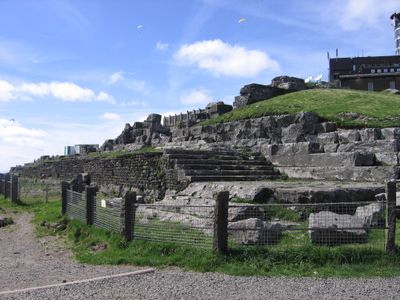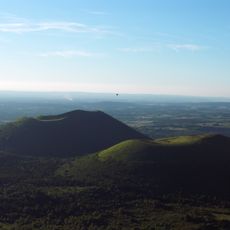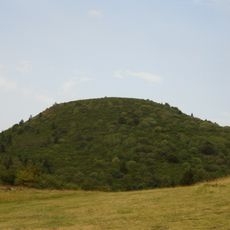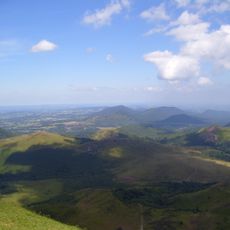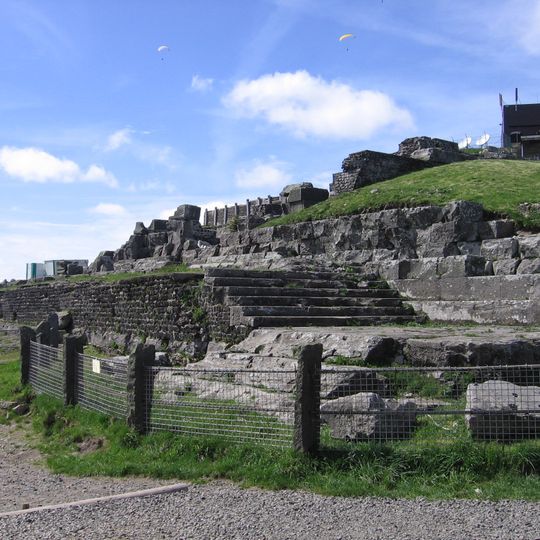
Temple of Mercury, Roman temple at Puy de Dôme summit, France.
The Temple of Mercury is a Roman sanctuary built on the Puy de Dôme summit during the 2nd century. The ruins display a central chamber with a front entrance structure, constructed from local trachyte stone that has endured over time.
Roman builders constructed this temple in the 2nd century to serve pilgrims and merchants for generations. Archaeological rediscovery in the 1800s led to formal protection of the site as a classified historical monument.
The temple's name comes from Mercury, the god of commerce and travel, to whom it was dedicated. A small statuette of Mercury found beside an annex temple during excavations confirmed the dedication. The sanctuary's layout, with a cella and pronaos on successive terraces, guided visitors along a processional route.
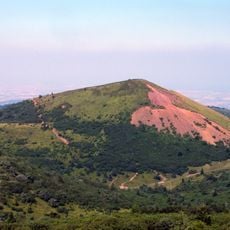
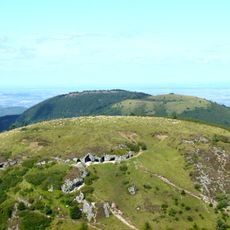
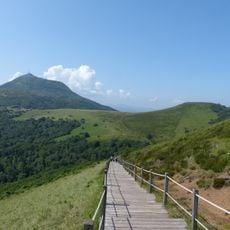
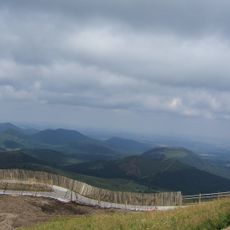
The ruins stand on the slope just below the summit, at about 1,435 metres, and are reached on foot from the Ceyssat pass at the foot of the Puy de Dôme. The lower parts of the sanctuary were partly rebuilt and the site reopened to the public in June 2024. Sturdy shoes help on the steep, uneven stone terraces.
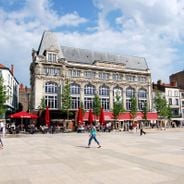
The 2nd-century temple was built lower on the slope, at about 1,435 m, from local trachyte cut near the Ceyssat Pass; its decoration used white and coloured marbles, Autun shale and arkose capitals. Paving fragments are kept at the Bargoin museum in Clermont-Ferrand.
The community of curious travelers
AroundUs brings together thousands of curated places, local tips, and hidden gems, enriched daily by 92,946 contributors worldwide.