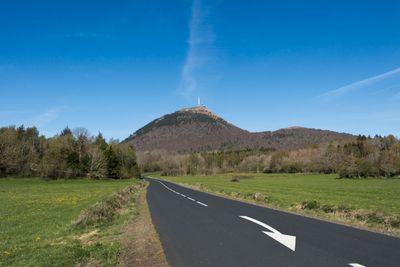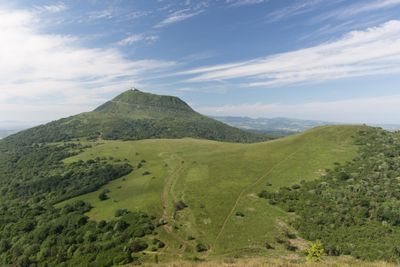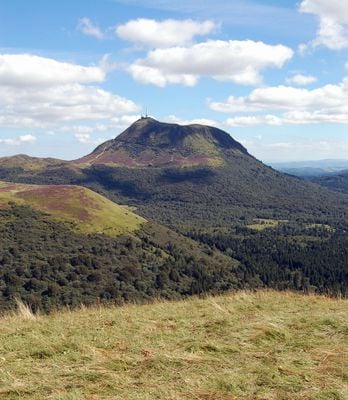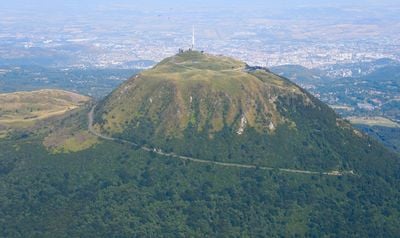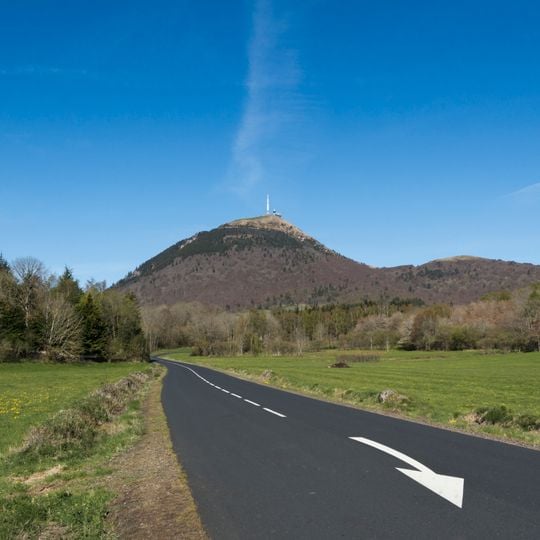
Puy de Dôme, Volcanic mountain at Massif Central, France
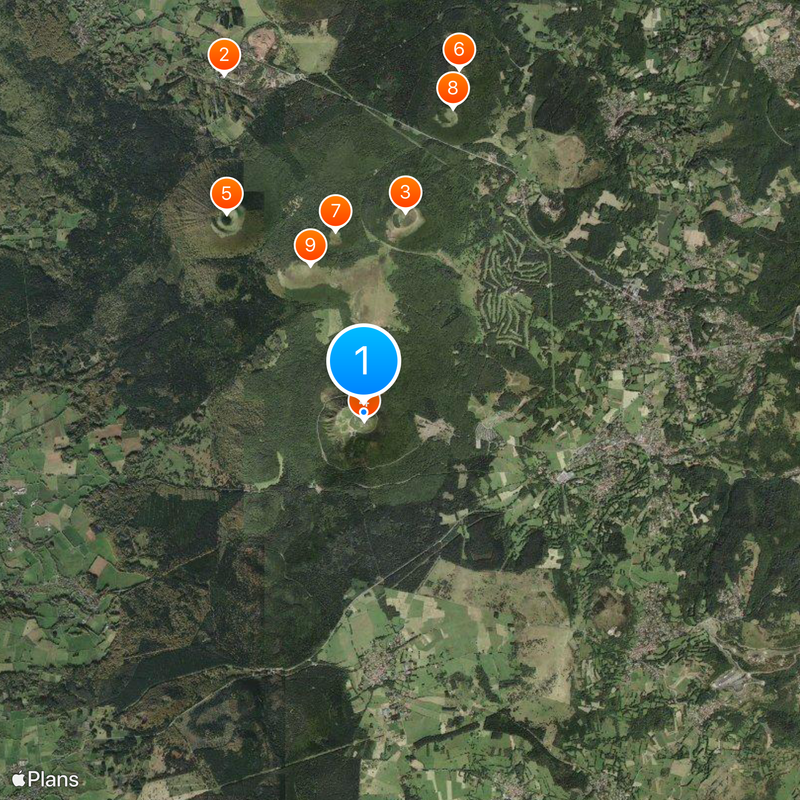
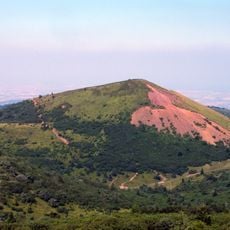
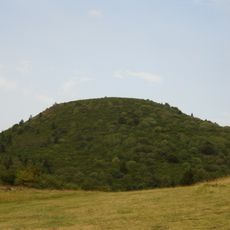
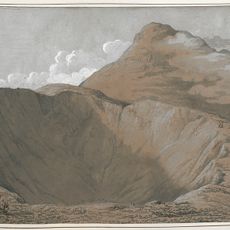
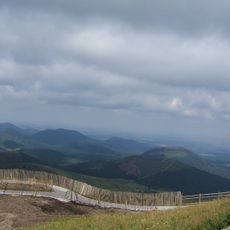
Puy de Dôme is a dormant stratovolcano in the Massif Central that rises to 1465 meters (4806 feet) above sea level. Its dome-shaped summit is made from domite, a pale volcanic rock that formed during its last eruption around 11,000 years ago.
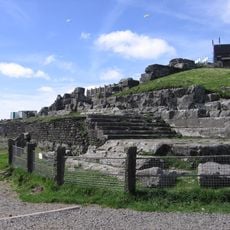
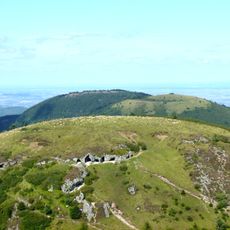
The mountain was the site of Blaise Pascal's barometric experiments in 1648, which proved that atmospheric pressure decreases with altitude. Archaeologists discovered the remains of a Roman temple dedicated to Mercury on the summit in 1872, revealing the mountain's importance in ancient times.
The name comes from Latin
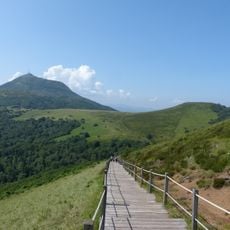
The Panoramique des Dômes, an electric train, carries visitors to the summit in around 15 minutes and runs regularly throughout the day. Several hiking trails also lead to the top, with the walk taking roughly 90 minutes depending on the route chosen.
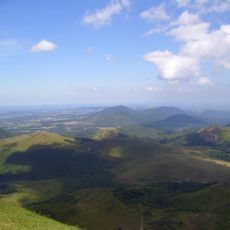
The International Union of Geological Sciences has included this site in its list of 100 most important geological sites worldwide. The summit serves as a launch point for paragliders and hang gliders who use the thermals to soar over the Massif Central landscape.
The community of curious travelers
AroundUs brings together thousands of curated places, local tips, and hidden gems, enriched daily by 90,830 contributors worldwide.