Puy de Côme, Sleeping volcano in Puy-de-Dôme, France.
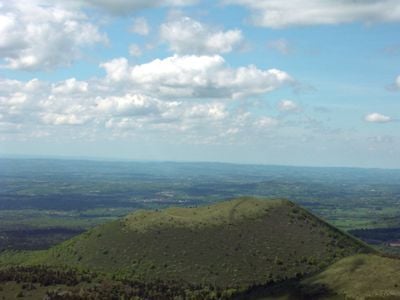
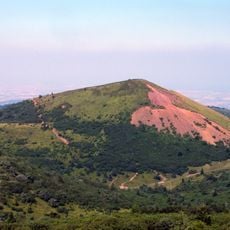
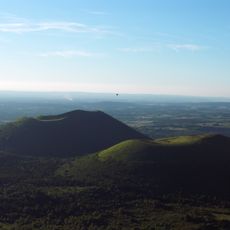
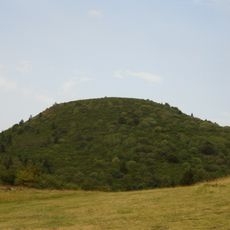
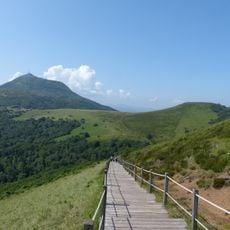
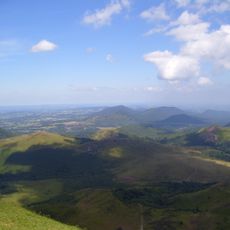
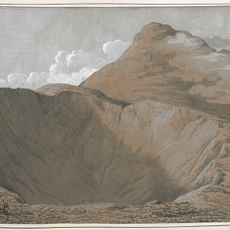
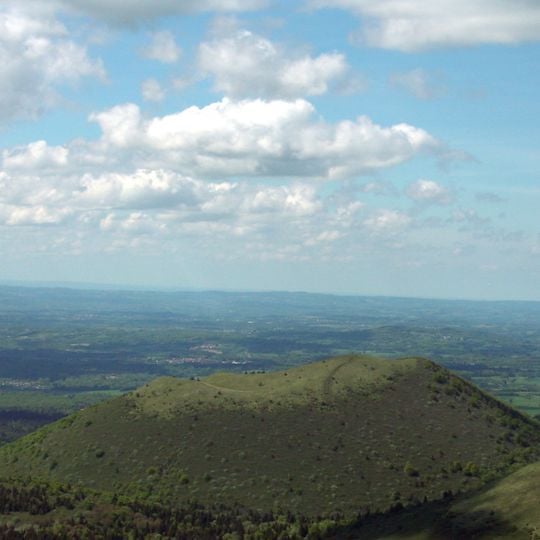
Puy de Côme is a near-perfect basaltic cone rising to about 1,251 metres, with two craters nested on almost the same axis, a sign of two eruptive phases. Its slopes are covered with rows of planted trees that make it recognisable from afar, and a track curves across the grassy upper surface. Its volume is roughly 190 million cubic metres.
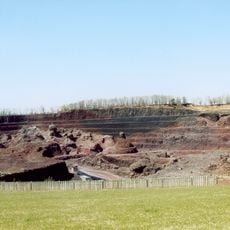
Puy de Côme is a Strombolian basalt cone with two craters nested on nearly the same axis, evidence of two eruptive phases. Its lava flows, called cheires, are the largest in the Chaîne des Puys: they reached the site of present-day Pontgibaud and forced the Sioule to cut a new bed. Successive flows, stacked over eruptions, reach 130 metres thick in a borehole 1.5 km from the volcano.
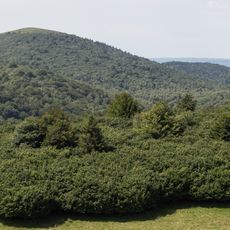
The rows of trees on the flanks of Puy de Côme, some running straight down to the foot of the cone, are visible from afar and may come from local foresters dividing the slopes among themselves. Since a 2002 municipal ruling closed the summit, sheep herds are normally the only occupants.
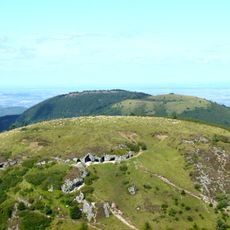
A 2002 municipal decree bans access to the summit of Puy de Côme, so the top is normally grazed only by sheep. Visitors stay on the lower slopes, where the conifer plantations are planted in straight, regular rows that reach down to the foot of the cone.
The lava flows from Puy de Côme, called cheires, are the largest in the Chaîne des Puys; they reached the site of present-day Pontgibaud and forced the Sioule to cut a new bed. A borehole 1.5 km from the cone found the stacked flows 130 m thick.
The community of curious travelers
AroundUs brings together thousands of curated places, local tips, and hidden gems, enriched daily by 92,885 contributors worldwide.