Fontaine d'Amboise, Gothic and Renaissance fountain in Clermont-Ferrand, France
The Fontaine d'Amboise is a Volvic stone fountain with three stacked basins, built in a Gothic structure with buttresses and Renaissance carved decoration of rinceaux, masks and grotesques. Its octagonal middle basin has eight panels, four centred on masks spouting water, with candelabra at each corner. A bearded wild man holding a club and the Amboise family shield crowns the top.
Bishop Jacques d'Amboise, bishop of Clermont from 1505 to 1516, had the fountain built from 1511 by the sculptor Chapart, in the garden of the episcopal palace near the cathedral's south portal. It was moved four times: to place Delille in 1808, when a lower basin and the wild-man statue were added, to the cours Sablon in 1854, and to place Olympe-de-Gouges in 1962. A restoration campaign ended in May 2019.
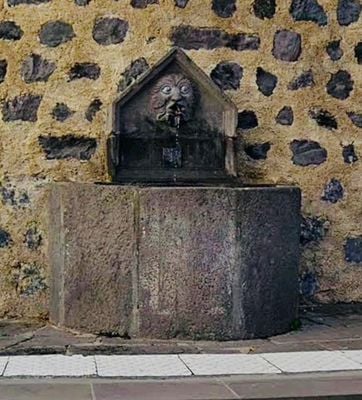
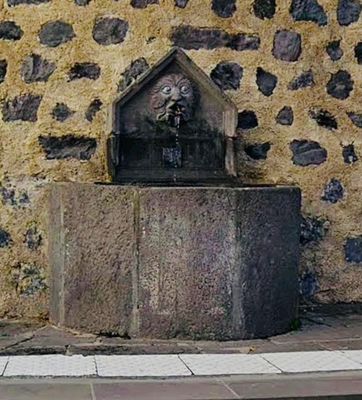
The figure on top is a bearded "wild man" covered in fleece, holding a club and a shield with the arms of the Amboise family, patrons of the fountain. The carved masks, grotesques and rinceaux show Italian influence brought by Bishop Jacques d'Amboise, brother of Cardinal Georges d'Amboise. Four of the eight octagonal panels have a mask spouting water.
The fountain stands on Place Olympe-de-Gouges, the square formerly called Place de la Poterne, near the Hôtel de Ville. It was fully restored in a campaign completed in May 2019. The basin and carved upper section are best examined up close, since the water falls in thin streams from the sculpted faces.
The fountain displays symbols of the Amboise family, including a figure of an untamed man holding the family crest. This detail shows how Renaissance fountains often served as personal monuments reflecting the patron's lineage and status in the city.
The community of curious travelers
AroundUs brings together thousands of curated places, local tips, and hidden gems, enriched daily by 92,645 contributors worldwide.