Melleray Abbey, Trappist monastery in La Meilleraye-de-Bretagne, France
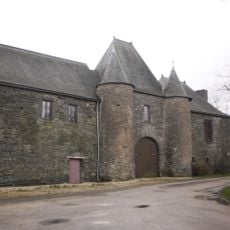
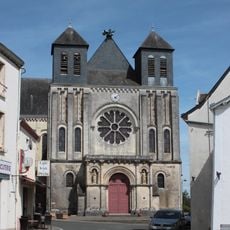
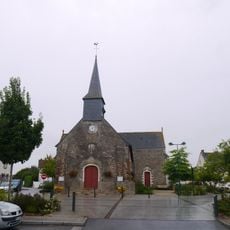
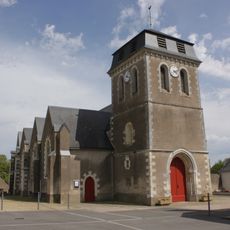
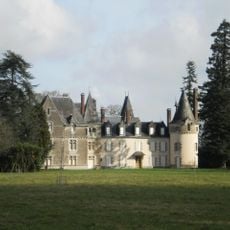
Melleray Abbey is a former Cistercian monastery in La Meilleraye-de-Bretagne, now occupied by the Chemin Neuf Community. Its connected stone buildings include a two-storey wing of exposed brown and grey stone with a steep slate roof and dormer windows, a slate-roofed bell tower with a slender grey spire, and a cream-coloured three-storey wing with regular rectangular windows. A grassy lawn lies in front.
Cistercian monks sent by Foulques, abbot of Pontron, founded the abbey in 1145 on land given by Alain de Moisdon; the church was completed in 1183 under the fourth abbot, Geffroy. After the French Revolution the buildings were sold, but in 1817 Trappists from Lulworth, led by Antoine de Beauregard, bought and restored the monastery. Trappist monks remained until 2016, when the Chemin Neuf Community took over.
The name Melleray derives from a legend: two founding monks found a honeycomb in a hollow tree where they slept, and the spot became the monastery site. Since 2016 the Chemin Neuf Community, from the Catholic charismatic renewal, has occupied the abbey in place of the Trappists.
The abbey stands at Vieux-Melleray, about 20 km south of Châteaubriant and 40 km north of Nantes, on a hillside at roughly 50 m altitude between the Don and Erdre watersheds. The site is enclosed by the Vioreau and Ancenis forests, and streams feed a pond on the grounds. Parts of the complex are protected as monuments historiques, so access to the church, cloister gallery and monastic rooms depends on the community in residence.
The name Melleray derives from Meilleraie, meaning honeycomb: two founding brothers, sleeping in a hollow tree in the forest, found a honeycomb there that fed them, and the tree marked the site of the monastery. The abbey later founded Mount Melleray in Ireland (1833) and Mount Saint Bernard in England (1835).
The community of curious travelers
AroundUs brings together thousands of curated places, local tips, and hidden gems, enriched daily by 94,515 contributors worldwide.