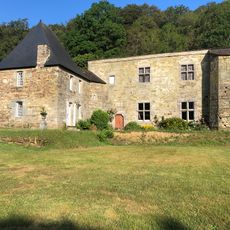
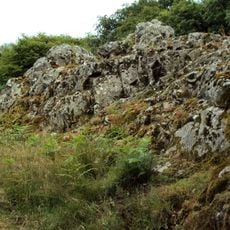
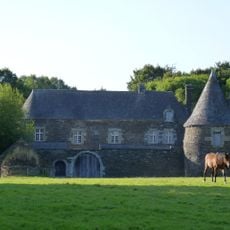
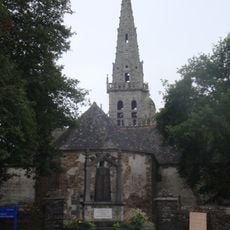
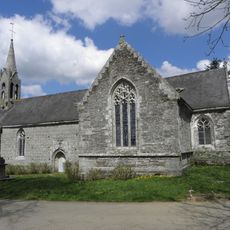
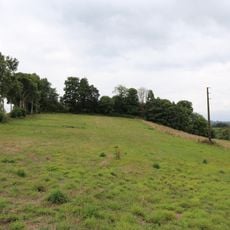
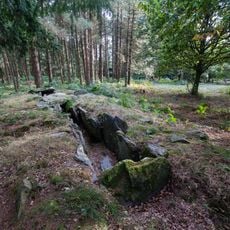
Allée couverte de Coët Correc, Neolithic gallery grave in Guerlédan, France.
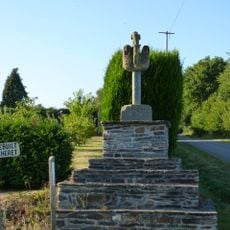
Allée couverte de Coët Correc is a gallery grave 10.50 m long and about 1.40 m wide, bordered by around twenty upright slabs of local slate schist. Only two of its covering slabs remain in place; four others lie along the access path. A porthole-shaped side entrance opens between two notched slabs at the southeast end, and the remains of a dry-stone calvary built around 1905 straddle the west end.
The structure was built during the Neolithic period around 4000 BC and reflects the engineering skills of early agricultural communities in Brittany. It served as a collective tomb for multiple members of these Neolithic societies and shows their ability to create lasting structures for important communal purposes.
Around 1905 the farmer Mathurin Le Flohic, described as very pious, built a dry-stone calvary of slate over the western end of the passage grave. Early 20th-century postcards show it as a two-ramp stairway ending in a small platform with a stone block and cross. Ruined and opened during the 1984-1985 excavations, it has since been partly rebuilt.
The site is freely accessible year-round and requires a short walk from the parking area to reach. Visitors should contact the local tourist office to learn about current conditions and any restrictions before planning their visit.
The structure clearly shows it was designed as a communal burial site for multiple people, with a central passage and separate burial areas. This layout allowed the community to gather their deceased in one sacred place across many generations.
The community of curious travelers
AroundUs brings together thousands of curated places, local tips, and hidden gems, enriched daily by 93,614 contributors worldwide.