Palais de la Porte Dorée, Art Deco museum complex in 12th arrondissement, France
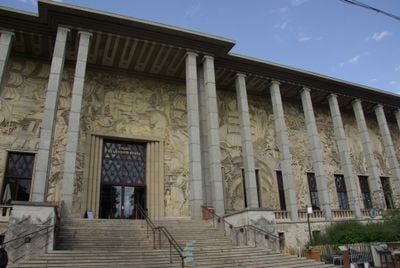
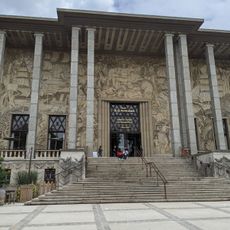
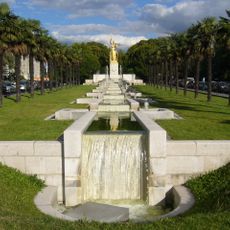
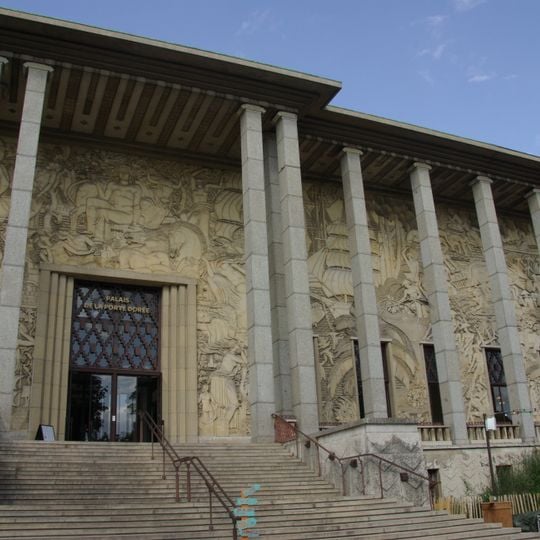
The Palais de la Porte Dorée is a 17,000 m² Art Deco building designed by Albert Laprade with Léon Jaussely and Léon Bazin, its symmetrical stone facade carrying Alfred Janniot's 1,200 m² relief of ships, oceans and animals such as antelopes, elephants, zebras and snakes. Inside, the former festival hall, now the forum, holds Pierre-Henri Ducos de La Haille's fresco on France's influence overseas. The cellar houses the tropical aquarium.
The building opened in 1931 as part of the Paris Colonial Exposition, designed by architect Albert Laprade with collaborators Léon Jaussely and Léon Bazin. It later transformed from its original purpose into a space dedicated to examining immigration and its role in shaping nations.
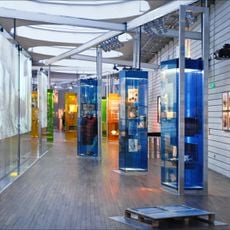
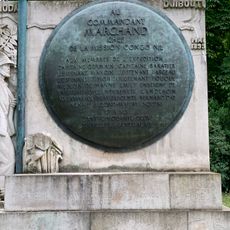
The building's successive names trace its shifts: Musée des Colonies from 1931, Musée de la France d'outre-mer in 1935, Musée des arts africains et océaniens in 1960, then the Cité nationale de l'histoire de l'immigration in 2007, renamed the Musée national de l'Histoire de l'immigration in 2012. The east facade, called the mur des grands coloniaux, carries an inscription to France's grateful recognition and 160 engraved names.
The building sits at the edge of Bois de Vincennes and is easily reached by public transport, with multiple floors to explore and distinct zones to visit. Allow enough time to see both the museum exhibits and the aquarium, as they are housed under the same roof and each deserves careful attention.
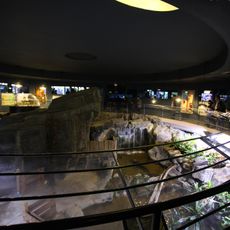
The aquarium was installed when the palace opened in 1931, meant to show visitors the fauna of the French colonies. It sits on the lower ground floor and for a long time was the only aquarium in Paris. It holds about 5,000 animals of some 350 species, in tanks from 100 to 370,000 litres.
The community of curious travelers
AroundUs brings together thousands of curated places, local tips, and hidden gems, enriched daily by 93,488 contributors worldwide.