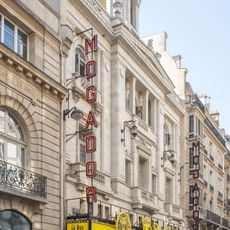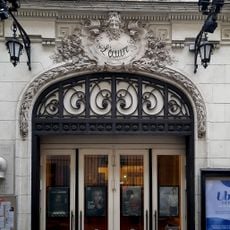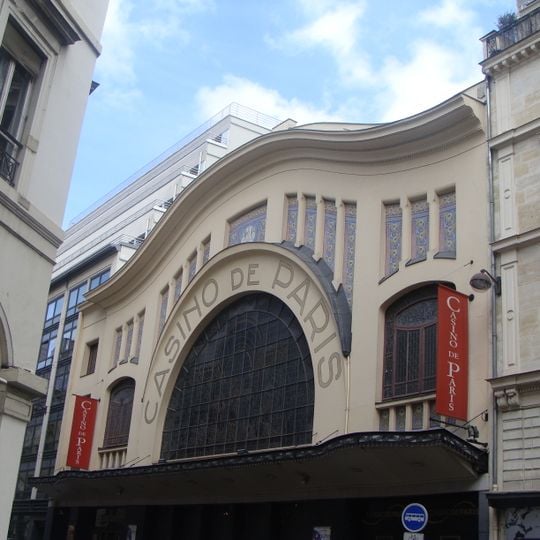
Casino de Paris, Concert hall in 9th arrondissement, France
Casino de Paris is a concert hall in the 9th arrondissement featuring an auditorium with roughly 1800 seats arranged in a grand space. The interior displays ornate chandeliers and architectural details from the Belle Époque period that give the venue its character.
The site began around 1730 as a private theatre for the Duc de Richelieu, later becoming the Folie-Richelieu and then the Tivoli amusement park. In 1880 part of a roller-skating rink was converted into the Palace-Théâtre, restored in 1891 by Édouard Niermans. The new Casino de Paris opened in October 1891. A fire in 1922 led to rebuilding, and revues starred Mistinguett, Maurice Chevalier and Joséphine Baker.
The name Casino de Paris comes from the Italian word casino, meaning "little house", adopted in French in the mid-19th century to mean a performance hall, not a gambling house. In December 1891, administrator Monsieur Lué launched the paper confetti craze at a Carnival of Paris costume party. The restaurant Le Perroquet sits on the mezzanine of the foyer under the large glass roof.
The venue sits on Rue de Clichy in the 9th arrondissement and is easily accessible by public transportation. Programming includes concerts, comedy, and theater performances with event details available on the official website.
The name has nothing to do with gambling: "casino" entered French in the mid-19th century meaning a hall for shows or festivities. The venue's own history includes an 1892 real-ice rink of 720 m2 called Le Pôle Nord, reached from 18 rue de Clichy, and a fire in February 1895 that destroyed the whale of Villerville, a cetacean converted into a theatre-museum by Simon-Max.
The community of curious travelers
AroundUs brings together thousands of curated places, local tips, and hidden gems, enriched daily by 93,526 contributors worldwide.