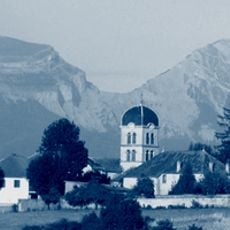
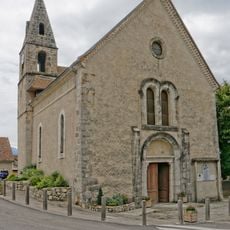
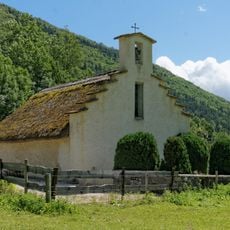
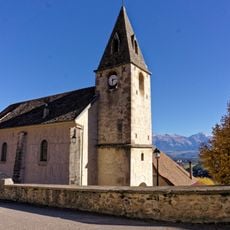
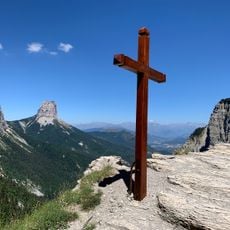
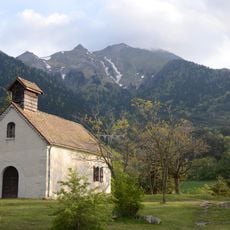
Mount Aiguille, Limestone summit in Vercors Regional Natural Park, France
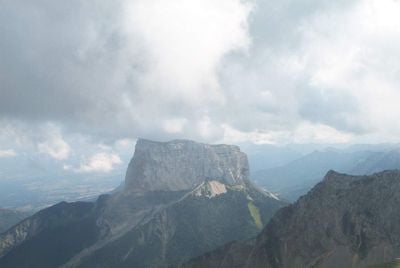
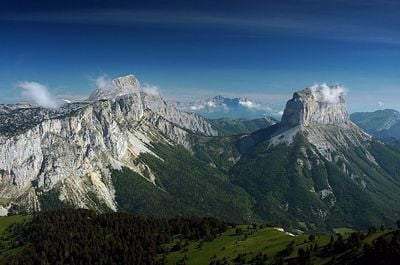
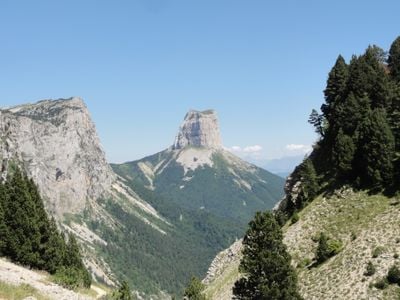
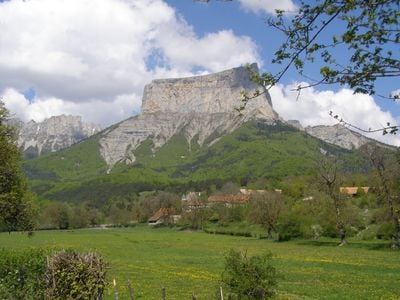
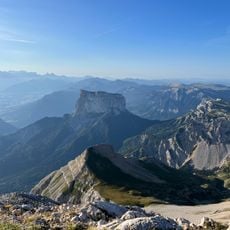
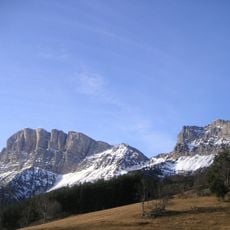
Mont Aiguille is a 2,087-metre limestone butte-témoin in the Vercors massif, an outlier left by erosion of the surrounding plateau. Its flat summit meadow, about 500 metres long and 100 metres wide, ends in two secondary peaks at 2,071 and 2,024 metres. Below the plateau, vertical cliffs drop some 300 metres on all sides, with a softer limestone and marl base flaring outward.
On 26 June 1492 Antoine de Ville, chamberlain of Charles VIII, reached the summit with several companions, two priests and a notary, using ladders and hooks from the Col de l'Aupet. A mass was said on the flat top, the mountain was renamed Aiguille-Fort, and crosses and a small hut were built. The feat, told by Rabelais in his Quart Livre, is taken as the birth of alpinism.
Gervais de Tilbury listed it among the Seven Wonders of Dauphiné as early as the 13th century. Medieval minds pictured the flat summit as a kind of Eden, a territory cut off from the profane world. The name Aiguille-Fort, given officially after the 1492 ascent, never replaced the older Mons inaccessibilis.
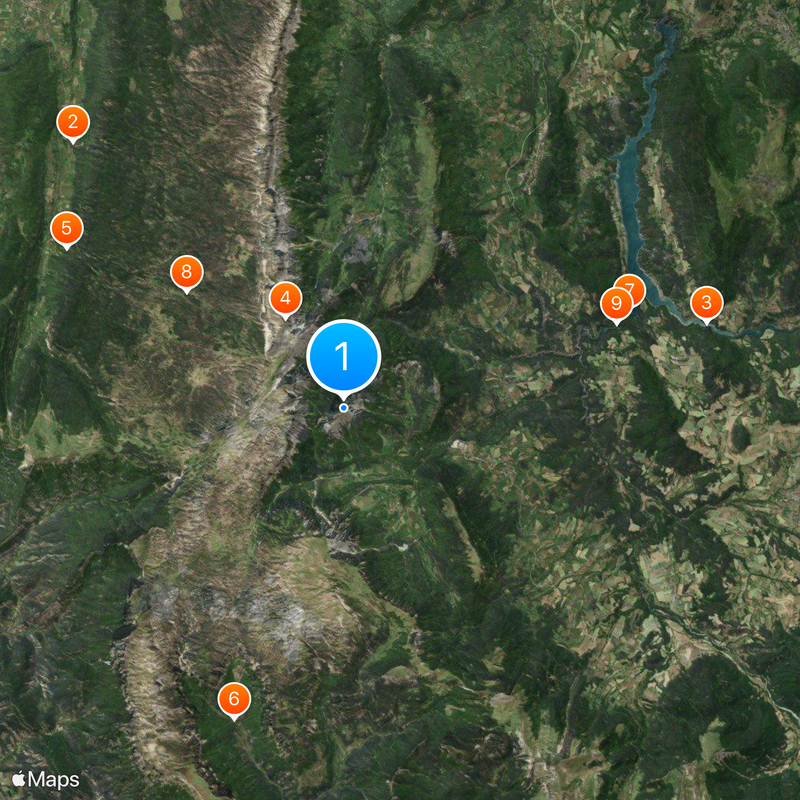
The normal route follows the path of the 1492 first ascent, partly equipped as a via ferrata by the Club Alpin Français in 1878, starting from the Col de l'Aupet (1,627 m) to the west. Bivouacking on the summit meadow has been banned since 2022 within the Vercors high plateaus nature reserve. The mountain lies in Chichilianne, 58 km south of Grenoble.
Henri Giraud, a mountain pilot with the Aéro-Club du Dauphiné, was the only person to land on the summit meadow. He touched down on 27 August 1957 in a Piper Cub, then on skis on 22 March 1960 in a Choucas Super Cub, later bringing passengers.
The community of curious travelers
AroundUs brings together thousands of curated places, local tips, and hidden gems, enriched daily by 93,401 contributors worldwide.