See the monuments around you in AROpen chests in the app
Around Us is built for your phone — point your camera at the streets and discover the monuments and places around you in augmented reality.Around Us is built for your phone — chests unlock when you walk, explore and capture nearby places.
France displays a range of geological formations shaped by millions of years of natural processes. White chalk cliffs mark the northern coast, including the cliffs of Étretat and the rock of Mont Saint-Michel in Normandy. In southern regions, deep limestone gorges cut through the landscape, while natural bridges, narrow coves, and carved stone columns reveal the power of water and erosion. Isolated plateaus rise from flatlands, and rocky headlands punctuate the Mediterranean shore.
The Verdon Gorge and Vallon-Pont-d'Arc showcase how rivers have carved through limestone layers over time. Corsican calanques offer steep-sided rocky inlets framed by cliffs. The Calanques of Piana and Calanque d'En-Vau present dramatic seascapes where rock meets water. Mont Aiguille stands as a distinctive limestone table mountain, while formations like Les Pénitents des Mées display weathered stone pinnacles rising from the landscape.
From the rocky headlands of Cap Canaille and Pointe du Raz to the columnar rock formations called Orgues d'Ille-sur-Têt, these sites show how stone takes different forms across France. Waterfalls such as Chaudière Falls demonstrate the continuous work of flowing water. Together, these places illustrate the geological diversity found across the country and reward visitors interested in natural forms and landscape history.
France displays a range of geological formations shaped by millions of years of natural processes. White chalk cliffs mark the northern coast, including the cliffs of Étretat and the rock of Mont Saint-Michel in Normandy. In southern regions, deep limestone gorges cut through the landscape, while natural bridges, narrow coves, and carved stone columns reveal the power of water and erosion. Isolated plateaus rise from flatlands, and rocky headlands punctuate the Mediterranean shore.
The Verdon Gorge and Vallon-Pont-d'Arc showcase how rivers have carved through limestone layers over time. Corsican calanques offer steep-sided rocky inlets framed by cliffs. The Calanques of Piana and Calanque d'En-Vau present dramatic seascapes where rock meets water. Mont Aiguille stands as a distinctive limestone table mountain, while formations like Les Pénitents des Mées display weathered stone pinnacles rising from the landscape.
From the rocky headlands of Cap Canaille and Pointe du Raz to the columnar rock formations called Orgues d'Ille-sur-Têt, these sites show how stone takes different forms across France. Waterfalls such as Chaudière Falls demonstrate the continuous work of flowing water. Together, these places illustrate the geological diversity found across the country and reward visitors interested in natural forms and landscape history.
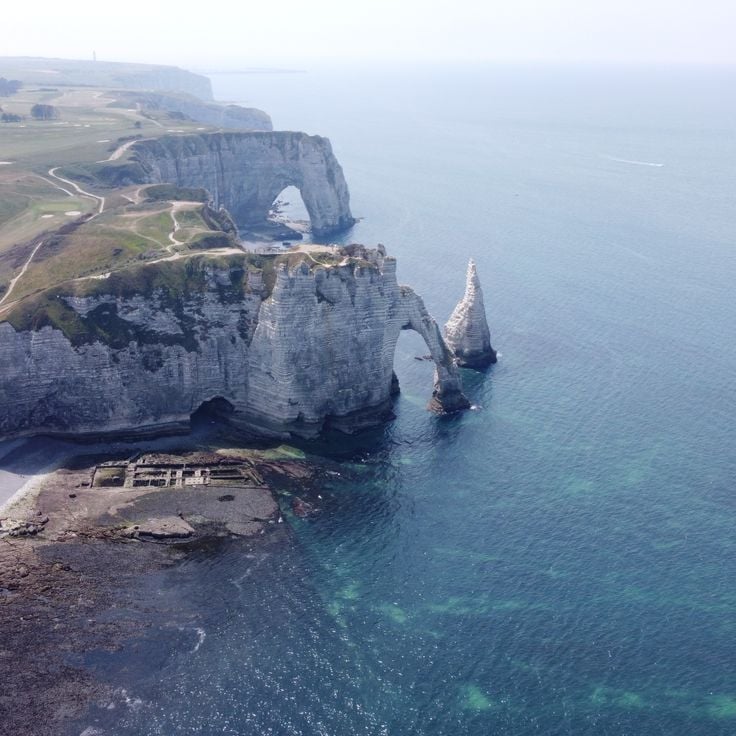
These cliffs rise 295 feet (90 meters) above the English Channel and consist of limestone shaped by thousands of years of natural erosion. The rock formation includes three large natural stone arches that emerge from the white cliffs. The geological structures demonstrate the power of wind and water on sedimentary rock over geological time periods. The rocks extend along the coast of Normandy and form one of France's most recognized coastal landscapes. The natural arches, including the Falaise d'Aval with its characteristic arch and freestanding needle, demonstrate ongoing coastal erosion processes. The chalk deposits in the cliffs contain fossil remains from the Cretaceous period and provide insights into the marine history of the region.
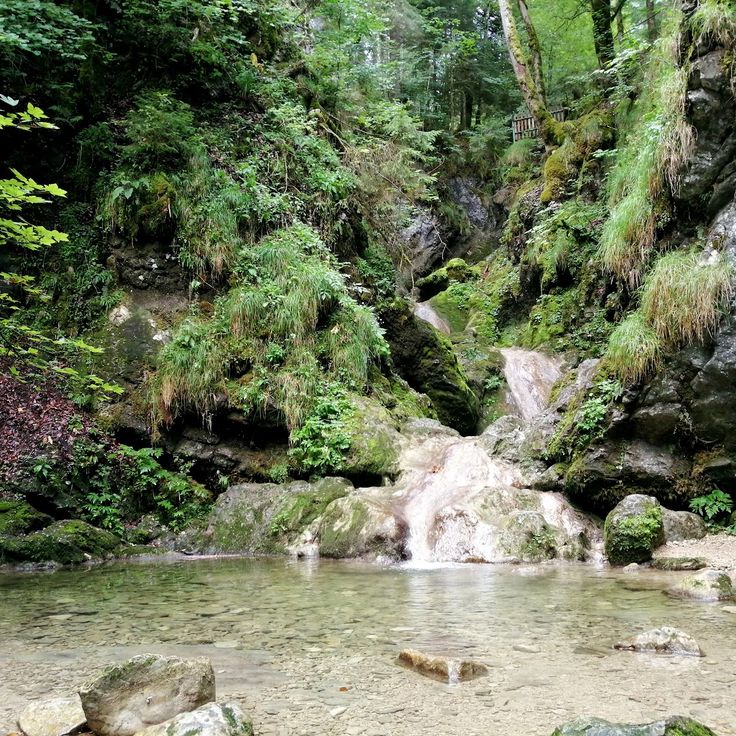
This waterfall drops 89 feet (27 meters) over weathered limestone rocks in the Doubs River and forms a natural water basin at its base. Chaudière Falls represents one of the geological formations that characterize France's varied landscape, which extends from the chalk cliffs of Normandy to the limestone gorges of Provence. The rock displays typical erosion patterns of the Jura region, where river water has shaped limestone layers over thousands of years. The drop height and forceful current have carved a pronounced depression into the bedrock, serving as a natural collection basin. This formation belongs to France's geological diversity, which includes natural bridges, cliffs, canyons, and various limestone plateaus.
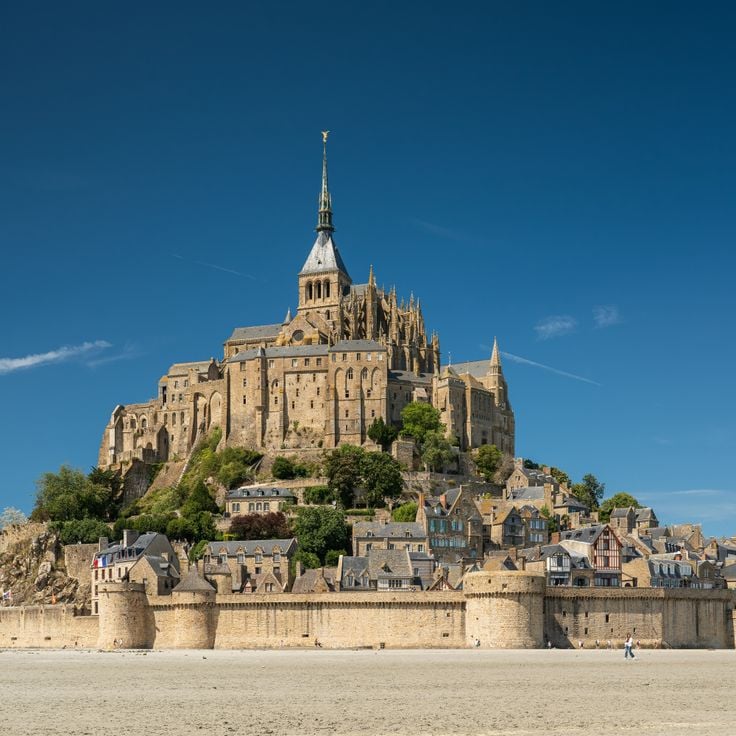
Mont Saint-Michel rises as a granite island 262 feet (80 meters) above the bay and stands among the most notable rock formations in France. This island supports medieval fortifications and an 8th-century Benedictine abbey, with structures built upon the natural granite rock. The geological formation consists of granite that has withstood the sea for over a millennium, serving as the foundation for religious and military constructions.
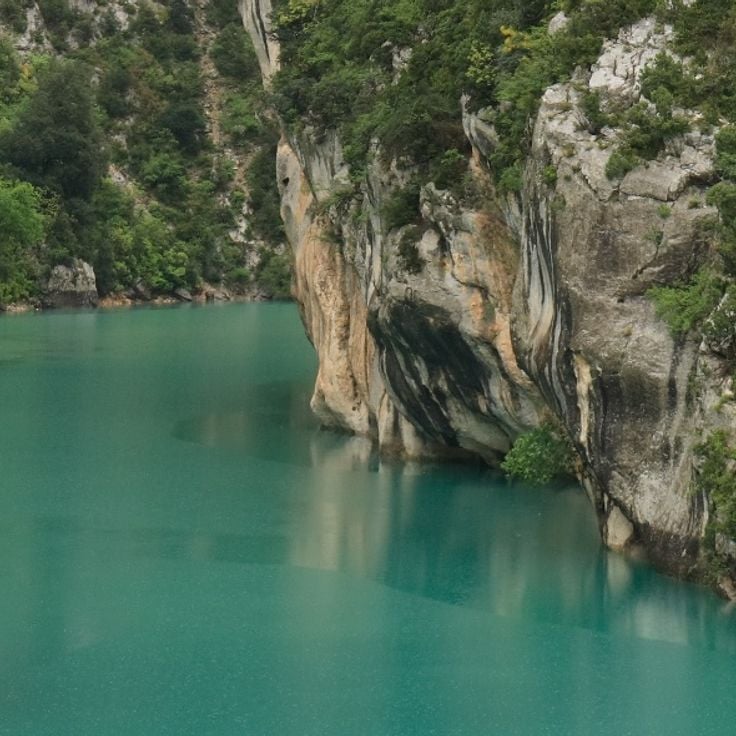
The Verdon Gorge extends for 15 miles (25 kilometers) through the Alpes-de-Haute-Provence, with limestone walls rising up to 2300 feet (700 meters) above the turquoise Verdon River. This geological formation represents one of France's significant rock formations, carved by the river through layers of limestone over millions of years. The canyon demonstrates the erosive power of water on sedimentary rock and provides access to geological strata dating back to the Jurassic period. The gorge's depth and vertical walls make it a notable example of the limestone geological features found throughout the French landscape, alongside the chalk cliffs of Normandy and the natural formations of Provence.
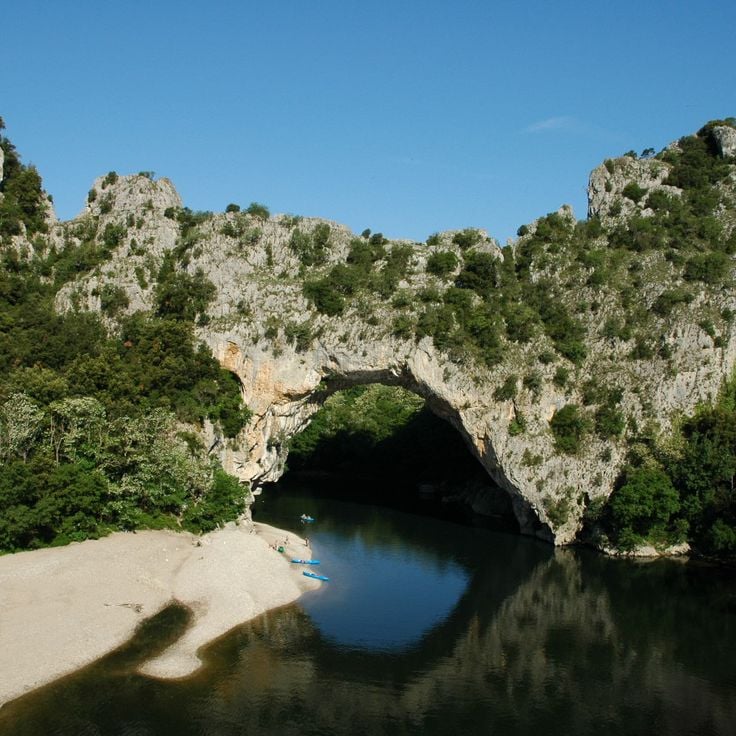
Vallon-Pont-d'Arc is a natural stone bridge formed by the erosive power of the Ardèche River, which has carved through limestone over thousands of years. The arch rises 177 feet (54 meters) above the riverbed and marks the entrance to the Ardèche Gorges. This geological formation ranks among the notable limestone structures in France and demonstrates the long-term effects of fluvial erosion on sedimentary rock. The natural arch spans approximately 197 feet (60 meters) in width and forms a portal between the upper river valley and the canyon section.
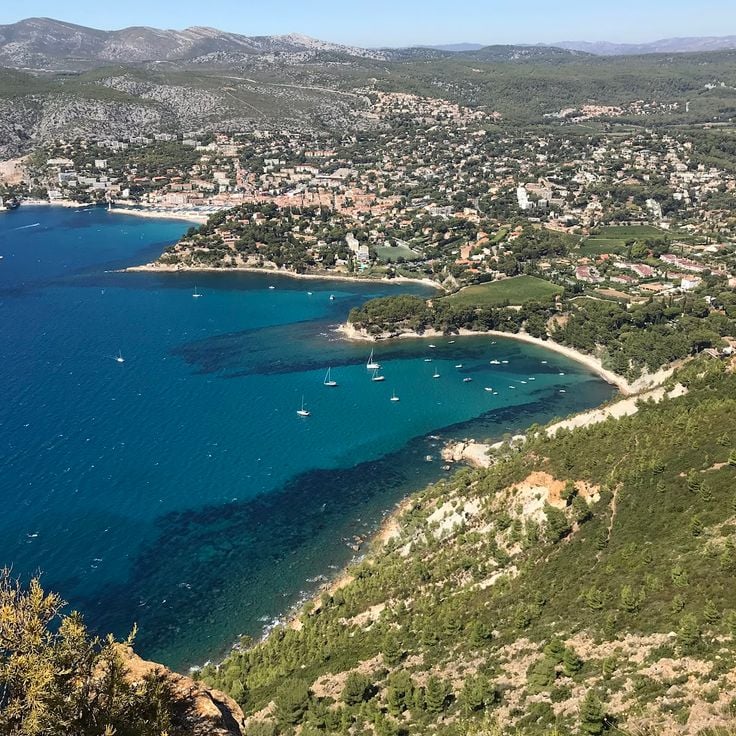
This cliff rises 1,293 feet (394 meters) above the Mediterranean Sea and consists of reddish sandstone. As one of the highest sea cliffs in Europe, Cap Canaille forms the eastern terminus of the Calanques and marks a transition between the white limestone formations to the west and the red sedimentary rocks of this region. The geological formation resulted from tectonic uplift and marine erosion over millions of years. The cliff provides an example of the diverse rock formations found across France, ranging from the chalk cliffs of Normandy to the limestone gorges of Provence. Hiking trails along the summit offer views of the sea and surrounding coastline.
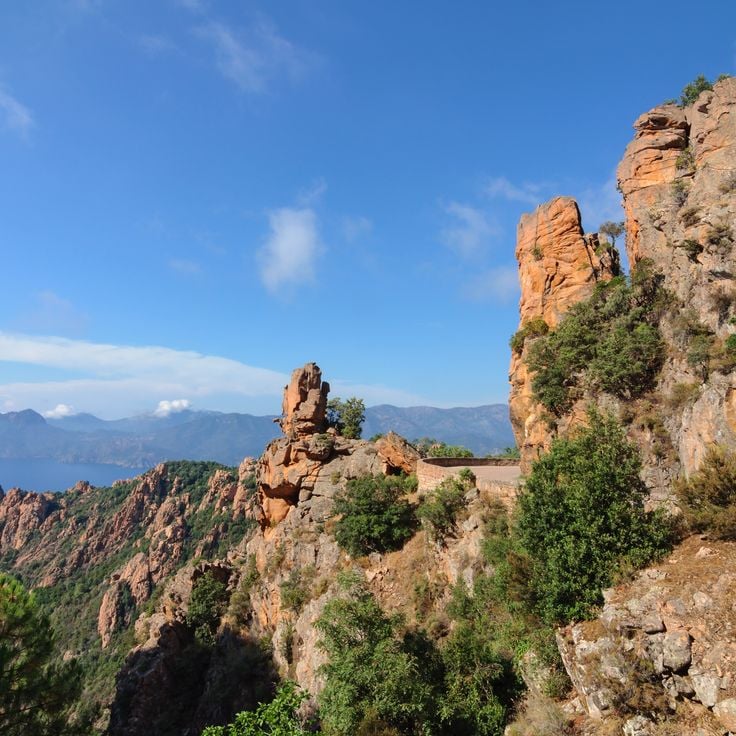
The Calanques of Piana consist of red granite rocks that rise directly from the Mediterranean Sea, forming a six-mile (10-kilometer) coastline. These geological formations represent some of the notable natural landmarks in France and display the volcanic past of Corsica. The rocks feature erosion-formed structures that resemble various shapes. The red stone creates a contrast with the blue waters of the Mediterranean and the vegetation of the region.
Les Pénitents des Mées is a geological formation of sandstone columns extending over 1.2 miles (2 kilometers) along a mountain ridge. These distinctive rock formations reach heights of approximately 330 feet (100 meters) and stand closely together like a procession. The columns formed through erosion of conglomerate rock from the Oligocene epoch. This formation represents one of the notable rock formations in France, demonstrating the geological processes that shaped the Provençal landscape. The vertical structures provide an example of natural weathering of sedimentary rocks in the Alpes-de-Haute-Provence region.
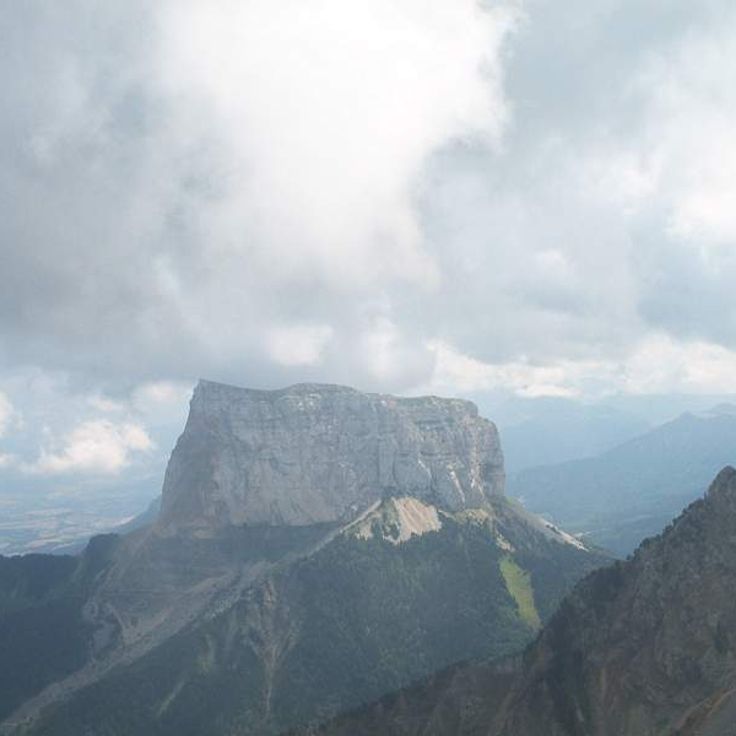
This 6,847-foot (2,087 m) limestone tower rises in isolation within the Vercors mountains, with vertical rock faces on all sides. Mont Aiguille stands among the notable geological formations across France, ranging from the limestone plateaus of the Alps to the coastal cliffs of Normandy. The distinctive flat summit and sheer walls make this formation a prominent example of the country's geological diversity. The mountain is recognized as the site of one of the first documented mountaineering ascents, which took place in 1492.
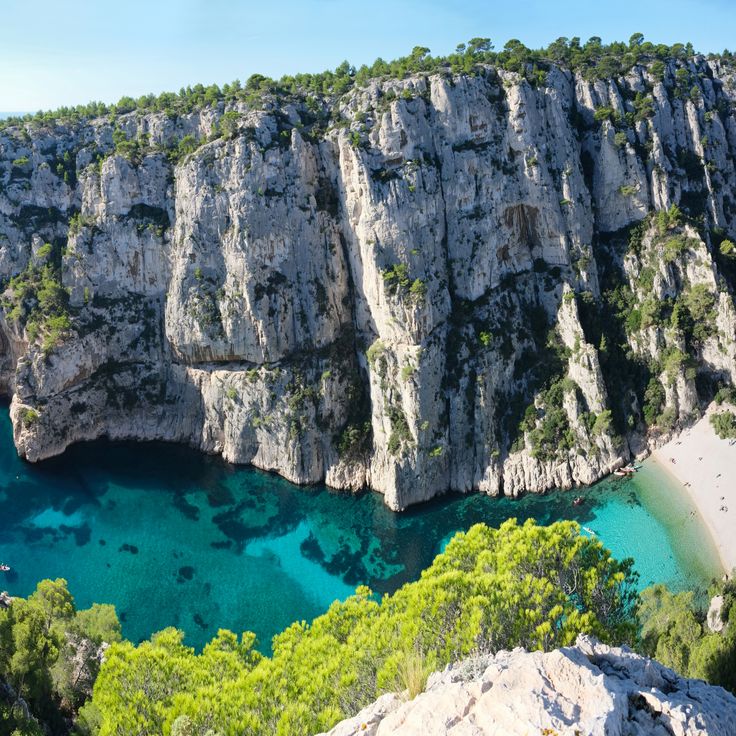
This calanque on the Mediterranean coast between Marseille and Cassis features steep limestone cliffs rising approximately 328 feet (100 meters) above turquoise water. The narrow sea inlet is part of the geological system of calanques formed through erosion of limestone formations. Access to Calanque d'En-Vau is via hiking trails or by sea, providing views of the characteristic rock formations of the Provençal coast. The white limestone cliffs contrast with the blue Mediterranean waters and the Mediterranean vegetation on the upper slopes.
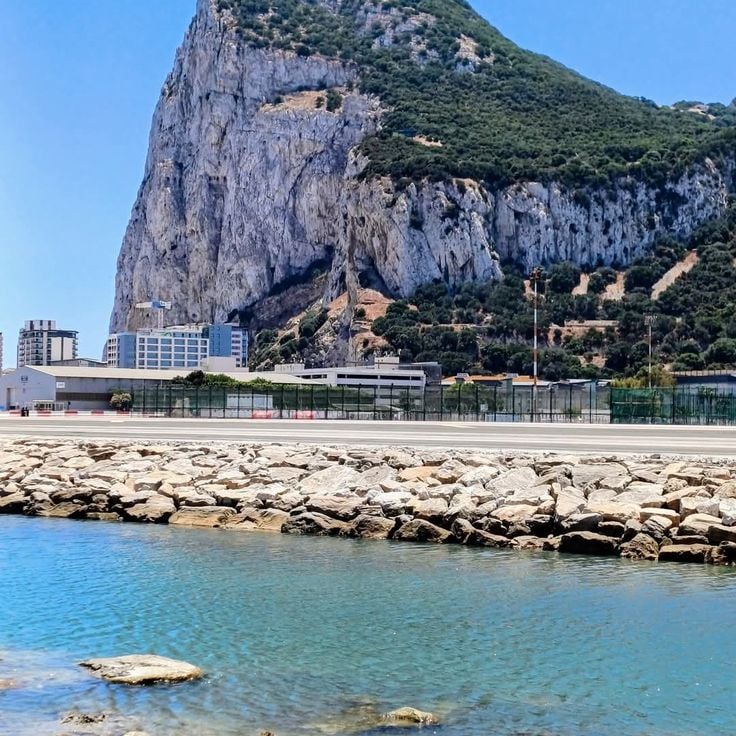
This 426-foot (130-meter) limestone rock with vertical walls marks the strait between the Mediterranean Sea and the Atlantic Ocean. The Rock of Gibraltar forms a geological feature characterized by its massive limestone structure. The formation rises steeply from the sea and shapes the landscape of this coastal region. The rock belongs to the notable limestone formations documented in the collection of geological formations in France. The steep rock walls and the height of the formation make it a recognizable geographic feature of the area.
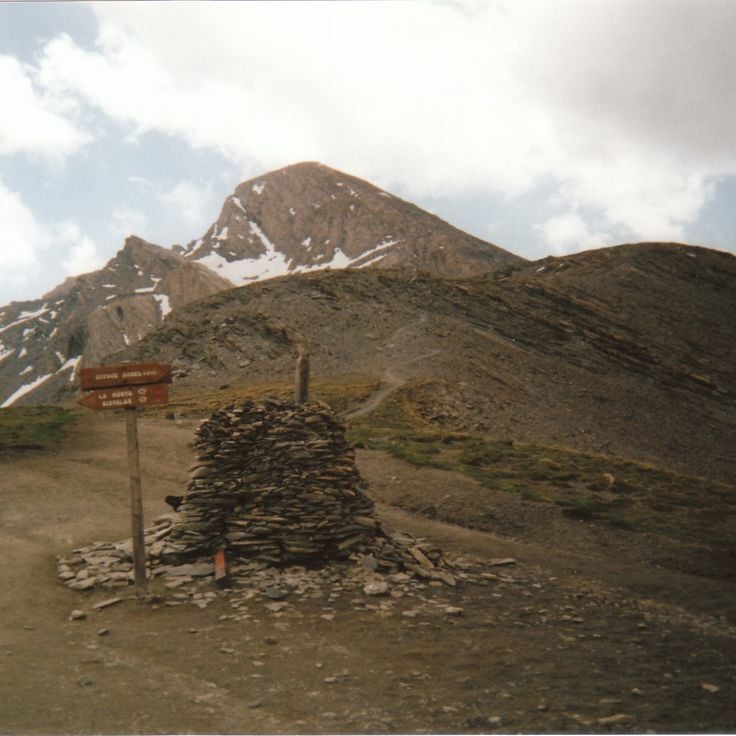
This 10500-foot (3200-meter) granite peak in the French Alps provides views of Mont Blanc and the Monte Rosa massif. The Sugar Loaf Mountain stands among the notable rock formations of the Queyras region and represents the volcanic geological history of the French Alps. The peak rises as part of a landscape shaped by glacial erosion and tectonic processes, displaying various rock types ranging from granite to metamorphic formations.
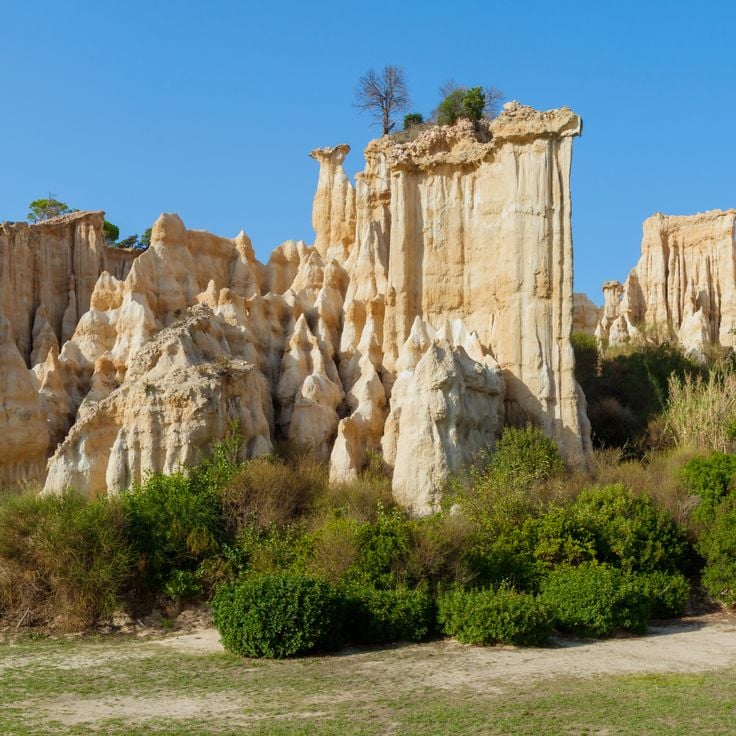
The Orgues d'Ille-sur-Têt are columns of eroded sedimentary rock rising up to 39 feet (12 meters) high, representing notable geological formations in France. These gray structures formed through the erosion of clay and sand deposits over thousands of years. The formation sits at the foothills of the Pyrenees and demonstrates the natural weathering processes that have shaped this region. The columns create a labyrinth of towers and ridges carved by the interplay of wind and water.
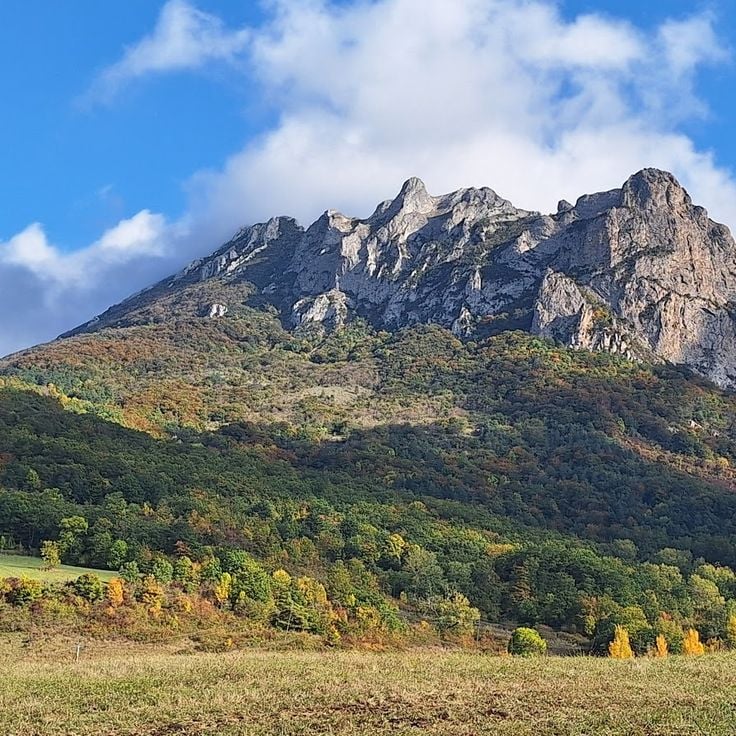
The Pic de Bugarach is a 4035-foot (1230 meter) mountain in the French Pyrenees characterized by its unusual geological formation. The rock layers of this elevation display inverted stratigraphy, where older limestone formations rest above younger rock layers. This geological anomaly resulted from tectonic movements during mountain formation. The mountain is located in the Aude department and forms the highest point in the Corbières range. The formation attracts geologists and hikers who seek to explore this anomaly in geological history.
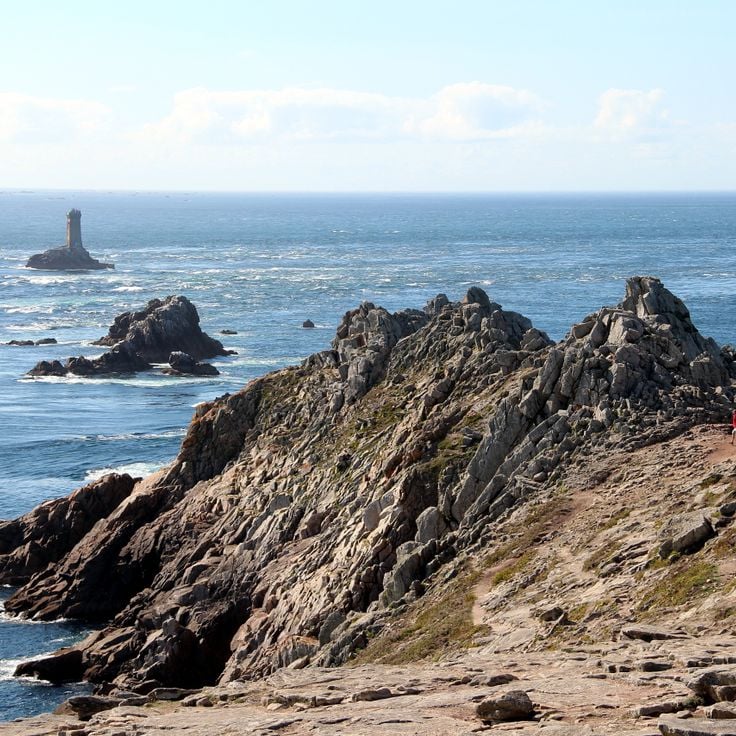
This headland extends along the rugged coastline of Brittany and marks one of the westernmost points of mainland France. Pointe du Raz rises 72 meters (236 feet) above the Atlantic Ocean and displays massive granite formations shaped by centuries of wave and wind erosion. The cliffs are among the geologically significant coastal formations in France and form a notable part of the Breton granite coastline. The area shows typical erosion patterns and steep rock faces that drop into the sea, characterizing this stretch of the shoreline.
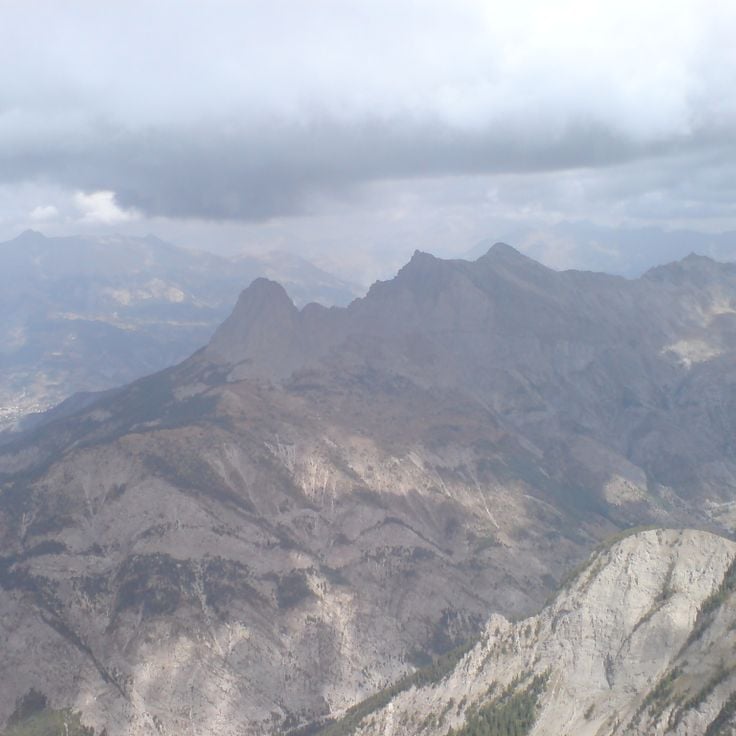
Le Chapeau de Gendarme is a 2682-foot (8800-foot) limestone peak in the Ubaye Valley whose distinctive geometric shape resembles a traditional French police hat. This rock formation is among the geological features of the southern French Alps and forms part of the limestone landscape characterized by steep walls and distinctive profiles. The mountain rises as a freestanding peak above the valley and provides an example of the erosion-shaped limestone formations of the region.
These cliffs rise 295 feet (90 meters) above the English Channel and consist of limestone shaped by thousands of years of natural erosion. The rock formation includes three large natural stone arches that emerge from the white cliffs. The geological structures demonstrate the power of wind and water on sedimentary rock over geological time periods. The rocks extend along the coast of Normandy and form one of France's most recognized coastal landscapes. The natural arches, including the Falaise d'Aval with its characteristic arch and freestanding needle, demonstrate ongoing coastal erosion processes. The chalk deposits in the cliffs contain fossil remains from the Cretaceous period and provide insights into the marine history of the region.
This waterfall drops 89 feet (27 meters) over weathered limestone rocks in the Doubs River and forms a natural water basin at its base. Chaudière Falls represents one of the geological formations that characterize France's varied landscape, which extends from the chalk cliffs of Normandy to the limestone gorges of Provence. The rock displays typical erosion patterns of the Jura region, where river water has shaped limestone layers over thousands of years. The drop height and forceful current have carved a pronounced depression into the bedrock, serving as a natural collection basin. This formation belongs to France's geological diversity, which includes natural bridges, cliffs, canyons, and various limestone plateaus.
Mont Saint-Michel rises as a granite island 262 feet (80 meters) above the bay and stands among the most notable rock formations in France. This island supports medieval fortifications and an 8th-century Benedictine abbey, with structures built upon the natural granite rock. The geological formation consists of granite that has withstood the sea for over a millennium, serving as the foundation for religious and military constructions.
The Verdon Gorge extends for 15 miles (25 kilometers) through the Alpes-de-Haute-Provence, with limestone walls rising up to 2300 feet (700 meters) above the turquoise Verdon River. This geological formation represents one of France's significant rock formations, carved by the river through layers of limestone over millions of years. The canyon demonstrates the erosive power of water on sedimentary rock and provides access to geological strata dating back to the Jurassic period. The gorge's depth and vertical walls make it a notable example of the limestone geological features found throughout the French landscape, alongside the chalk cliffs of Normandy and the natural formations of Provence.
Vallon-Pont-d'Arc is a natural stone bridge formed by the erosive power of the Ardèche River, which has carved through limestone over thousands of years. The arch rises 177 feet (54 meters) above the riverbed and marks the entrance to the Ardèche Gorges. This geological formation ranks among the notable limestone structures in France and demonstrates the long-term effects of fluvial erosion on sedimentary rock. The natural arch spans approximately 197 feet (60 meters) in width and forms a portal between the upper river valley and the canyon section.
This cliff rises 1,293 feet (394 meters) above the Mediterranean Sea and consists of reddish sandstone. As one of the highest sea cliffs in Europe, Cap Canaille forms the eastern terminus of the Calanques and marks a transition between the white limestone formations to the west and the red sedimentary rocks of this region. The geological formation resulted from tectonic uplift and marine erosion over millions of years. The cliff provides an example of the diverse rock formations found across France, ranging from the chalk cliffs of Normandy to the limestone gorges of Provence. Hiking trails along the summit offer views of the sea and surrounding coastline.
The Calanques of Piana consist of red granite rocks that rise directly from the Mediterranean Sea, forming a six-mile (10-kilometer) coastline. These geological formations represent some of the notable natural landmarks in France and display the volcanic past of Corsica. The rocks feature erosion-formed structures that resemble various shapes. The red stone creates a contrast with the blue waters of the Mediterranean and the vegetation of the region.
Les Pénitents des Mées is a geological formation of sandstone columns extending over 1.2 miles (2 kilometers) along a mountain ridge. These distinctive rock formations reach heights of approximately 330 feet (100 meters) and stand closely together like a procession. The columns formed through erosion of conglomerate rock from the Oligocene epoch. This formation represents one of the notable rock formations in France, demonstrating the geological processes that shaped the Provençal landscape. The vertical structures provide an example of natural weathering of sedimentary rocks in the Alpes-de-Haute-Provence region.
This 6,847-foot (2,087 m) limestone tower rises in isolation within the Vercors mountains, with vertical rock faces on all sides. Mont Aiguille stands among the notable geological formations across France, ranging from the limestone plateaus of the Alps to the coastal cliffs of Normandy. The distinctive flat summit and sheer walls make this formation a prominent example of the country's geological diversity. The mountain is recognized as the site of one of the first documented mountaineering ascents, which took place in 1492.
This calanque on the Mediterranean coast between Marseille and Cassis features steep limestone cliffs rising approximately 328 feet (100 meters) above turquoise water. The narrow sea inlet is part of the geological system of calanques formed through erosion of limestone formations. Access to Calanque d'En-Vau is via hiking trails or by sea, providing views of the characteristic rock formations of the Provençal coast. The white limestone cliffs contrast with the blue Mediterranean waters and the Mediterranean vegetation on the upper slopes.
This 426-foot (130-meter) limestone rock with vertical walls marks the strait between the Mediterranean Sea and the Atlantic Ocean. The Rock of Gibraltar forms a geological feature characterized by its massive limestone structure. The formation rises steeply from the sea and shapes the landscape of this coastal region. The rock belongs to the notable limestone formations documented in the collection of geological formations in France. The steep rock walls and the height of the formation make it a recognizable geographic feature of the area.
This 10500-foot (3200-meter) granite peak in the French Alps provides views of Mont Blanc and the Monte Rosa massif. The Sugar Loaf Mountain stands among the notable rock formations of the Queyras region and represents the volcanic geological history of the French Alps. The peak rises as part of a landscape shaped by glacial erosion and tectonic processes, displaying various rock types ranging from granite to metamorphic formations.
The Orgues d'Ille-sur-Têt are columns of eroded sedimentary rock rising up to 39 feet (12 meters) high, representing notable geological formations in France. These gray structures formed through the erosion of clay and sand deposits over thousands of years. The formation sits at the foothills of the Pyrenees and demonstrates the natural weathering processes that have shaped this region. The columns create a labyrinth of towers and ridges carved by the interplay of wind and water.
The Pic de Bugarach is a 4035-foot (1230 meter) mountain in the French Pyrenees characterized by its unusual geological formation. The rock layers of this elevation display inverted stratigraphy, where older limestone formations rest above younger rock layers. This geological anomaly resulted from tectonic movements during mountain formation. The mountain is located in the Aude department and forms the highest point in the Corbières range. The formation attracts geologists and hikers who seek to explore this anomaly in geological history.
This headland extends along the rugged coastline of Brittany and marks one of the westernmost points of mainland France. Pointe du Raz rises 72 meters (236 feet) above the Atlantic Ocean and displays massive granite formations shaped by centuries of wave and wind erosion. The cliffs are among the geologically significant coastal formations in France and form a notable part of the Breton granite coastline. The area shows typical erosion patterns and steep rock faces that drop into the sea, characterizing this stretch of the shoreline.
Le Chapeau de Gendarme is a 2682-foot (8800-foot) limestone peak in the Ubaye Valley whose distinctive geometric shape resembles a traditional French police hat. This rock formation is among the geological features of the southern French Alps and forms part of the limestone landscape characterized by steep walls and distinctive profiles. The mountain rises as a freestanding peak above the valley and provides an example of the erosion-shaped limestone formations of the region.
These cliffs rise 295 feet (90 meters) above the English Channel and consist of limestone shaped by thousands of years of natural erosion. The rock formation includes three large natural stone arches that emerge from the white cliffs. The geological structures demonstrate the power of wind and water on sedimentary rock over geological time periods. The rocks extend along the coast of Normandy and form one of France's most recognized coastal landscapes. The natural arches, including the Falaise d'Aval with its characteristic arch and freestanding needle, demonstrate ongoing coastal erosion processes. The chalk deposits in the cliffs contain fossil remains from the Cretaceous period and provide insights into the marine history of the region.
This waterfall drops 89 feet (27 meters) over weathered limestone rocks in the Doubs River and forms a natural water basin at its base. Chaudière Falls represents one of the geological formations that characterize France's varied landscape, which extends from the chalk cliffs of Normandy to the limestone gorges of Provence. The rock displays typical erosion patterns of the Jura region, where river water has shaped limestone layers over thousands of years. The drop height and forceful current have carved a pronounced depression into the bedrock, serving as a natural collection basin. This formation belongs to France's geological diversity, which includes natural bridges, cliffs, canyons, and various limestone plateaus.
Mont Saint-Michel rises as a granite island 262 feet (80 meters) above the bay and stands among the most notable rock formations in France. This island supports medieval fortifications and an 8th-century Benedictine abbey, with structures built upon the natural granite rock. The geological formation consists of granite that has withstood the sea for over a millennium, serving as the foundation for religious and military constructions.
The Verdon Gorge extends for 15 miles (25 kilometers) through the Alpes-de-Haute-Provence, with limestone walls rising up to 2300 feet (700 meters) above the turquoise Verdon River. This geological formation represents one of France's significant rock formations, carved by the river through layers of limestone over millions of years. The canyon demonstrates the erosive power of water on sedimentary rock and provides access to geological strata dating back to the Jurassic period. The gorge's depth and vertical walls make it a notable example of the limestone geological features found throughout the French landscape, alongside the chalk cliffs of Normandy and the natural formations of Provence.
Vallon-Pont-d'Arc is a natural stone bridge formed by the erosive power of the Ardèche River, which has carved through limestone over thousands of years. The arch rises 177 feet (54 meters) above the riverbed and marks the entrance to the Ardèche Gorges. This geological formation ranks among the notable limestone structures in France and demonstrates the long-term effects of fluvial erosion on sedimentary rock. The natural arch spans approximately 197 feet (60 meters) in width and forms a portal between the upper river valley and the canyon section.
This cliff rises 1,293 feet (394 meters) above the Mediterranean Sea and consists of reddish sandstone. As one of the highest sea cliffs in Europe, Cap Canaille forms the eastern terminus of the Calanques and marks a transition between the white limestone formations to the west and the red sedimentary rocks of this region. The geological formation resulted from tectonic uplift and marine erosion over millions of years. The cliff provides an example of the diverse rock formations found across France, ranging from the chalk cliffs of Normandy to the limestone gorges of Provence. Hiking trails along the summit offer views of the sea and surrounding coastline.
The Calanques of Piana consist of red granite rocks that rise directly from the Mediterranean Sea, forming a six-mile (10-kilometer) coastline. These geological formations represent some of the notable natural landmarks in France and display the volcanic past of Corsica. The rocks feature erosion-formed structures that resemble various shapes. The red stone creates a contrast with the blue waters of the Mediterranean and the vegetation of the region.
Les Pénitents des Mées is a geological formation of sandstone columns extending over 1.2 miles (2 kilometers) along a mountain ridge. These distinctive rock formations reach heights of approximately 330 feet (100 meters) and stand closely together like a procession. The columns formed through erosion of conglomerate rock from the Oligocene epoch. This formation represents one of the notable rock formations in France, demonstrating the geological processes that shaped the Provençal landscape. The vertical structures provide an example of natural weathering of sedimentary rocks in the Alpes-de-Haute-Provence region.
This 6,847-foot (2,087 m) limestone tower rises in isolation within the Vercors mountains, with vertical rock faces on all sides. Mont Aiguille stands among the notable geological formations across France, ranging from the limestone plateaus of the Alps to the coastal cliffs of Normandy. The distinctive flat summit and sheer walls make this formation a prominent example of the country's geological diversity. The mountain is recognized as the site of one of the first documented mountaineering ascents, which took place in 1492.
This calanque on the Mediterranean coast between Marseille and Cassis features steep limestone cliffs rising approximately 328 feet (100 meters) above turquoise water. The narrow sea inlet is part of the geological system of calanques formed through erosion of limestone formations. Access to Calanque d'En-Vau is via hiking trails or by sea, providing views of the characteristic rock formations of the Provençal coast. The white limestone cliffs contrast with the blue Mediterranean waters and the Mediterranean vegetation on the upper slopes.
This 426-foot (130-meter) limestone rock with vertical walls marks the strait between the Mediterranean Sea and the Atlantic Ocean. The Rock of Gibraltar forms a geological feature characterized by its massive limestone structure. The formation rises steeply from the sea and shapes the landscape of this coastal region. The rock belongs to the notable limestone formations documented in the collection of geological formations in France. The steep rock walls and the height of the formation make it a recognizable geographic feature of the area.
This 10500-foot (3200-meter) granite peak in the French Alps provides views of Mont Blanc and the Monte Rosa massif. The Sugar Loaf Mountain stands among the notable rock formations of the Queyras region and represents the volcanic geological history of the French Alps. The peak rises as part of a landscape shaped by glacial erosion and tectonic processes, displaying various rock types ranging from granite to metamorphic formations.
The Orgues d'Ille-sur-Têt are columns of eroded sedimentary rock rising up to 39 feet (12 meters) high, representing notable geological formations in France. These gray structures formed through the erosion of clay and sand deposits over thousands of years. The formation sits at the foothills of the Pyrenees and demonstrates the natural weathering processes that have shaped this region. The columns create a labyrinth of towers and ridges carved by the interplay of wind and water.
The Pic de Bugarach is a 4035-foot (1230 meter) mountain in the French Pyrenees characterized by its unusual geological formation. The rock layers of this elevation display inverted stratigraphy, where older limestone formations rest above younger rock layers. This geological anomaly resulted from tectonic movements during mountain formation. The mountain is located in the Aude department and forms the highest point in the Corbières range. The formation attracts geologists and hikers who seek to explore this anomaly in geological history.
This headland extends along the rugged coastline of Brittany and marks one of the westernmost points of mainland France. Pointe du Raz rises 72 meters (236 feet) above the Atlantic Ocean and displays massive granite formations shaped by centuries of wave and wind erosion. The cliffs are among the geologically significant coastal formations in France and form a notable part of the Breton granite coastline. The area shows typical erosion patterns and steep rock faces that drop into the sea, characterizing this stretch of the shoreline.
Le Chapeau de Gendarme is a 2682-foot (8800-foot) limestone peak in the Ubaye Valley whose distinctive geometric shape resembles a traditional French police hat. This rock formation is among the geological features of the southern French Alps and forms part of the limestone landscape characterized by steep walls and distinctive profiles. The mountain rises as a freestanding peak above the valley and provides an example of the erosion-shaped limestone formations of the region.