Côte de Granit Rose, Natural coastal area in northern Brittany, France.
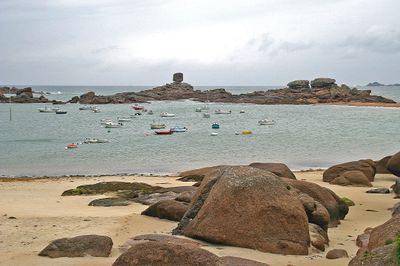
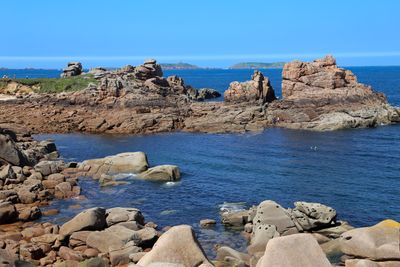
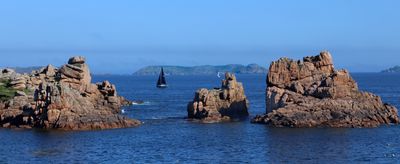
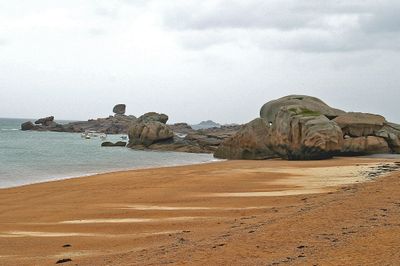
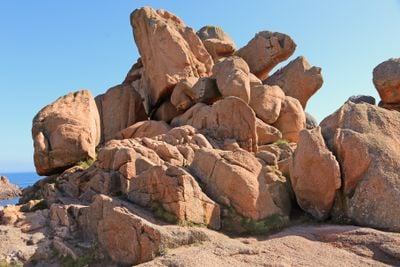
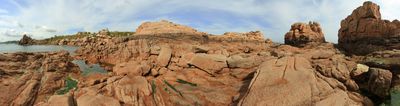
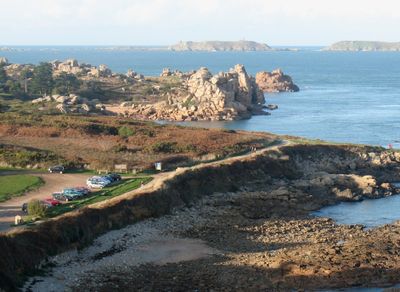
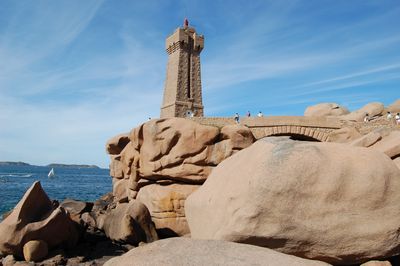
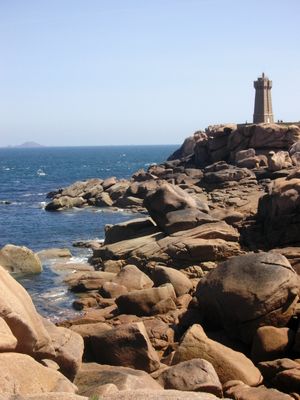
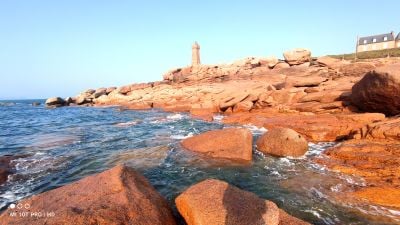
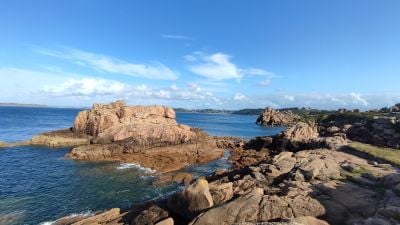
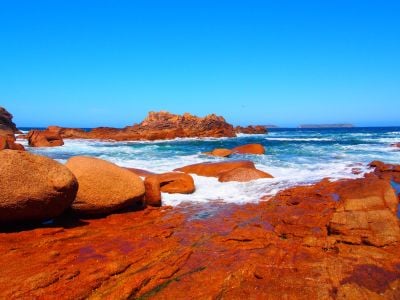
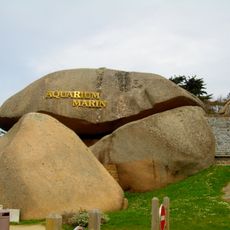
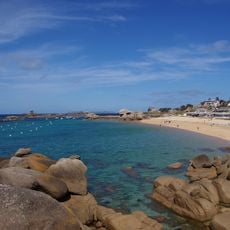
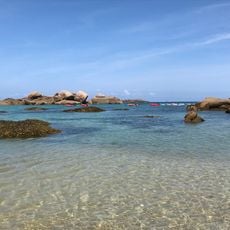
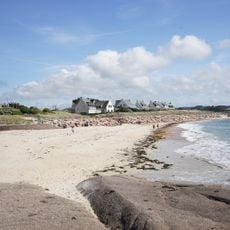
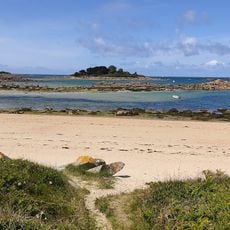
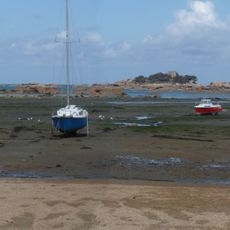
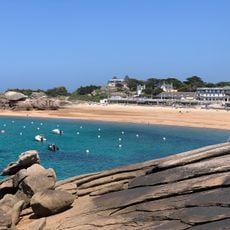
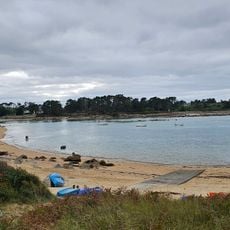
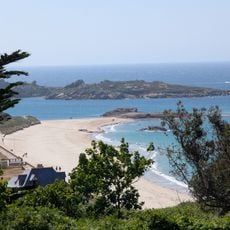
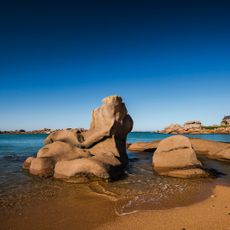
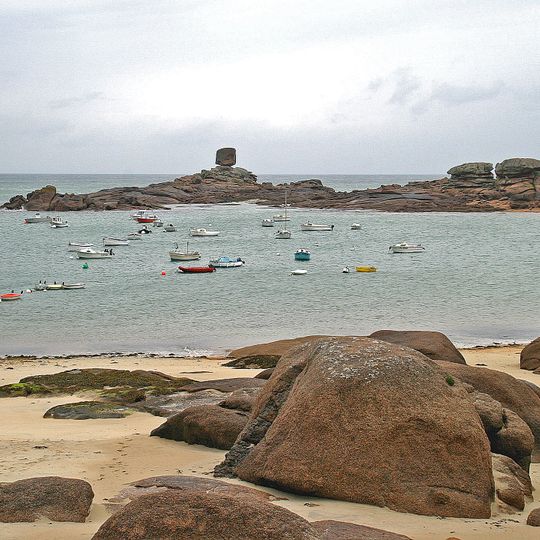
The coast stretches thirty kilometers from Plestin-les-Grèves to Louannec with formations of pink granite along turquoise waters. Massive rounded rocks rise from sand and seawater, creating coves, caves, and natural arches. Tidal pools form between boulders at low tide, sheltering marine life. Vegetation grows on cliffs above the tide line.
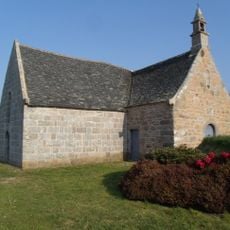
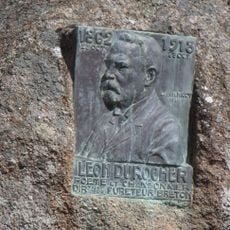
The pink granite formed around 300 million years ago during the Variscan orogeny, coloured by haematite and alkali feldspar. In 1901 the Syndicat artistique de protection des sites pittoresques de Ploumanac'h was founded in Paris to buy up sensitive land and shield the rocks from damage. An association to safeguard the customs officers' path followed in 1928, and in 1986 the Conservatoire du littoral acquired 35 hectares. From 2000 to 2007 the site, receiving some 700,000 visitors a year, underwent major rehabilitation.
The region has inspired artists, writers, and architects since the late nineteenth century. Hotels and villas along the coast feature granite from local quarries. Several municipalities organize festivals and cultural events that combine maritime traditions with modern tourism. The coastal landscape remains a popular subject for painters and photographers.
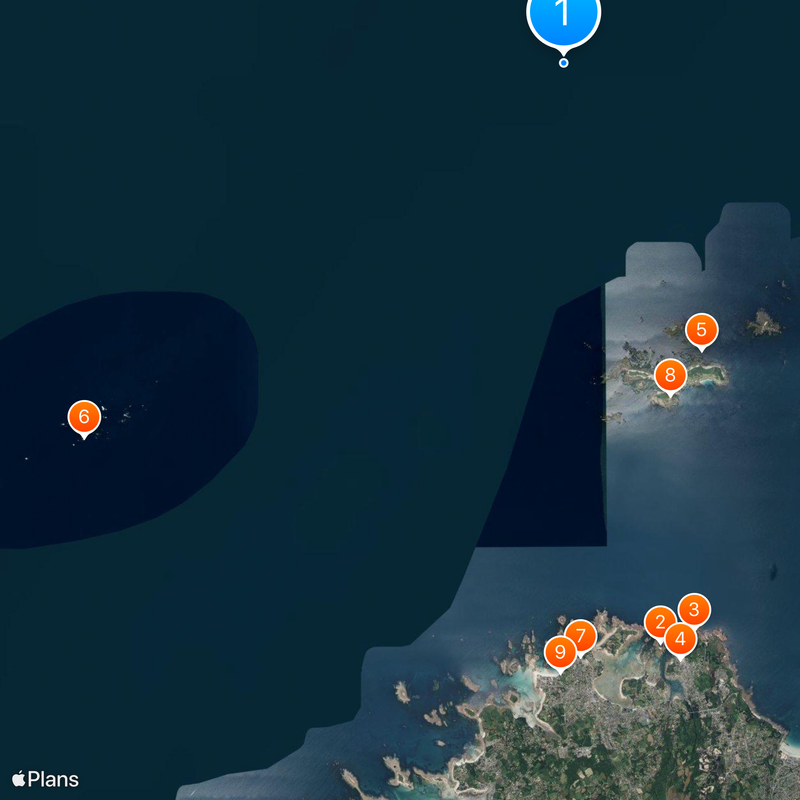
The GR 34 hiking trail connects multiple beaches and provides access to the coastal formations. Visitors should consult tide tables to explore tidal pools during low water. Parking areas are available at Ploumanac'h, Trégastel, and Perros-Guirec. Local tourism offices provide maps and boat excursions to the Sept-Îles archipelago. Sturdy footwear is recommended for rocky terrain.
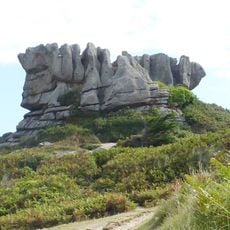
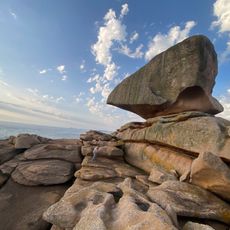
Similar geological formations exist only in Corsica and China worldwide. The stones show color variations from pink to grey, with intense rose hues visible during direct sunlight. Erosion patterns have shaped some rocks into recognizable forms that carry local names like Le Chapeau de Napoléon and Le Dé.
The community of curious travelers
AroundUs brings together thousands of curated places, local tips, and hidden gems, enriched daily by 92,719 contributors worldwide.