Besançon Cathedral, Catholic cathedral in Besançon, France.
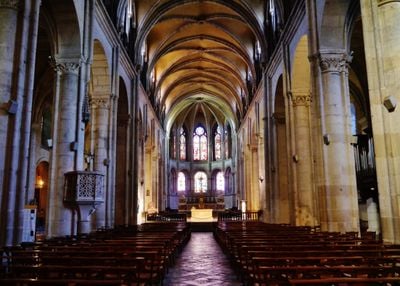
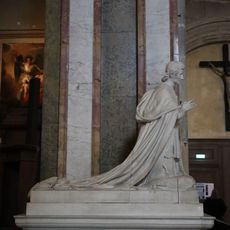
Besançon Cathedral is a stone church with a large nave flanked by two aisles and two facing apses, each with an altar. It has no transept and no main doorway. The Romanesque arches date from the 13th century, and the choir was rebuilt in the 18th century. The western apse has seven Romanesque windows below seven Gothic bays.
A 9th-century Carolingian basilica was rebuilt between 1127 and 1161; a fire destroyed its timber frame in 1212. The bell tower collapsed in 1724 and was replaced in 1730 by the eastern apse of the Holy Shroud, decorated in Louis XV style. The cathedral was classified as a historic monument in 1875.
The name Saint-Jean comes from Archbishop Bernoin's 9th-century consecration, linking the church to Saint John through the city's founders Ferjeux and Ferréol. The 1050 Rose of Saint John, a white marble eight-lobed altar over a metre wide, now stands in the chapel dedicated to Saint Joseph. Stendhal set chapter 28 of Le Rouge et le Noir in the cathedral during Corpus Christi.
Visitors can usually enter freely and explore at their own pace, though guided tours with expert explanations are available if you prefer. Wearing comfortable shoes helps since there is much to see and the interior invites slow, careful looking.
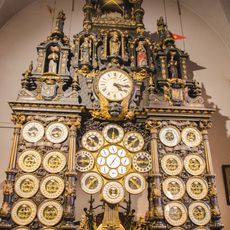
Inside the cathedral stands a 19th-century astronomical clock that shows not just the time but also heavenly movements and features mechanical figures that perform on schedule. These moving figures have captivated visitors for generations with their synchronized movements.
The community of curious travelers
AroundUs brings together thousands of curated places, local tips, and hidden gems, enriched daily by 94,440 contributors worldwide.