National Museum of Ceramics, Ceramics museum in Sèvres, France
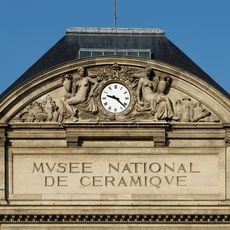
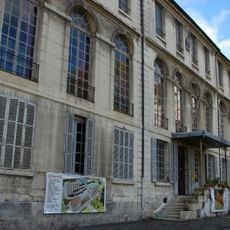
The National Museum of Ceramics in Sèvres holds nearly 50,000 ceramic objects from prehistory to the present, with the largest share European pieces from the 15th to 19th centuries. Its neoclassical building, designed by Alexandre Laudin and inaugurated in 1876, has a curved pediment with a clock flanked by two sculpted female figures holding urns. Inside, a gallery with parquet flooring and pale stone columns displays three large ornamental vases on plinths before a red wall with nine small shelves.
This museum was founded in 1824 as a place to inspire the craftspeople working at the royal pottery factory and to support research in ceramics. The creation reflected a growing interest in preserving and studying the techniques of ceramic arts.
The ceramics on display here reflect how different regions developed their own craft techniques and styles over time. You can see the contrast between Eastern and Western approaches to shaping and decorating clay.
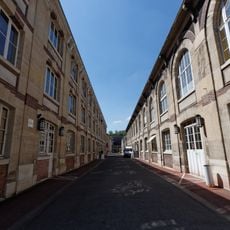
The museum has been closed since 1 January 2026 for renovation, with reopening planned around 2030; check before planning a visit. The building stands beside the Saint-Cloud park in Sèvres, on the site given by Napoleon III, and the collection is displayed across three floors.
The museum began with two collections already at the Sèvres factory: terracotta models used to make porcelain biscuits and antique Greek, Etruscan and Roman vases from Dominique-Vivant Denon's collection, bought by Louis XVI in 1785. Brongniart named the former porcelain painter Désiré Riocreux as first curator in 1824.
The community of curious travelers
AroundUs brings together thousands of curated places, local tips, and hidden gems, enriched daily by 94,076 contributors worldwide.