Pont de Sèvres, Road bridge in Boulogne-Billancourt and Sèvres, France
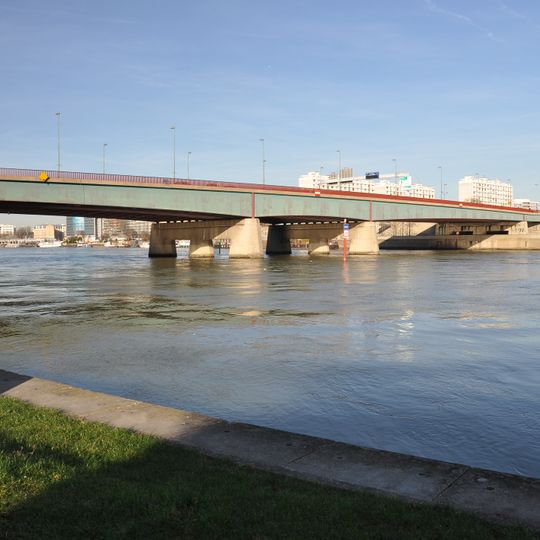
The Pont de Sèvres is a road bridge crossing the Seine river to connect Boulogne-Billancourt and Sèvres, spanning a total of 150 meters. The structure features multiple traffic lanes and a main central span of approximately 80 meters to carry vehicles between the two municipalities.
A first wooden bridge was built in 1684 by decision of Louis XIV to ease travel between Paris and Versailles, at the downstream tip of Île Seguin. Napoleon I replaced it with a masonry bridge begun in 1808 under engineers Jean Joseph Pierre Vigoureux and Corneille Lamandé; damaged in the Hundred Days fighting, it was finished only in 1820. The present steel-beam bridge with reinforced-concrete slabs entered service in 1963.
The bridge gives its name to the Pont de Sèvres district in Boulogne-Billancourt, to a Paris Métro Line 9 terminus and to a former station on the Moulineaux line. The rue du Vieux-Pont-de-Sèvres recalls the wooden bridge built in 1684 under Louis XIV.
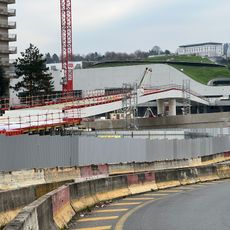
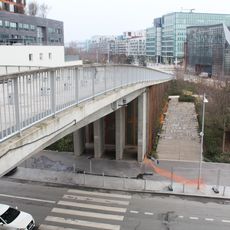
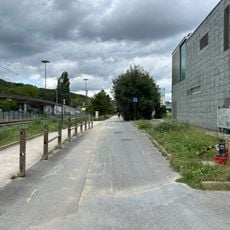
The bridge carries the RD 910 and is crossed by tramway Line 2, with sidewalks on both sides. A cycle lane installed on the upstream sidewalk in the early 2010s was little used and poorly connected to the banks; temporary cycle lanes were added in June 2020. Work at the left-bank junction by the Manufacture de Sèvres aims to create a continuous cycle route by 2028.
The bridge gave its name to the Pont de Sèvres metro station, the western terminus of Paris Métro Line 9, as well as to a former station on the Moulineaux line and a bus station. A street in Boulogne-Billancourt, the rue du Vieux-Pont-de-Sèvres, still recalls the wooden bridge built in 1684.
The community of curious travelers
AroundUs brings together thousands of curated places, local tips, and hidden gems, enriched daily by 93,404 contributors worldwide.