Temple of Diana, Roman temple in Nîmes, France.
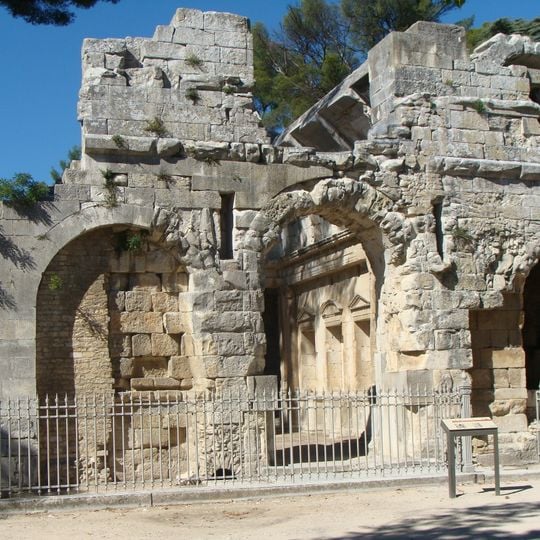
The Temple of Diana is a 1st-century Roman building in Nîmes, partly cut into the slope of Mount Cavalier. Its main facade has three large arches, and the surviving vaulted hall measures 14.5 by 9.5 metres. The north wall holds five rectangular niches with alternating triangular and semi-circular pediments, once separated by composite columns.
Built under Augustus in the 1st century, the building was probably not a temple: its basilica-like plan and the absence of any evidence for a dedication to Diana suggest a library. Its facade was rebuilt in the 2nd century, and in the Middle Ages it housed a monastery, which saved it from destruction. Excavated in 1745 during the creation of the garden of La Fontaine, it was made a monument historique in 1840.
The building's layout with recessed wall spaces and basilica-like structure suggests it may have served as a library for storing and displaying scrolls rather than as a religious sanctuary. This practical design would have made it a center for learning and knowledge in Roman Nîmes.
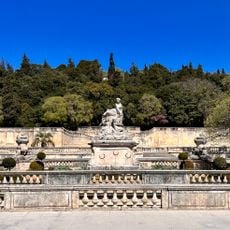
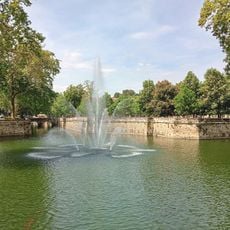
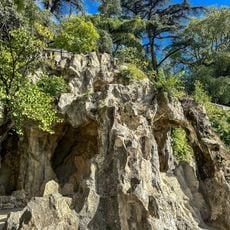
The building is reached from the Jardins de la Fontaine, the garden laid out around the spring of La Fontaine from 1745. The vaulted hall is partly cut into the slope of Mount Cavalier, so the ground is uneven underfoot and the floor of the hall lies below the level of the surrounding paths.
The building's identification as a temple rests on tradition, not evidence: its basilica-like plan and the absence of any archaeological or literary trace of a dedication to Diana led scholars to propose it was a library. The opus sectile floor of coloured marble set in mortar came to light during the 1745 excavations for the garden of La Fontaine.
The community of curious travelers
AroundUs brings together thousands of curated places, local tips, and hidden gems, enriched daily by 93,603 contributors worldwide.