Château d'Écouen, Renaissance château and national museum in Écouen, France.
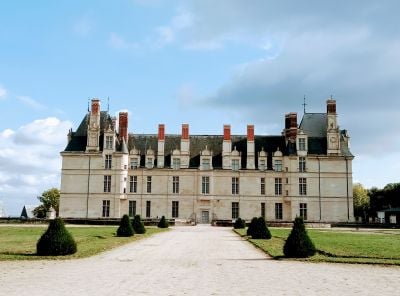
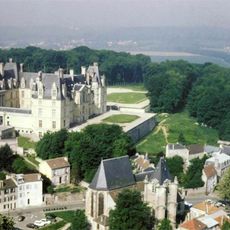
Château d'Écouen is a pale cream stone château built around a central court, with two three-story residential wings joined by a lower entrance wing. The north wing carries Jean Bullant's neo-classical peristyles, and rows of dormer windows line the top floors. Since 1977 it has housed the Musée national de la Renaissance.
Anne de Montmorency ordered its construction between 1539 and 1555, replacing a medieval castle that had stood on the same spot. The building reflects how French nobility adopted Renaissance architecture to express their power and wealth during this transformative period.
The museum's most famous holding is a ten-piece tapestry series telling the story of David and Bathsheba, woven in Brussels around 1515–1520 and thought to have belonged to Henry VIII of England. Its 75-metre length dictated the choice of Écouen, the only available heritage site large enough to display it. The collection also includes Limoges painted enamels, Ottoman ceramics and the arms assembled by Édouard de Beaumont.
The location north of Paris is accessible by public transportation, making it straightforward to visit without a car. Plan for a morning or afternoon visit to view the collections at a comfortable pace without rushing through the galleries.
The David and Bathsheba tapestries, ten panels woven in Brussels around 1515-1520 and thought to have belonged to Henry VIII of England, measure about 75 metres and dictated the choice of Écouen as a museum: it was the only available heritage site large enough to display them.
The community of curious travelers
AroundUs brings together thousands of curated places, local tips, and hidden gems, enriched daily by 93,521 contributors worldwide.