Abbey of Valsaintes, Cistercian abbey in Simiane-la-Rotonde, France
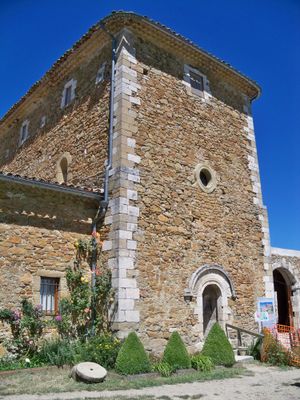
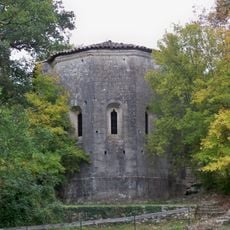
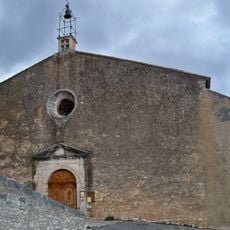
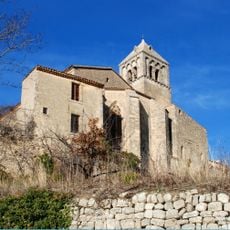
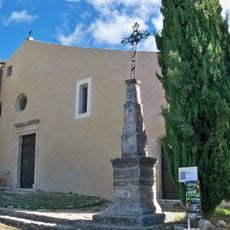
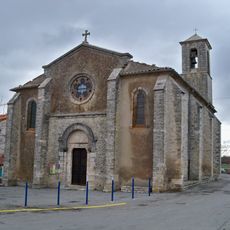
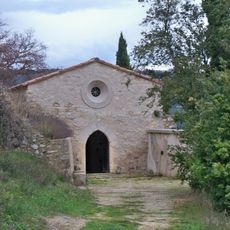
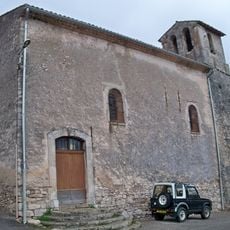
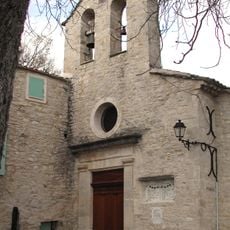
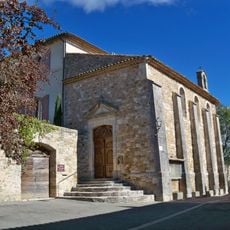
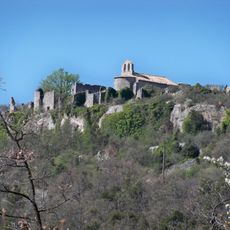
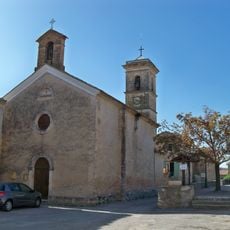
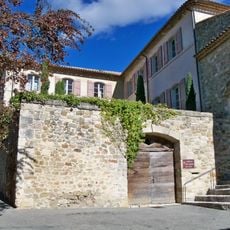
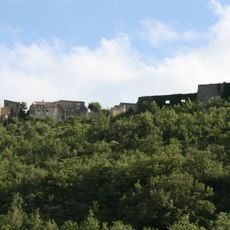
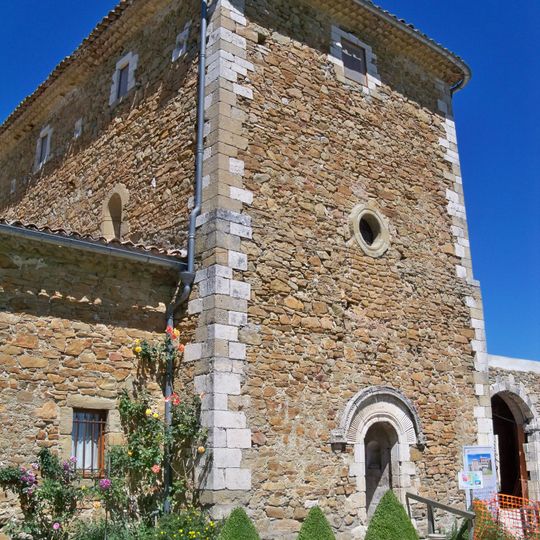
The Abbey of Valsaintes occupies a rectangular two-storey building on a hill, its lower level housing the church. The church has a single nave with a pointed barrel vault and a flat chevet pierced by three tall narrow windows, with a secular upper floor above. The walls are of irregular brown and tan stone, with lighter dressed quoins at the corner and around a round-arched doorway and a small round window.
Founded in 1180 by monks from Silvacane at L'Abbadie, about two kilometres from the present site, the abbey was destroyed by Raymond de Turenne and united with Silvacane in 1440. In 1668 the community moved to the castle of Boulinette, where a new abbey church was consecrated in 1672. The monks were expelled in 1790, and the buildings later served as a farm, stable and sheepfold.
The gardens here display Mediterranean plants and roses organized by theme, reflecting how this place has been shaped by the region's horticultural traditions. Visitors walking through can observe the care put into maintaining these spaces and their importance to local heritage.
The gardens can be toured on foot, with a walk through all sections taking roughly two hours. Visitors receive written guides with plant information and can take their time exploring the different zones at their own pace.
The abbey's arms, recorded in the sources, are "De sinople à un écureuil d'argent, coupé d'or à un pairle de gueules": a silver squirrel on green above a red Y-shaped pall on gold. The site also kept a glassworks in the Middle Ages, whose production became well known; the surviving 12th-century church has a secular upper floor above the vaulted nave.
The community of curious travelers
AroundUs brings together thousands of curated places, local tips, and hidden gems, enriched daily by 95,500 contributors worldwide.