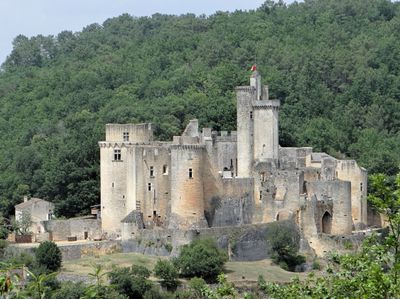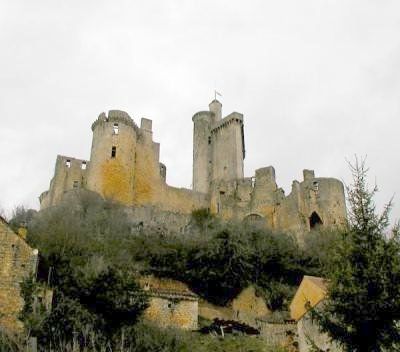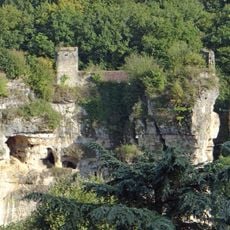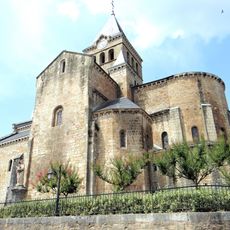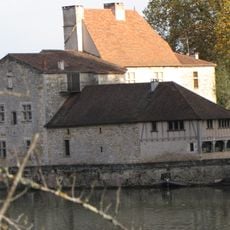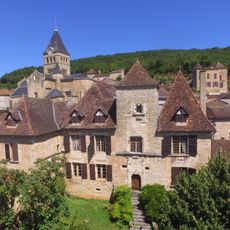
Château de Bonaguil, Medieval castle in Saint-Front-sur-Lémance, France
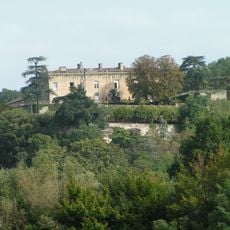
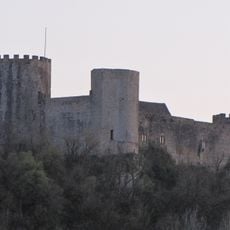
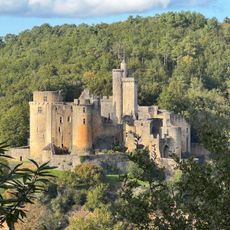
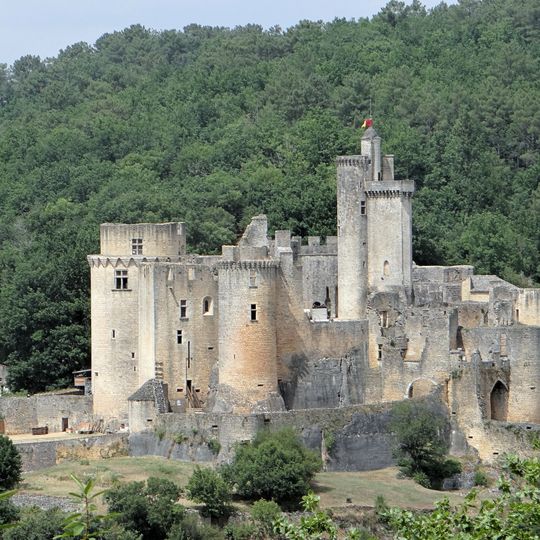
Château de Bonaguil is a medieval fortress perched on a limestone ridge in southwestern France, featuring thick defensive walls, numerous towers, and a network of underground passages throughout its structure. The complex displays the fortification techniques typical of medieval military architecture with multiple defensive layers.
The fortress was founded in the 13th century and underwent major transformation between 1480 and 1510 when Bérenger de Roquefeuil modernized it with artillery defenses. These renovations marked the shift from medieval to early modern military technology on the structure.
The castle hosts a summer theater festival that has brought performances to its grounds for decades, drawing audiences who experience classical and contemporary works within medieval walls. This tradition has transformed the fortress into a living cultural venue beyond its defensive purpose.
Visitors can join guided tours or explore the grounds independently, with a nature trail showcasing former iron ore quarries and local plant life. Wear comfortable shoes since the castle sits on a hill with some steep pathways.
The fortress was equipped with advanced artillery defense systems yet never faced an actual attack throughout its military history. This makes it a rare example of a fortification whose defensive capabilities were never tested in battle.
Location: Saint-Front-sur-Lémance
Inception: 16 century
Architectural style: medieval architecture
Website: http://chateau-bonaguil.com
GPS coordinates: 44.53812,1.01432
Latest update: December 6, 2025 16:01
France's historical architecture documents two millennia of construction, from Roman amphitheaters to modern bridge engineering. The structures demonstrate developments in engineering and architecture across multiple periods. The heritage extends from medieval fortifications like Carcassonne and the Fortress of Salses through Gothic cathedrals such as Notre-Dame de Paris and Amiens Cathedral to Renaissance châteaux including Chambord and Chenonceau. Roman engineering persists in the Pont du Gard and the Arena of Nîmes, while the Papal Palace in Avignon and Sainte-Chapelle illustrate medieval political and religious authority. The Loire Valley châteaux and fortified structures like Bonaguil and Pierrefonds demonstrate defensive architecture and aristocratic living. The 20th century brought new perspectives with Le Corbusier's Villa Savoye, a defining work of modern architecture. The Millau Viaduct represents contemporary engineering achievement. Pilgrimage sites like the Basilica of Sainte-Anne-d'Auray and Mont Saint Michel Abbey combine religious significance with architectural skill. These structures provide insight into French history, construction traditions and technical innovation through the centuries.
Medieval castles and fortresses span Europe, documenting defense systems and princely seats from the 9th through 16th centuries. These sites include mountaintop strongholds such as Montségur in the Pyrenees, island fortifications like Trakai in Lithuania, and coastal defenses such as Kronborg in Denmark. Construction methods range from Romanesque towers to late medieval artillery positions, from Moorish palaces like the Alhambra to Gothic defensive structures like Burg Eltz. Many of these sites feature multiple rings of fortifications, underground passages, and residential quarters that provide insights into both military and civil aspects of medieval life. The collection includes locations in varied geographical contexts. Predjama Castle in Slovenia is built into a cliff face, while Eilean Donan in Scotland occupies a tidal island. Fortresses such as Sant Ferran near Figueres demonstrate 18th century military architecture with star shaped bastions. Some sites like Neuschwanstein were constructed in the 19th century in historicist style, combining romantic ideals with engineering advances of their era. Further examples include Château de Chambord in the Loire Valley, Peles Castle in the Carpathian Mountains, and Bojnice in Slovakia. These sites document functions ranging from border fortresses to royal residences and show the evolution of European military architecture across several centuries.
The Nouvelle-Aquitaine region contains historic and natural sites often overlooked by traditional tourist routes. The area features military castles such as Bonaguil with its seven 13th-century towers, underground churches carved into limestone in Saint-Émilion and Aubeterre-sur-Dronne, as well as caves decorated with Paleolithic paintings like that of Villars. Medieval villages such as Talmont-sur-Gironde preserve their original layout and overlook the Gironde estuary. From Dordogne to the Pyrenean foothills, the region presents rock-hewn forts like Maison Forte de Reignac, Benedictine abbeys established since the 8th century in Brantôme, and Romanesque churches like the Collegiate Church of Saint-Léonard-de-Noblat. The Vayres and Roquetaillade castles demonstrate the evolution of fortified architecture from the Middle Ages to the Renaissance. These sites reflect the military, religious, and cultural history of the region and provide diverse examples of southwestern France's architectural heritage.
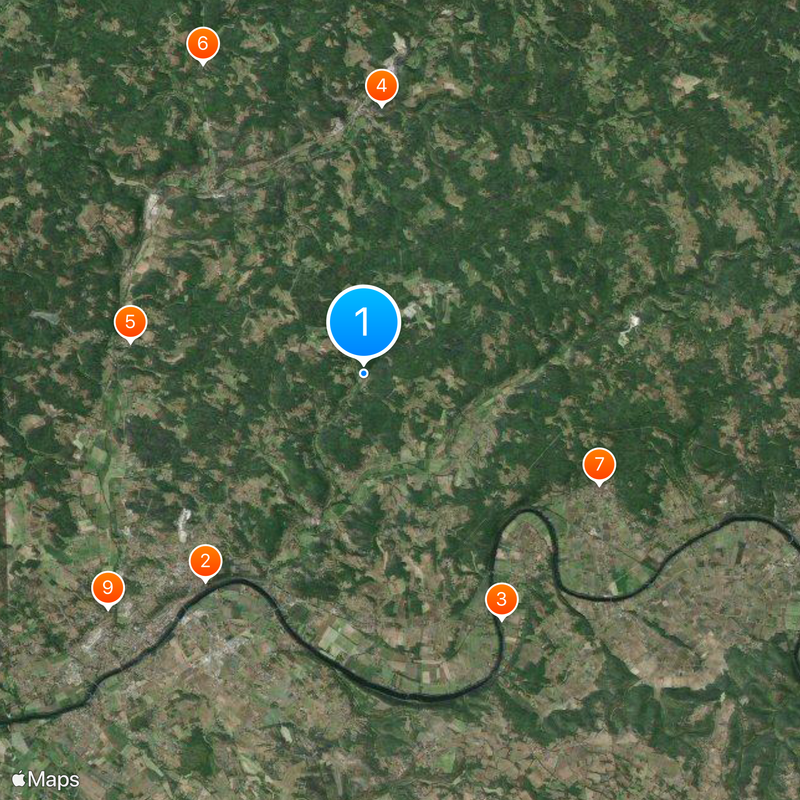
Château de Fumel
5.7 km
Source Bleue
6.2 km
Château des Rois ducs
5.9 km
Château de Cuzorn
5.2 km
Château de Blanquefort-sur-Briolance
7.7 km
Église Saint-Hilarion de Duravel
5.7 km
Église Saint-Géraud de Monsempron-Libos
7.6 km
Prieuré de Monsempron-Libos
7.6 km
Château de Ladhuie
5.7 km
Château Boutier
5.8 km
Forge du Moulinet
4.9 km
Église Saint-Louis de Montcabrier
4.8 km
Église Notre-Dame de Cabanac
8.2 km
Église Saint-Front de Saint-Front-sur-Lémance
5.4 km
Église Saint-Saturnin de Cazes
7.6 km
Gisement préhistorique du Martinet
6.4 km
Église Saint-Barthélemy de Sauveterre-la-Lémance
5.8 km
Église Saint-Romain de Lastreilles
3.4 km
Église Notre-Dame de Blanquefort-sur-Briolance
7.4 km
Église Saint-Martin de Cuzorn
5.1 km
Croix de chemin de Sauveterre-la-Lémance
5.7 km
Stade Henri-Cavallier
7.9 km
Monument aux morts de Sauveterre-la-Lémance
5.8 km
Église Saint-Antoine de Fumel
5.9 km
Théâtre d'eau
5.3 km
Église Saint-Michel de Bonaguil
71 m
Église Notre-Dame de Montcabrier
4.5 km
Fonderie de Fumel
6.8 kmReviews
Visited this place? Tap the stars to rate it and share your experience / photos with the community! Try now! You can cancel it anytime.
Discover hidden gems everywhere you go!
From secret cafés to breathtaking viewpoints, skip the crowded tourist spots and find places that match your style. Our app makes it easy with voice search, smart filtering, route optimization, and insider tips from travelers worldwide. Download now for the complete mobile experience.
A unique approach to discovering new places❞
— Le Figaro
All the places worth exploring❞
— France Info
A tailor-made excursion in just a few clicks❞
— 20 Minutes