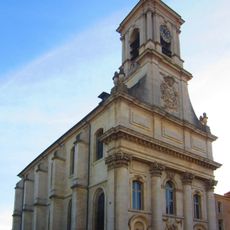
Château de Montaigu, Historical château in Laneuveville-devant-Nancy, France.
Château de Montaigu is a château in Laneuveville-devant-Nancy combining multiple architectural styles from different periods. Its facades and interior spaces blend traditional and more modern elements added during renovations from the 17th through 19th centuries.
Montaigu began as a hermitage founded by Raphaël Hanzelin in 1608, whose chapel was blessed in 1625. In 1757 Bon Prévost, receiver general of the Fermes of Lorraine, bought the estate and built a hillside pleasure house; its seven-bay east elevation, terrace and double stair ramp survive. From 1856 the marquis de Vaugiraud had architect Albert Jasson enlarge it into a château, and after the 9 November 1921 fire Édouard Salin had Pierre Lebourgeois rebuild the roof in reinforced concrete.
The château holds the Maisons des Illustres label, awarded in 2020 for the collection assembled by Suzanne and Édouard Salin in their own home. Édouard Salin, a metallurgical engineer, archaeologist and collector, left the house and park to the Lorraine museum; the displays cover 18th- to early 20th-century painting, sculpture and furniture alongside archaeological finds.
The château can be visited on select occasions throughout the year, with certain events like European Heritage Days providing regular access. Plan your visit in advance since opening hours are limited and the site does not operate daily.
In 1931 the chapel of Montaigu was moved stone by stone to its present site, because vibrations from the nearby Paris–Strasbourg railway were damaging it and its decoration. The operation was directed by the owners, Suzanne and Édouard Salin; during the work the foundations of the adjoining hermitage and the remains of the damaged choir were found.
The community of curious travelers
AroundUs brings together thousands of curated places, local tips, and hidden gems, enriched daily by 94,047 contributors worldwide.