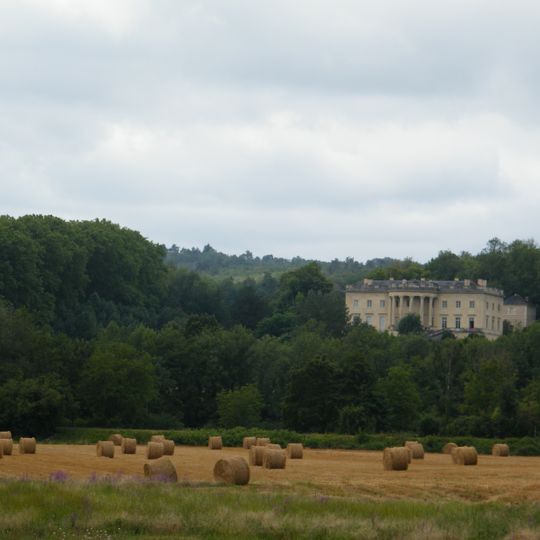
Château de Rastignac, Neoclassical château in La Bachellerie, France.
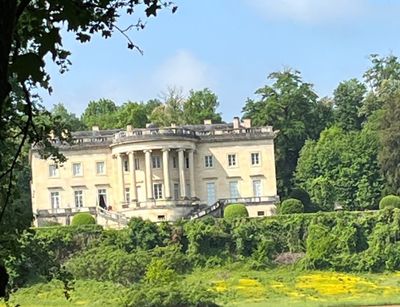
The Château de Rastignac is a neoclassical château in La Bachellerie, Dordogne, built of limestone between 1811 and 1817 to designs by Mathurin Salat, known as Blanchard. Its central feature is a semi-circular Ionic portico on the south facade, added in 1829, flanked by symmetrical wings with rows of rectangular windows. A balustrade runs along the flat roofline, and the pale stone building stands at the edge of a wooded park.
The building was constructed between 1811 and 1817, then suffered devastation in 1944 when German forces set it ablaze with phosphorus for five days. This attack destroyed significant portions and marked a turning point in the structure's later history.
The château's name comes from the Chapt de Rastignac family, whose earlier castle on the site, the Hospitium de Rastinhaco recorded in 1483, was burned in 1572 after Raymond Chapt de Rastignac and his two brothers were condemned at the Grands Jours de Périgueux. The present house was begun for Pierre Chapt de Rastignac, and in 1817 his daughter Zenaïde brought it as dowry to François Marie de La Rochefoucauld, duc de Liancourt. The dancer Cléo de Mérode, rival of Sarah Bernhardt, stayed here while it belonged to the Lauwick family.
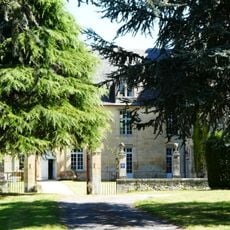
The château is not fully open to visitors today, as it has been divided into residential apartments and partially operates as an art jewelry workshop space. The exterior architecture can be appreciated from the surrounding grounds and approach area.
In 1971 an American, Leslie E. Acsay, offered 1,000 francs to anyone who could establish the château's construction date and architect. Noël Becquart, curator of the Dordogne departmental archives, won in 1972 by studying the steward's five account books for 1811–1817, naming Mathurin Salat, called Blanchard.
The community of curious travelers
AroundUs brings together thousands of curated places, local tips, and hidden gems, enriched daily by 94,363 contributors worldwide.