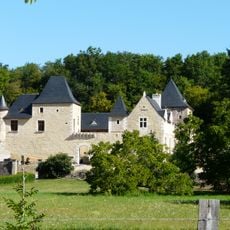
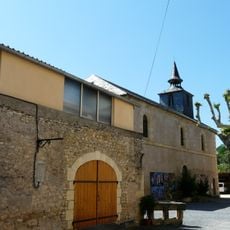
Château de Sauvebœuf, Louis XIII style castle in Aubas, France.
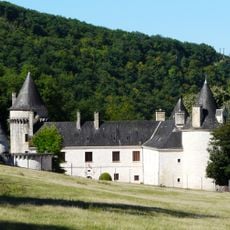
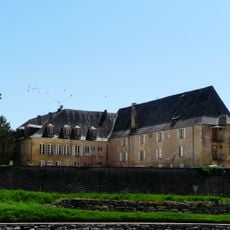
The Château de Sauvebœuf is a 17th-century castle on the left bank of the Vézère in Aubas. Its long main lodge is flanked by pavilions with dormered roofs facing the river, and the entrance court is closed to the south by a gate and low wall, with a fourth pavilion standing isolated. The building follows the same style as the Palais du Luxembourg in Paris.
A first castle, recorded in 1365 as Hospitium de Sauvebuo, stood near a ford on the Vézère on the Montignac–Terrasson road. Jehan III de Ferrières had it renovated in Renaissance style in 1600; Richelieu ordered its demolition in 1633 as punishment for a duel. After Marie d'Hautefort interceded with Louis XIII, Charles-Antoine de Ferrières rebuilt it in 1636–1637, possibly to plans by Nicolas Rambourg.
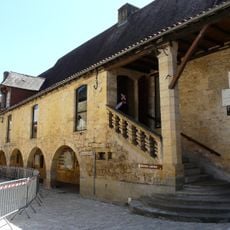
The castle displays features typical of French nobility residences, with its east-facing gallery, separate pavilion, and grand entrance staircase. These elements shape how the building looks and is organized today.
The castle is located in Aubas in the Dordogne department and can be viewed from the exterior. Check access details before visiting, as opening times and visitor access may vary.
The castle retains its original dovecote, a feature that speaks to how estates of that period were designed and managed. This detail reveals practical aspects of daily life for those who lived there.
The community of curious travelers
AroundUs brings together thousands of curated places, local tips, and hidden gems, enriched daily by 93,459 contributors worldwide.