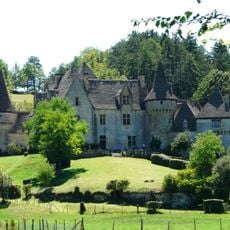
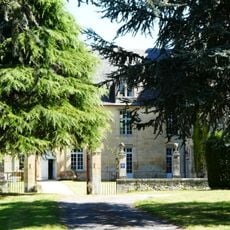
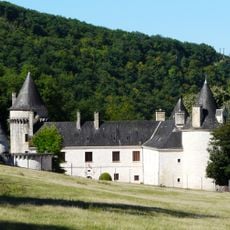
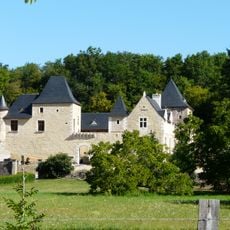
Le Régourdou, Archaeological site and show cave near Montignac-Lascaux, France.
Regourdou is a prehistoric site on a hill 800 m from Lascaux, in Montignac-Lascaux, Dordogne, where a collapsed karst cavity 35 m deep was found. The site is fenced and laid out for visits, with rectangular excavation areas of exposed brown earth edged in low stone, a small round stone structure with a conical roof, a second small stone building, and a plank path crossing the ground.
Regourdou was discovered by chance in 1954 by its owner, Roger Constant, who noticed water draining into a hole in his farmyard and dug there hoping to find another entrance to Lascaux. He excavated without official permission and on 22 September 1957 uncovered a Neanderthal mandible. François Bordes was alerted, and Eugène Bonifay and Bernard Vandermeersch led official excavations from 1961 to 1964. The site has been a classified historical monument since 1959.
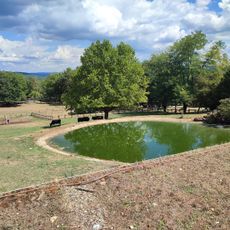
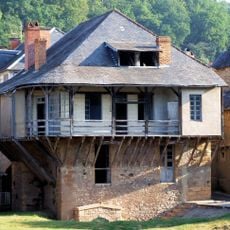
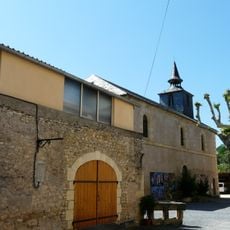
Roger Constant turned his farmhouse into a museum displaying a cast of the Regourdou mandible and knapped stone tools. In 1988 he opened a brown bear park to recall the bears whose bones fill the site; five bears lived there in 2021. The name Regourdou, not Le Régourdou, is the form the excavation team uses.
The site is accessible to visitors who wish to join guided tours, with multiple languages offered. It is wise to check in advance which tours are available and how to best reach the location.
The site is home to bears that live there and show which animals inhabited the region in prehistoric times. These animals help visitors imagine what the environment looked like when people lived here.
The community of curious travelers
AroundUs brings together thousands of curated places, local tips, and hidden gems, enriched daily by 93,507 contributors worldwide.