Abbaye Saint-André de Villeneuve-lès-Avignon, Benedictine abbey on Mont Andaon, Villeneuve-lès-Avignon, France
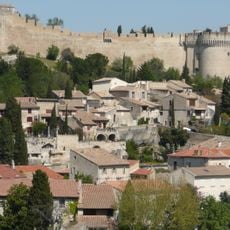
Abbaye Saint-André de Villeneuve-lès-Avignon is a Benedictine abbey on the summit of Mont Andaon, above the Rhône. Its pale stone buildings, with rows of small rectangular windows, stand behind a rampart wall along the cliff edge; a tall square tower with a domed lantern rises on the left. The surviving regular buildings, including the entrance pavilion, monumental portal, grand staircase, kitchen wing and vaulted refectory, are the work of architect Jean-Ange Brun.
Benedictine monks founded the abbey around 980 on Mont Andaon, a burial ground for Avignon's Christians since the 6th century around the tomb of the hermit Casarie, who died in 586. Bishop Garnier of Avignon endowed it by an act dated 6 May 982. By the 13th century it held over fifty priories from the Rhône valley to the Baronnies, and in 1292 Philippe le Bel signed a paréage with the abbot.
The abbey's name comes from Saint Andrew, to whom its church was dedicated alongside Saint Martin and Saint Casarie. The Belgian painter Louis-Joseph Yperman bought the abbey in 1913 and had his friend Émile Bernard paint three frescoes under the ceilings of one gallery: an Annunciation with two scenes of music-making angels. Yperman's wife, Marie van Elslande, ran a small orphanage in the complex.
The site is best explored on warm days when the gardens feel most welcoming and plant life is thriving. Comfortable walking shoes are recommended since the pathways navigate terraces with some steep sections.
From the terraces visitors enjoy panoramic views of Avignon's Papal Palace, Mont Ventoux, and the Luberon mountains in the distance. This location makes it an excellent vantage point for understanding the wider landscape of the region.
The community of curious travelers
AroundUs brings together thousands of curated places, local tips, and hidden gems, enriched daily by 93,817 contributors worldwide.