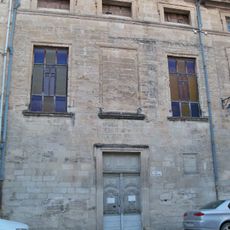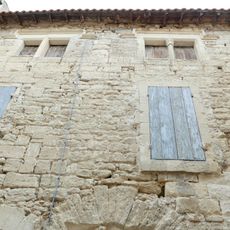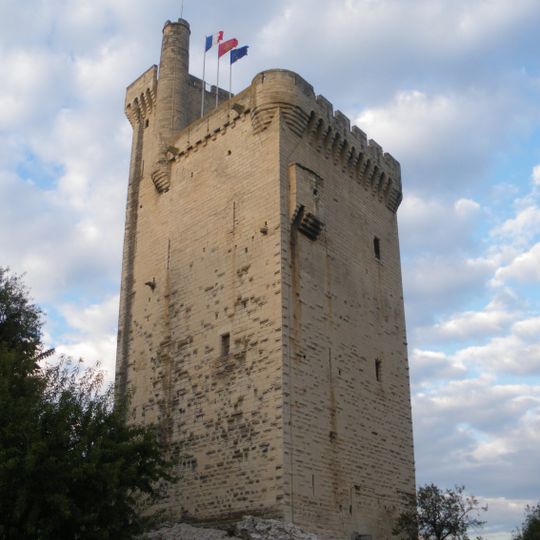
Tower of Philip the Fair, Medieval tower in Villeneuve-lès-Avignon, France.
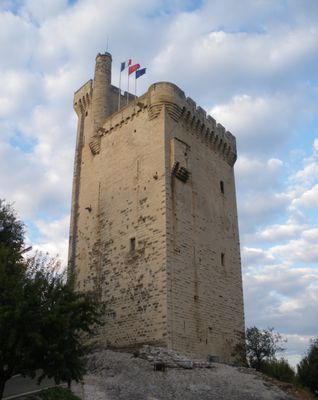
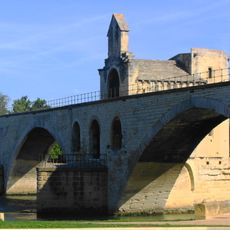
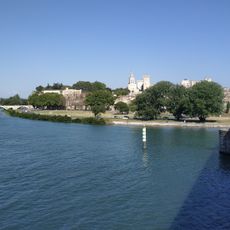
The Tower of Philip the Fair is a three-story limestone building at the western end of Saint-Bénézet Bridge, controlling the crossing between French and Papal territory. Its height provides views over both riverbanks and the historic passage point.
A first tower was built by the people of Avignon in 1185 after the Saint-Bénézet Bridge was completed, and they demolished it themselves in 1226 during the siege by Louis VIII. The paréage treaty of 1292 between Philip the Fair and the Abbey of Saint-André ordered a new tower near the old harbour; the king's architect Randolphe de Mornel finished the first floor in 1303. Around 1360, to keep routiers in check, a Gothic storey was added. The tower was listed as a monument historique in 1862.
The tower's name comes from King Philip IV of France, called Philip the Fair, who ordered its construction. It marked the French end of the Saint-Bénézet Bridge, where travellers, cardinals and princes crossed the Rhône toward the papal palace in Avignon. A narrow cylindrical watchtower was added later, perhaps in the 16th century.
The tower is open from Tuesday to Sunday, with access easily found from the bridge side. Comfortable footwear is helpful since the spiral staircase is narrow with many steps to the top.
The tower's wall still holds the hole used to anchor the chain ferry that carried passengers across the Rhône once the bridge became impassable. In 1822 the town demolished the rest of the fortress, leaving only this tower standing.
The community of curious travelers
AroundUs brings together thousands of curated places, local tips, and hidden gems, enriched daily by 92,835 contributors worldwide.