Abbaye Saint-Paul de Besançon, Gothic abbey in Besançon, France
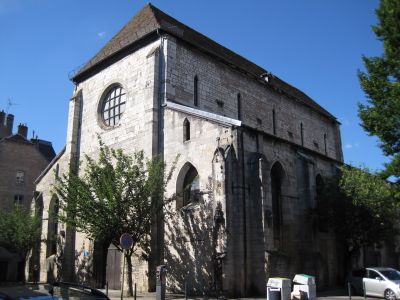
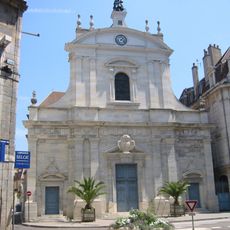
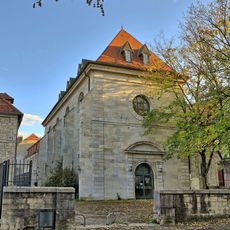
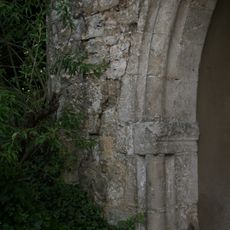
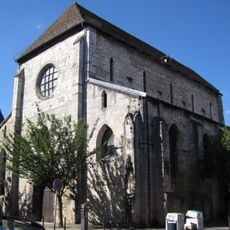
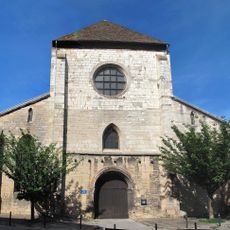
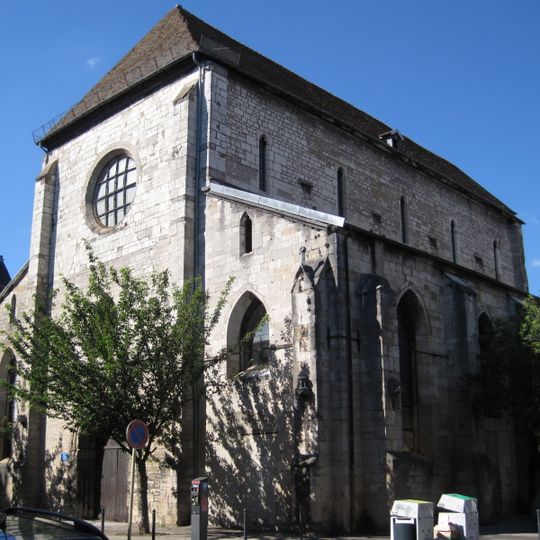
Abbaye Saint-Paul is a former Augustinian abbey in central Besançon whose surviving church is a 14th-century Gothic nave of three vessels. Its pale grey ashlar walls carry a tracery-divided round window and three narrow arched openings, while the right side shows three tall pointed-arch bays between slender engaged columns. The nave has served as the city's lapidary store since the building was sold in 2019.
Founded around 630 on the ruins of a Roman palace, the abbey underwent a major transformation into a collegiate church in 1044 under Archbishop Hugh I of Salins. This shift marked a turning point in how the site functioned religiously and architecturally.
The name Saint-Paul comes from the 1044 dedication to Mary, Paul of Tarsus and Saint Antidius, when Archbishop Hugh I of Salins turned the abbey into a collegiate church of Augustinian canons. Since the Revolution the former church has served as an army stable, a clothing depot and now the city's lapidary reserve.
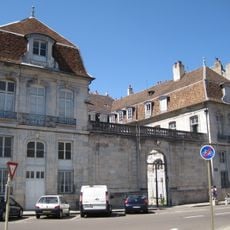
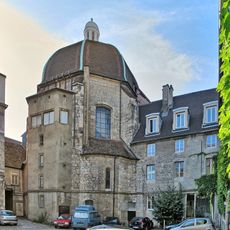
The abbey church stands at 2 rue d'Alsace, inside the eastern part of the Boucle du Doubs loop, and is seen from the street. The nave serves as the city's lapidary reserve, so interior access is not guaranteed. Remains of the bell tower are displayed in the courtyard of the municipal archives.
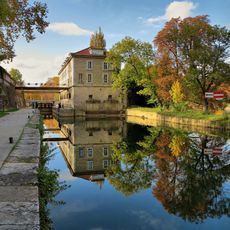
A mill belonging to the abbey documented since the 11th century was converted into a paper factory in 1473 and now houses offices for the French Waterways Service. This surprising transformation shows how religious sites adapted to economic needs over time.
The community of curious travelers
AroundUs brings together thousands of curated places, local tips, and hidden gems, enriched daily by 94,657 contributors worldwide.