Departmental Museum of archaeology Gilort Carcopino, Archaeological museum at Fort de Matra, Aléria, France.
The Departmental Museum of Archaeology Gilort Carcopino is housed within a 14th-century fortification that sits on a hilltop overlooking the Corsican coast. Inside, rooms with display cases hold pottery, jewelry, and other objects from different ancient cultures arranged chronologically and by origin.
The Fort of Matra, built by the Genoese in the 14th century, served as a cavalry squadron's headquarters and an arms depot; Corsican rebels partly destroyed it in 1729, and it later passed to the Matra family. Classified a monument historique in 1962, it received an archaeological depot in 1963 for finds from the pre-Roman necropolis and ancient Aleria. In 1969 the museum took the name of historian Jérôme Carcopino; Laurence Jehasse directed it from 1967 to 1978, and it joined the Collectivité de Corse on 1 January 2018.
The museum bears the name of Jérôme Carcopino, a historian of ancient Rome whose influence helped secure funding for the excavations; André Malraux is said to have chosen the dedication, made in 1969. Laurence Jehasse directed the museum from 1967 to 1978. In the courtyard stands a lion statue found in 1975 on the hill, of a type that often guarded the entrances of Etruscan tombs in the 4th century BC.
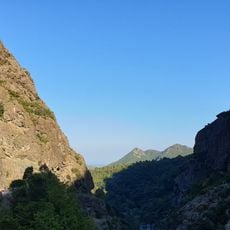
The museum occupies the Fort of Matra in old Aleria, about two kilometres from the modern village, roughly 70 km from Bastia and 120 km from Ajaccio. It is closed on Tuesdays. The fort stands on a hilltop, so the last stretch is uphill on foot.
In the museum courtyard stands a lion statue found in 1975 during excavations on the hill; such lions often guarded the entrances of the finest Etruscan tombs of the 4th century BCE. The collection also holds a glass-paste Carthaginian necklace whose pendant may depict the Egyptian god Bes, protector of the home.
The community of curious travelers
AroundUs brings together thousands of curated places, local tips, and hidden gems, enriched daily by 94,657 contributors worldwide.