Grotte de la Baume Bonne, Prehistoric cave in Quinson, France.
Grotte de la Baume Bonne is a prehistoric cave in southern France with archaeological layers containing stone tools, pottery fragments, and evidence of ancient settlements. The deposits span roughly 400,000 years of human occupation and show the development of early cultures.
Bernard Bottet first reported prehistoric occupation in the Verdon to scholars in 1946. The shelter was excavated under Henry de Lumley until 1968, then work resumed in 1988 under Claire Gaillard and later Jean Gagnepain. The site's sequence is divided into seven ensembles, from early Middle Palaeolithic and Mousterian to Upper Palaeolithic and Neolithic Cardial levels.
The name "baume" is the old Provençal word for cave, fixed in local toponymy as the Grotte de la Baume-Bonne. Visits are run by the educational service of the Musée de Préhistoire des gorges du Verdon in Quinson. The site also yielded a Cardial Neolithic level, named after the shell-impressed pottery of that period.
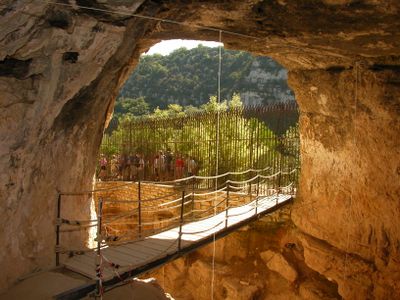
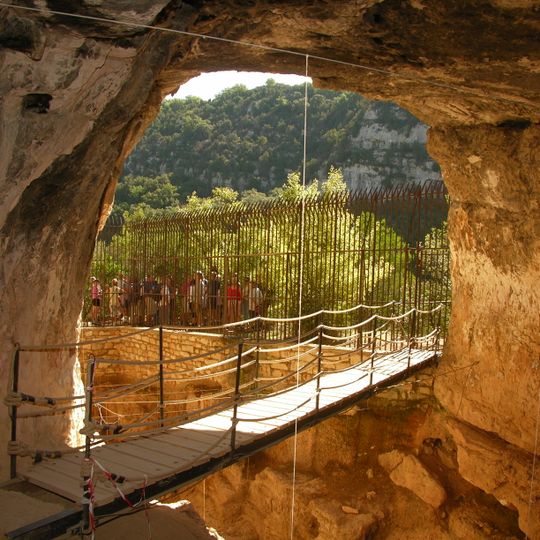
Visits to the cave are run by the educational service of the Musée de Préhistoire des gorges du Verdon in Quinson. The site is a rock cavity above the Verdon, reached by a narrow metal footbridge with light-coloured planks and thin railings; a tall barred metal fence stands behind it. Book through the museum before setting out.
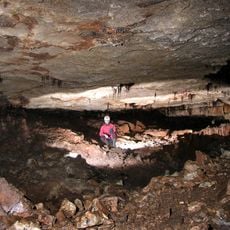
The cave underwent natural changes over thousands of years through water dissolution and mechanical erosion that shaped its layers. These geological processes helped preserve the archaeological finds exceptionally well.
The community of curious travelers
AroundUs brings together thousands of curated places, local tips, and hidden gems, enriched daily by 94,657 contributors worldwide.