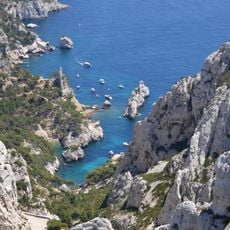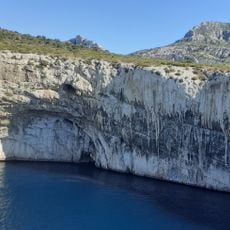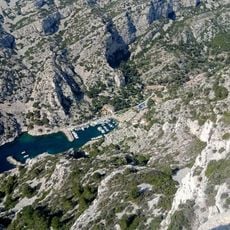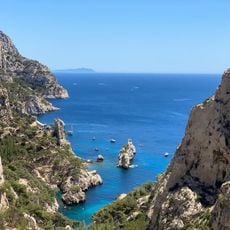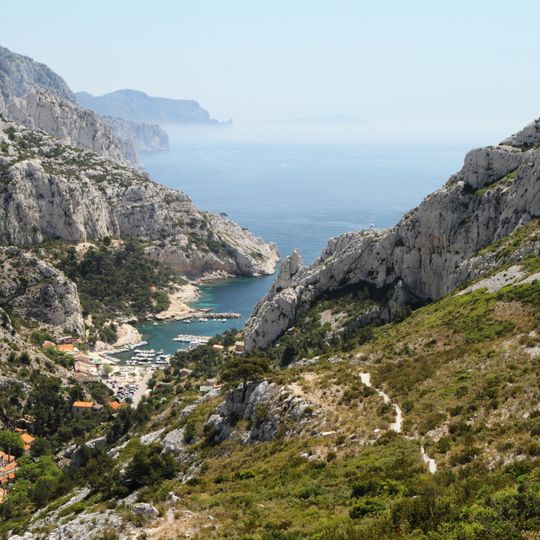
Calanque de Morgiou, Limestone inlet in 9th arrondissement of Marseille, France
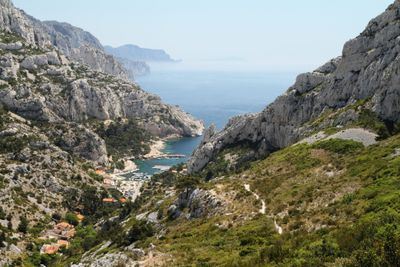
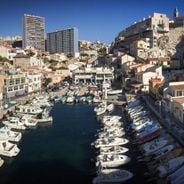
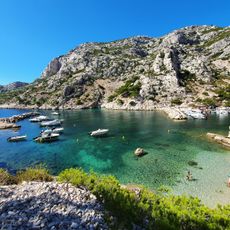
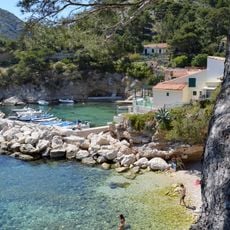
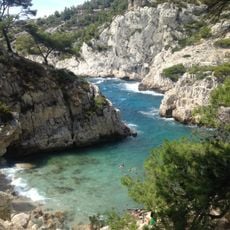
Calanque de Morgiou is a narrow inlet of dark blue water between a tall, fissured limestone cliff and a built-up shore. At its inner end, a pebbly bay holds a cluster of pale-walled cabins with terracotta roofs, beside a quay where small white and blue boats are moored in rows.
In 1622, when Louis XIII visited Marseille, the fishermen of Morgiou organised a huge traditional tuna trap, a madrague, in the cove. The inlet was formerly a fishing port; its small fishing cabins now serve tourism rather than fishing.
The name Morgiou comes from a local family name recorded in Marseille's archives. The small fishing cabins along the quay are now used for tourism rather than fishing, and the traditional tuna trap called a madrague was set up here in 1622 for King Louis XIII's visit.
You can reach the cove either by hiking along coastal trails from the Luminy area or by taking a boat from Marseille's old harbor. Summer visits are more restricted due to access controls, so timing your trip thoughtfully makes the experience smoother.
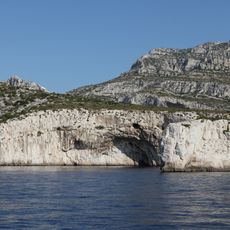
The Cosquer cave lies not in Morgiou itself but in the adjoining Calanque de la Triperie, a rock cirque in the cliff separating Morgiou from Sormiou. Its entrance sits 37 metres below the surface, and its walls carry paintings and engravings of bison, ibex, horses, seals and penguins made between 27,000 and 19,000 BCE. The entrance is sealed off to protect the site and because access is dangerous.
The community of curious travelers
AroundUs brings together thousands of curated places, local tips, and hidden gems, enriched daily by 93,467 contributors worldwide.